China Top Chair Mats Manufacturers and Suppliers?
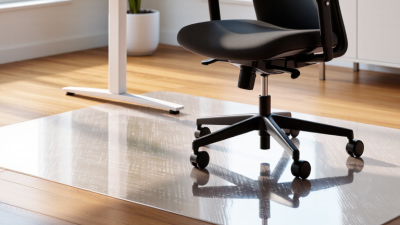
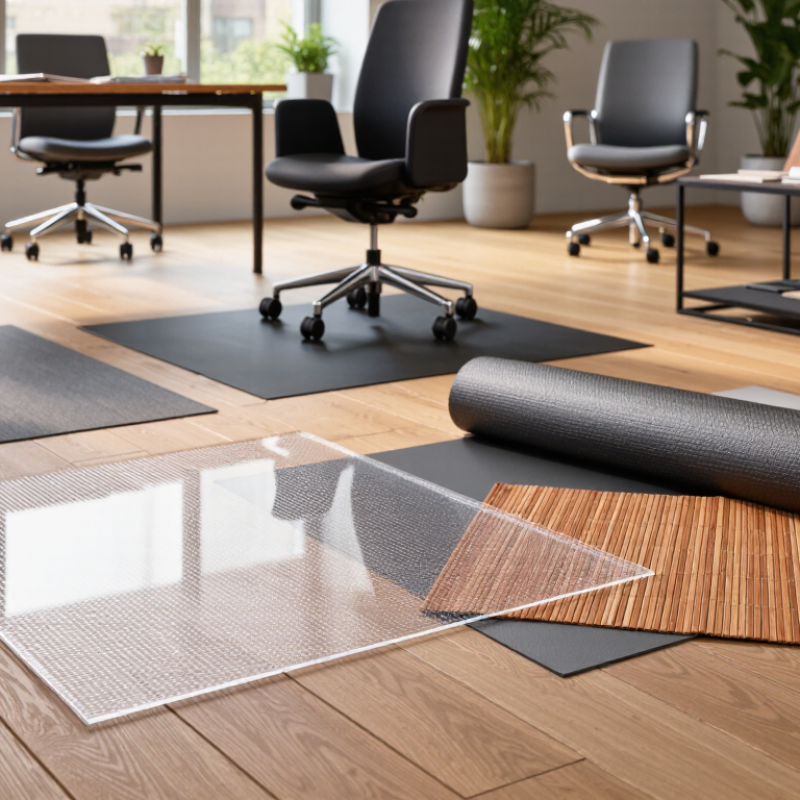
China has become a major sourcing destination for Chair Mats, serving offices, homes, hotels, and commercial interiors worldwide. Manufacturers offer options in PVC, polycarbonate, bamboo, and recycled materials. Each material behaves differently under chair wheels, temperature changes, and repeated pressure.
A dependable supplier should understand more than surface appearance. They should explain thickness, hardness, edge design, floor compatibility, and load performance clearly. For example, a 2-millimeter PVC mat may suit light home-office use, while a thicker polycarbonate mat can better support frequent rolling. Product samples reveal details that catalog images often hide, including curling edges, surface texture, and wheel resistance.
China’s leading manufacturers often provide OEM sizing, private labeling, packaging design, and flexible order quantities. However, “top” should not mean the largest factory alone. Production capacity, inspection records, communication speed, and after-sales support matter equally. Buyers should review material declarations, test reports, factory experience, and export references where available. Independent inspections can reduce avoidable risks.
There is no perfect supplier.
Some factories offer attractive prices but limited customization. Others provide excellent engineering but require higher minimum orders. A practical comparison should consider total cost, not only the quotation. Freight, packaging, replacement rates, and delivery consistency can change the final result. This guide introduces reputable China Chair Mats manufacturers and suppliers, while noting both their strengths and possible limitations. That balanced approach helps importers choose products that protect floors, improve workplace movement, and meet realistic purchasing requirements.
China Chair Mat Industry Profile: Materials, Sizes, and 2024 Market Metrics
China’s chair mat industry covers PVC, PET, polycarbonate, and recycled plastic products. PVC mats remain common because they offer low costs and flexible production. PET models provide clearer surfaces and better recycling potential. Polycarbonate mats resist cracking under rolling office chairs. However, material claims need testing, not assumptions.
Typical 2024 sizes include 36×48 inches for compact desks, 45×53 inches for standard workstations, and 48×60 inches for wider layouts. Thickness often ranges from 1.5 to 3 millimeters. Buyers should check load ratings, surface texture, odor levels, and edge curling. These details affect daily comfort more than attractive packaging. One weakness remains: some suppliers report durability without showing abrasion or caster tests.
Tips: Request samples from several factories. Measure hardness, flatness, and recovery after bending. Ask for test dates, material composition, and production capacity. Useful 2024 market metrics include export volume, average order value, repeat-order rates, defect percentages, and delivery performance. Procurement teams should compare these figures by product type. Low prices can hide higher replacement costs. Some market reports also combine household mats with commercial products, which can distort conclusions. A careful buyer should verify the research method before accepting any market estimate.
China Top Chair Mats Manufacturers and Suppliers? - China Chair Mat Industry Profile: Materials, Sizes, and 2024 Market Metrics
Product, manufacturing, and market-reference data for China’s chair mat industry
1. Material and Product Profile
| Material |
Typical Thickness |
Typical Transparency / Finish |
Main Advantages |
Common Applications |
| PVC |
1.5–3.0 mm |
Clear, tinted, or textured |
Flexible, economical, water-resistant, easy to process |
Home offices, carpeted floors, general commercial use |
| Polycarbonate (PC) |
1.5–3.0 mm |
High-clarity or lightly textured |
High impact resistance, strong dimensional stability, long service life |
Hard floors, heavy-use offices, executive workstations |
| PET / recycled PET |
1.8–3.0 mm |
Clear, frosted, or printed |
Recyclable material options, good stiffness, low odor |
Sustainability-focused offices and institutional projects |
| PP |
1.5–2.5 mm |
Opaque, translucent, or textured |
Lightweight, chemical-resistant, cost-efficient |
Temporary offices, education, retail, and volume projects |
| Bamboo / wood-fiber composite |
3.0–6.0 mm |
Natural grain, matte finish |
Decorative appearance, rigid surface, renewable-content positioning |
Residential workspaces and premium interior projects |
2. Standard Sizes and Configuration Metrics
| Product Configuration |
Common Dimensions |
Recommended Use |
Shape Options |
Typical Edge Treatment |
| Compact task-chair mat |
90 × 120 cm; 36 × 48 in |
Small desks and home offices |
Rectangle or lip shape |
Beveled or rounded edges |
| Standard office mat |
120 × 150 cm; 48 × 60 in |
Most single-user workstations |
Rectangle, lip, or contour |
Beveled perimeter |
| Large workstation mat |
120 × 180 cm; 48 × 72 in |
Large desks and executive offices |
Rectangle or extended lip |
Beveled or polished edge |
| Heavy-duty mat |
150 × 180 cm; 60 × 72 in |
High-traffic commercial environments |
Rectangle or custom-cut |
Reinforced beveled edge |
| Machine-cut custom mat |
Made to drawing or template |
Projects requiring unusual floor coverage |
Round, oval, corner-cut, or irregular |
CNC-cut, rounded, or beveled |
3. China Chair Mat Industry: 2024 Reference Metrics
| Metric |
2024 Reference Range |
Unit / Basis |
Industry Interpretation |
| Export-oriented production share |
Approximately 30%–50% |
Indicative share of output among export-capable factories |
China serves both domestic office-furniture demand and overseas private-label programs |
| Common export order quantity |
500–5,000 pieces |
Typical private-label or wholesale order |
Quantity varies according to size, material, packaging, and printing requirements |
| Common production lead time |
20–45 days |
After artwork, specifications, and deposit approval |
Custom tooling, printed surfaces, and peak-season capacity can extend lead times |
| Standard thickness demand |
1.5–3.0 mm |
Approximate range across mainstream plastic mats |
Thicker products generally provide greater stiffness and durability |
| Typical product weight |
2–8 kg per mat |
Depends on dimensions, density, and thickness |
Weight materially affects freight cost and packaging design |
| Retail packaging formats |
Flat-packed, rolled, or folded |
Packaging configuration |
Flat packing reduces curl risk; rolling reduces carton volume but may require conditioning |
| Material compliance focus |
REACH, RoHS, and applicable packaging requirements |
Market-entry documentation varies by destination |
Buyers commonly request material declarations, test reports, and packaging details |
4. Manufacturing and Quality-Control Indicators
| Quality Indicator |
Recommended Check |
Why It Matters |
| Dimensional tolerance |
Confirm length, width, thickness, and corner radius against approved samples |
Prevents fit problems during workstation installation |
| Surface flatness |
Inspect curling, warping, dents, bubbles, and uneven texture |
Flatness affects chair movement and user safety |
| Load and rolling performance |
Test repeated caster movement under the intended chair load |
Helps evaluate cracking, indentation, and premature wear |
| Odor and surface condition |
Check odor, discoloration, sharp edges, scratches, and contamination |
Important for indoor-office acceptance and customer satisfaction |
| Packaging integrity |
Verify carton strength, corner protection, labels, and moisture protection |
Reduces transit damage and warehouse handling losses |
Note: The ranges above are industry-reference values for product planning and supplier comparison. Exact specifications, compliance requirements, order quantities, pricing, and lead times should be confirmed against the final technical specification and destination-market regulations.
Material Benchmark: Comparing 1.5–3 mm PVC and Polycarbonate Chair Mats
China Top Chair Mats Manufacturers and Suppliers?
Material choice often decides whether a chair mat feels stable or frustrating. PVC mats between 1.5 and 3 mm offer flexibility, lower cost, and moderate sound absorption. They suit light office chairs and smooth floors. However, thin PVC can curl after storage, especially in cold rooms. Some products may also release a noticeable plastic odor.
Polycarbonate is harder and more impact resistant. A 1.5 mm sheet can support frequent rolling, while 2–3 mm options provide greater stiffness under heavier chairs. It usually stays flatter and resists cracking, but it costs more and can slide on polished flooring without suitable backing. A thicker mat is not automatically better. I have seen 3 mm PVC mats feel unstable on soft carpet when their underside lacked proper grip. Suppliers should provide load testing, thickness tolerance, edge finishing, and temperature storage guidance.
Tips: Test samples under the actual chair. Roll across the same path for several days. Check edge lift, wheel movement, surface marks, and odor. Ask whether the thickness includes surface texture. Review packaging quality, too. A well-made mat can arrive warped if shipping protection is weak. For purchasing teams, compare material certificates, measured dimensions, and return procedures rather than relying only on attractive catalog photos.
Supplier Evaluation: ISO 9001, EN 425, and Load-Capacity Testing
When comparing top chair mat manufacturers and suppliers in China, certification claims need practical verification. ISO 9001 shows that a supplier controls documented processes, corrective actions, purchasing, and customer feedback. It does not automatically prove that every mat performs well. Ask for the certificate number, issuing body, validity dates, and covered production site. The scope should include relevant plastic or floor-protection products. A certificate for another facility raises questions.
EN 425 testing deserves equal attention. This standard relates to the behavior of resilient floor coverings under castor chairs. Suppliers should explain testing conditions, surface type, chair load, rolling cycles, and visible damage criteria. Request a complete report, not a logo or one-page claim. Check whether results apply to the selected thickness, backing, edge design, and material blend. A 1.5-millimeter mat may not behave like a thicker model. That difference matters.
Load-capacity testing should reflect real office use, including concentrated pressure from casters and repeated movement. Ask whether the test measures cracking, permanent dents, curling, and dimensional change after loading. Independent laboratory results are useful, but factory records can reveal batch variation. Review sample identification, test dates, equipment calibration, and retained-sample procedures. I would also inspect a pre-production sample on carpet and hard flooring. Small flaws appear quickly. Supplier selection is not perfectly linear; low-cost samples can hide inconsistent resin or weak backing. That uncertainty should be recorded, not ignored.
Buyer Checklist: Warranty, Packaging, Certifications, and Total Landed Cost
China Top Chair Mats Manufacturers and Suppliers?
When evaluating chair mat suppliers in China, start with the warranty. Ask for coverage length, replacement conditions, and exclusions in writing. A useful warranty should address cracking, curling, surface separation, and early discoloration. I also request production samples before placing a large order. Small samples reveal more than attractive photographs.
Packaging deserves equal attention. Check whether each mat uses corner protection, moisture barriers, and a rigid outer carton. Ask for carton dimensions, gross weight, and drop-test records. A low-cost mat can become expensive after damaged shipments. I once underestimated stacked cartons, and several edges arrived bent. The supplier corrected the issue, but the delay affected our delivery schedule.
Request current certification documents, test methods, and issuing laboratory details. Certificates should match the actual material, thickness, and production site. Do not accept a generic file without verification. Also calculate total landed cost, including product price, tooling, inland transport, export handling, freight, insurance, duties, taxes, port fees, and local delivery. Compare suppliers using the same delivery terms. A cheaper quote may hide higher freight or weaker packaging. Leave room for currency changes and inspection costs. This part is easy to overlook.
China Chair Mat Supplier Buyer Checklist: Landed Cost and Compliance
Worked example for 100 chair mats shipped from China to the United States. The model includes an FOB goods value of USD 4,200, ocean freight of USD 900, cargo insurance of USD 35, an illustrative 8.5% duty rate applied to the goods value, customs brokerage of USD 150, and destination delivery of USD 480. Confirm the HS code, duty rate, warranty terms, packaging specification, and required certifications before placing an order.
Total modeled landed cost: USD 6,122, or approximately USD 61.22 per mat. A complete supplier review should compare the delivered cost together with written warranty coverage, protective packaging details, and verifiable compliance documentation—not product price alone.