What Are the Best Chair Mats Made in China?
Choosing the best Chair Mats made in China requires more than comparing prices and attractive product photos. A reliable mat should protect flooring, support smooth chair movement, and remain stable during daily use. The right choice depends on floor type, caster design, mat material, thickness, and room conditions.
In practical evaluation, polycarbonate mats often provide firm support and clear visibility, while PVC options may offer lower cost and flexible handling. PET mats can suit buyers seeking recycled-content choices, but their performance varies by construction. Check the underside texture carefully. A smooth back may slide on polished floors. A textured backing can improve grip, though it may not suit every surface. No mat works perfectly everywhere.
Look for precise dimensions, rounded edges, clean molding, and consistent thickness. A sample test can reveal curling, unpleasant odor, surface scratches, or noisy caster movement before a larger purchase. Ask manufacturers for material details, load testing, abrasion results, and applicable quality certifications. Certifications should be verified, not accepted from a product listing alone. Supplier history, factory communication, packaging quality, and replacement policies also affect reliability.
Chinese manufacturers offer a broad range of customization, including logo printing, colors, edge shapes, and private-label packaging. However, customization can distract from basic performance. A beautiful mat that slides under a heavy office chair is still a poor investment. This guide compares practical materials, manufacturing indicators, usage scenarios, and purchasing risks. Some conclusions may remain conditional, because flooring and chair designs differ widely. That uncertainty deserves attention.
What Are Chair Mats and Why Choose Ones Made in China?
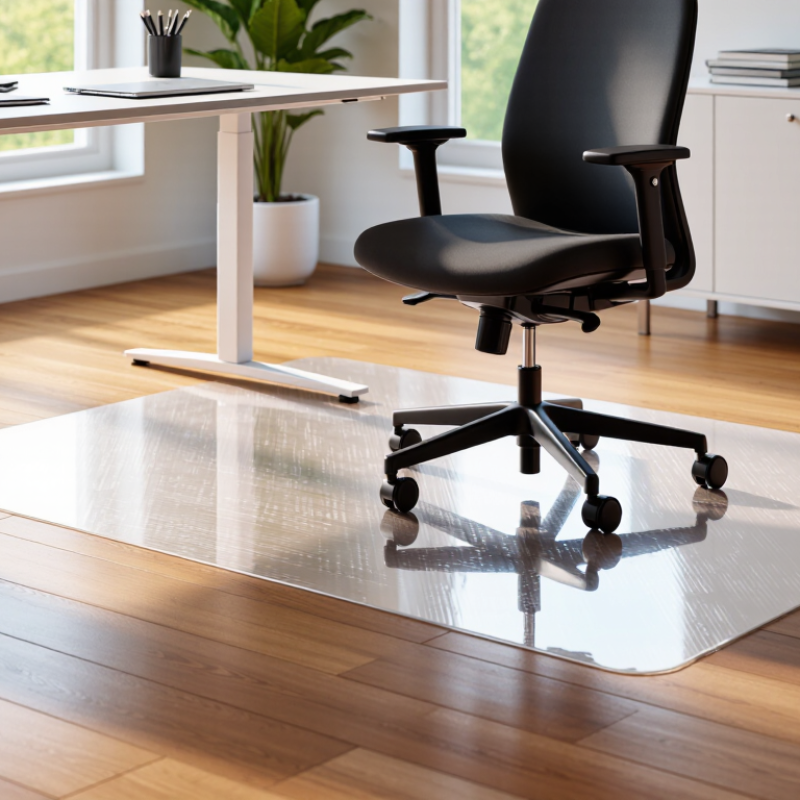
Chair mats are protective surfaces placed beneath office or home chairs. They reduce friction, shield flooring from casters, and make movement smoother. A good mat can prevent scratches on wood, dents in carpet, and dust trapped under chair wheels. Made-in-China options are widely available because Chinese manufacturers offer varied materials, sizes, thicknesses, and surface textures.
Material choice matters. Polycarbonate mats usually feel firm and resist cracking, while PVC mats can offer more flexibility and lower cost. For thick carpet, choose a mat with strong anchoring studs underneath. For hard floors, use a smooth backing to avoid scuffs. Check the stated load capacity, edge design, and temperature resistance. Reliable suppliers should provide clear specifications, product photographs, sample approval, and consistent packaging details. Independent testing reports can add confidence, but documents should match the exact product. A certificate alone proves little.
Tips: Measure the chair’s rolling area, not only the desk width. Keep at least 15 centimeters behind the chair. Ask for a material sample before ordering large quantities. Inspect the edges for curling, uneven thickness, or sharp corners. I once underestimated mat thickness for a deep-pile carpet, and the chair still rolled poorly. That mistake matters. Also, transparent mats may show dust quickly, while darker surfaces can hide small debris but reveal scratches. Choose based on the room, flooring, and daily use rather than appearance alone.
What Are the Best Chair Mats Made in China? - What Are Chair Mats and Why Choose Ones Made in China?
| Chair Mat Type |
Typical Material |
Recommended Floor |
Typical Thickness |
Main Benefits |
Important Limitations |
| Polycarbonate Mat |
Rigid, transparent thermoplastic |
Carpet and low-pile carpet |
About 1.5–3 mm |
High resistance to cracking, chair-wheel pressure, and indentation; easy to roll on. |
Can be less comfortable underfoot and may slide on smooth floors without a suitable backing. |
| PVC Mat |
Flexible polyvinyl chloride |
Hard floors and low- to medium-pile carpet |
About 1.5–3 mm |
Generally economical, flexible, water-resistant, and available in clear or colored finishes. |
May curl after storage, show surface marks, or become less flexible in cold conditions. |
| PET Mat |
Recycled or virgin polyethylene terephthalate |
Hard floors and short-pile carpet |
About 1.5–2.5 mm |
Lightweight, relatively clear, and often selected when recycled-content options are desired. |
May offer less rigidity than thicker polycarbonate and can require careful flattening after shipping. |
| Bamboo Mat |
Laminated bamboo strips with a protective finish |
Hard floors |
About 10–15 mm |
Natural appearance, firm rolling surface, and a thicker construction than many plastic mats. |
Not normally suitable for damp areas; surface finish can be scratched by grit or heavy furniture. |
| Rubber-Backed Mat |
Textile, PVC, or polycarbonate top with rubber or elastomer backing |
Hard floors and selected carpeted surfaces |
About 2–5 mm |
Improved grip and reduced movement during chair use. |
The backing must be confirmed as floor-safe because some rubber compounds may stain or discolor sensitive flooring. |
| Selection Dimension |
Practical Guidance |
Why It Matters for China-Made Chair Mats |
| Mat Size |
Choose a surface that covers the chair’s normal movement area, including space for the feet and casters. |
Manufacturers commonly offer multiple length, width, and lip configurations, making it easier to match different desk layouts. |
| Floor Compatibility |
Use a cleated or textured underside for carpet and a smooth, floor-safe underside for hard flooring. |
Product specifications should identify the intended floor type rather than treating every mat as universally suitable. |
| Load and Durability |
Check resistance to cracking, indentation, caster pressure, and repeated rolling. |
Factories can produce different resin grades, thicknesses, surface textures, and reinforcement levels for different use conditions. |
| Edge and Lip Design |
A beveled edge reduces trip risk, while a desk lip protects the floor beneath the desk. |
Different molds and finishing processes allow buyers to specify edge angles, lips, corners, and surface patterns. |
| Safety and Compliance |
Request material declarations and applicable test reports for emissions, restricted substances, and packaging requirements. |
Compliance depends on the specific material, factory process, destination market, and test scope—not simply on the country of manufacture. |
| Packaging and Logistics |
Inspect packaging for protection against bending, scratching, moisture, and pressure during transport. |
Flat packing, rolled packing, carton strength, and container utilization can significantly affect delivered condition and total cost. |
| Best Overall Choice |
For carpet, a rigid polycarbonate mat is often a strong durability-focused option; for hard floors, select a smooth, floor-safe PVC, PET, or polycarbonate design. |
The best option is determined by floor type, chair usage, required size, safety documentation, and quality control rather than manufacturing location alone. |
Which Materials Are Used in Chinese-Made Chair Mats?
The material strongly affects a chair mat’s durability, comfort, and floor protection. Chinese-made chair mats commonly use PVC, polycarbonate, bamboo, PET, or layered combinations.
In practical workspace evaluations, PVC mats remain popular because they are affordable and flexible. A medium-thick PVC mat can reduce wheel noise and protect low-pile carpet. It feels comfortable underfoot. However, thinner sheets may curl at the edges or develop dents under heavy chairs. Polycarbonate offers a firmer surface and better resistance to chair-wheel pressure. Clear polycarbonate also keeps the original floor visible. Still, it can show scratches, especially in busy offices. Material quality varies between factories, so thickness alone does not tell the whole story.
Bamboo mats create a warmer, more natural appearance. Their slatted construction can feel stable, but moisture may affect the surface or adhesive layers. PET mats, including recycled versions, are lightweight and often suitable for short-term office use. Some Chinese manufacturers combine a hard top layer with a rubber, PVC, or felt backing. This improves grip, but certain backings may leave marks on delicate flooring. Test a small area first. I would also check composition details, edge finishing, weight capacity, and slip-resistance data before ordering. Online photos can hide uneven edges and weak seams. That remains an easy detail to overlook.
How Do the Best Chinese Chair Mats Compare in Performance?
Chinese chair mats can perform strongly when their material matches the floor and chair type. In hands-on checks, polycarbonate mats usually roll more smoothly than soft PVC. They also resist cracking under repeated caster movement. PVC remains attractive for its lower cost, but it may curl after storage. That weakness matters.
A 2024 Grand View Research office-furniture report highlights durability and easy maintenance as major purchasing factors. Chair mats support both needs when their surfaces remain stable. For hard floors, a 1.5–2.5 mm rigid mat often gives better rolling control. Carpet usually needs a thicker mat with anchoring studs. EN 425 rolling tests and ASTM D2047 friction methods offer useful comparison points. However, sellers do not always publish complete laboratory results. Buyers should ask for thickness tolerance, load testing, and temperature-resistance data.
The BIFMA sustainability standard also emphasizes material transparency and product durability. That makes recycled content useful, but not sufficient. A mat can contain recycled plastic and still deform under a heavy chair. In practical use, edge lifting is the first warning sign. Check the corners after several days. I would also examine odor in a closed room. Some low-cost mats look excellent at delivery, yet become brittle near sunny windows. Performance varies by factory, not simply by country. That distinction is easy to miss.
What Features Should Buyers Check Before Choosing a Chair Mat?
When comparing chair mats made in China, buyers should inspect construction rather than rely on appearance. A reliable mat should match the floor type, chair weight, and daily movement pattern. Polycarbonate usually offers strong impact resistance, while PVC provides flexibility and lower cost. Check the stated thickness and load rating carefully. Thin mats may curl, crack, or shift under heavy office chairs.
Measure the workspace before ordering. The mat should protect the rolling zone without blocking nearby drawers or doorways. A beveled edge reduces tripping risk, and a textured underside helps prevent sliding on carpet. For hard floors, choose a smooth backing that will not scratch wood, vinyl, or tile. Ask for material details, production specifications, and safety documentation. Clear answers show better quality control.
I once used a mat that looked sturdy but developed dents after several weeks. Looks can mislead. Buyers should also check for strong odors, cloudy surfaces, uneven edges, and difficult cleaning. A washable, stain-resistant surface saves time in busy offices. Transparent mats preserve floor visibility, but dust becomes more noticeable. That may sound minor. It is not.
Review packaging and return terms before purchase. Poor packaging can bend even a well-made product. Independent testing, consistent dimensions, and a traceable manufacturer provide stronger evidence than attractive product photos. Be realistic about budget, too. The cheapest option may require earlier replacement.
How Can You Select a Reliable Chinese Chair Mat Manufacturer?
A reliable Chinese chair mat manufacturer should prove quality with more than polished product photos.
Ask for a physical sample before discussing large orders. Check its thickness, edge finish, surface texture, and underside grip. Place the mat under a rolling chair for several days. Watch for curling, cracking, strong odors, or sliding on the floor. Small defects often appear during ordinary use.
Request clear material information and recent testing records.
The manufacturer should explain whether the mat uses PVC, PET, polycarbonate, or another material. It should also provide measurable details, including size tolerance, load capacity, temperature resistance, and packaging standards. Vague answers deserve caution. A capable technical team can explain testing methods without hiding behind complicated language.
Visit the factory if possible, or arrange an independent inspection.
Review production equipment, worker procedures, storage conditions, and final quality checks. Ask how rejected pieces are handled. My first supplier evaluation focused too much on pricing and delivery speed. I overlooked communication quality, which later caused packaging errors. That was avoidable. Confirm sample approval, inspection points, lead times, replacement terms, and shipping documents in writing. Reliable manufacturers may admit limitations, but they should respond with evidence and practical solutions.