| Water supply valve | Locate the main irrigation shutoff valve and confirm that the handle is aligned with the pipe when using a quarter-turn valve. | The valve is fully open and the pipe is not restricted. | A partially closed or closed valve can stop water from reaching every zone. | Open the valve slowly. If it will not turn or leaks around the stem, arrange for professional repair. | High |
| Backflow prevention assembly | Check the irrigation backflow device for visible leaks, damage, or closed test and isolation valves. Do not remove its protective caps. | Isolation valves are open, with no continuous leakage or visible damage. | A closed valve, failed check assembly, or leak may reduce or interrupt flow. | Open only the normal isolation valves if clearly identified. Contact a qualified irrigation or plumbing professional for repairs or testing. | High |
| System pressure | Observe the pressure gauge, if installed, while a sprinkler zone is running. Compare the reading with the irrigation system’s design requirements. | Pressure remains within the equipment manufacturer’s specified operating range. | Very low pressure may indicate a supply restriction, leak, clogged filter, or undersized service. Excessive pressure can damage components. | Inspect for restrictions and leaks. Install or adjust pressure regulation only when the required pressure is known. | High |
| Water meter or supply indicator | Turn off indoor and outdoor fixtures, then check whether the water meter continues to register flow. | The meter is stationary when all water outlets are off. | Continued movement can indicate an underground irrigation leak or another plumbing leak. | Shut off the irrigation supply if a major leak is suspected and have the system inspected. | Urgent |
| Zone control valve | Activate one zone and listen near its valve box for a click or gentle water-flow sound. Check for standing water in the box. | The valve opens during the programmed zone and the valve box remains reasonably dry. | A stuck solenoid, damaged diaphragm, wiring fault, or flooded valve box may prevent operation. | Check the controller wiring and valve-box connections. Replace or repair the valve only after turning off the water supply. | High |
| Filter or screen | Inspect the system filter or pump intake screen if the system has one. Rinse removable screens with clean water. | The screen is clean and allows water to pass freely. | Debris can restrict flow and cause weak or uneven sprinkler operation. | Clean the filter according to the equipment instructions and reinstall it securely. | Medium |
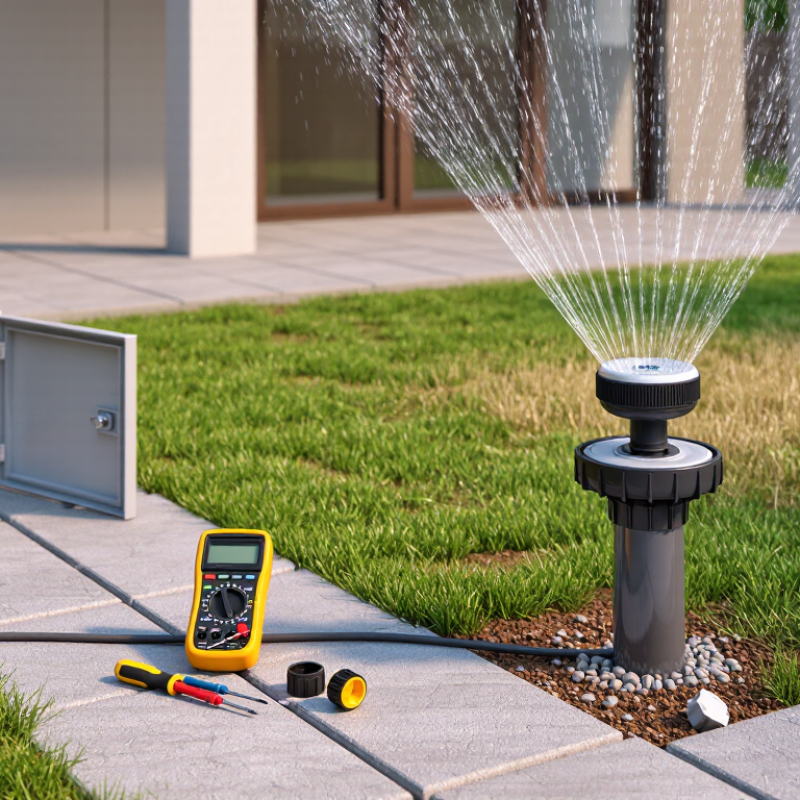
| Sprinkler heads and nozzles | Run the affected zone and check for clogged nozzles, broken heads, tilted bodies, or water spraying from the head seal. | Heads rise fully, spray evenly, and retract or drain normally after the zone stops. | Blocked nozzles cause poor coverage; broken heads can waste water and lower pressure across the zone. | Clean or replace damaged components. Use a nozzle designed for the same flow and spray pattern. | Medium |
| Underground pipe or tubing | Look for unusually wet soil, erosion, sinkholes, bubbling water, or water flowing when the system is off. | No unexplained wet areas or continuous flow are present. | A cracked pipe or disconnected fitting may cause pressure loss and poor sprinkler performance. | Turn off the affected zone or main irrigation supply and repair the damaged section. | Urgent |
| Controller schedule and manual start | Use the controller’s manual-start function to run the affected zone. Confirm the program is enabled and seasonal adjustments have not reduced watering time to zero. | The zone starts when manually activated and the programmed run time is greater than zero. | A disabled schedule, incorrect date or time, rain-delay setting, or seasonal adjustment can make the system appear inactive. | Correct the controller settings and replace the backup battery if the time or program is repeatedly lost. | Medium |
| Electrical power and valve signal | Confirm the controller has power and inspect the low-voltage wiring for loose, cut, or corroded connections. | The controller display is active and the selected valve receives the correct control signal during operation. | A tripped power supply, blown fuse, damaged wire, or failed controller output can keep a valve closed. | Disconnect power before handling wiring. Use a qualified technician for electrical testing when the fault is not obvious. | High |
| Pump and storage tank, if installed | Check that the pump has power, the tank contains water, and the pump intake is not blocked. Listen for abnormal noise. | The pump starts when required, remains primed, and supplies stable flow without overheating. | Loss of prime, an empty tank, blocked intake, or pump failure can stop water delivery. | Switch off the pump before clearing blockages. Follow the pump instructions or call a qualified service professional. | Urgent |
| Freeze or weather-related damage | Inspect exposed pipes, valves, and backflow equipment after freezing temperatures or severe weather. | Components are intact, with no cracks, splits, or water leaks. | Frozen water can expand and crack pipes, valves, and backflow assemblies. | Close the supply valve if leaking is present and replace damaged parts before restarting the system. | Urgent |