| Small folding panel | 20–40 W | 1–3 kg | Charging phones, GPS units, cameras, and small power banks | 60–160 Wh/day | 2–5 minutes | Lightweight, easy to pack, and suitable for short trips | Limited output; charging slows considerably in shade or cloudy weather |
| Medium folding panel | 60–100 W | 3–7 kg | Supporting several personal devices and a small portable power station | 180–400 Wh/day | 5–10 minutes | Good balance between portability and useful charging capacity | Needs a stable, unobstructed location and regular repositioning |
| Large portable panel | 120–200 W | 6–13 kg | Recharging a medium-sized power station for lights, fans, laptops, or camera equipment | 360–800 Wh/day | 8–15 minutes | Higher energy production for longer stays and larger loads | Bulkier to transport; anchoring is recommended in windy conditions |
| Rigid framed portable panel | 100–200 W | 8–18 kg | Frequent car camping where durability and repeated outdoor use are priorities | 300–800 Wh/day | 10–20 minutes | Strong frame, good ventilation, and generally longer physical service life | Less convenient for backpacking and more difficult to store |
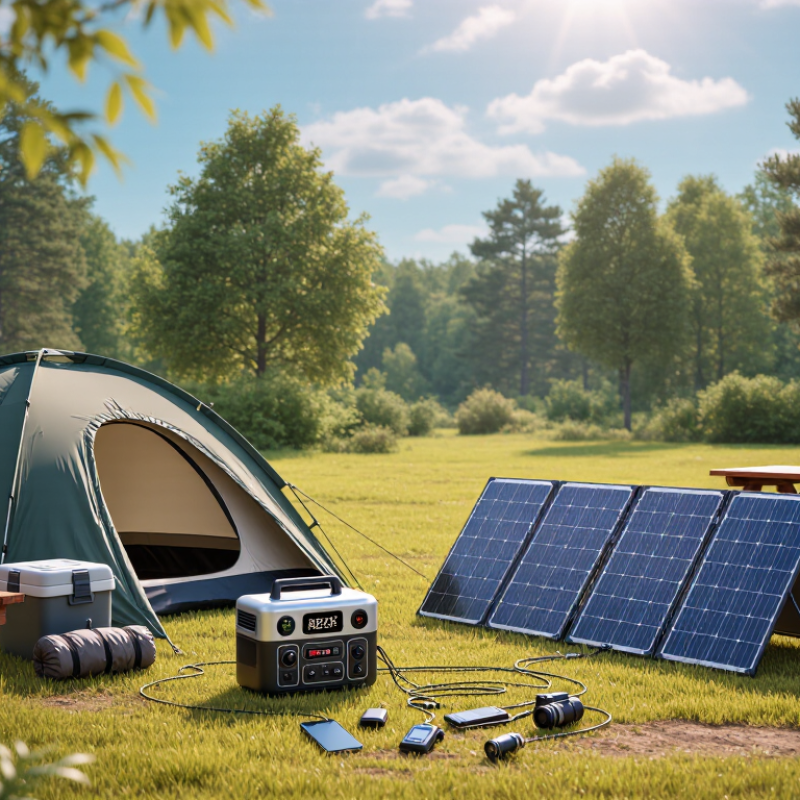
| Portable panel with a power station | 80–200 W panel paired with a 300–1,000 Wh battery | 10–25 kg combined | Multi-day camping with lighting, phones, laptops, cameras, or small low-wattage appliances | 300–800 Wh/day input in good sun | 10–20 minutes | Stores energy for nighttime and provides regulated charging ports | Conversion and battery losses reduce the usable energy; check input limits |
| Direct USB solar charging | 5–20 W practical device charging | 0.3–1.5 kg | Emergency phone charging or topping up a small power bank during daylight | 15–80 Wh/day | 2–5 minutes | Simple system with minimal equipment and low carrying weight | Output can fluctuate, so some devices may stop and restart during passing clouds |
| Solar panel with a charge controller | 50–200 W panel system | 4–16 kg, excluding battery | Charging a 12 V battery used for lights, refrigeration, or other campsite equipment | 150–800 Wh/day | 10–25 minutes | Provides controlled charging and supports larger off-grid electrical systems | Requires compatible voltage, connectors, fuses, and correct battery settings |
| Recommended panel angle | Face the panel toward the sun; adjust during the day | Not applicable | Improving energy collection at a fixed campsite | Often 10–30% better than a poorly oriented panel | 2–5 minutes per adjustment | Improves output without adding more panels | Keep the surface free of leaves, dirt, and shadows from trees or tents |
| Realistic energy planning | Use the panel rating as a maximum, not a guaranteed output | Not applicable | Estimating whether solar power can meet daily camping needs | Actual production depends on sunlight, temperature, shading, angle, and conversion losses | Review once each day | Helps prevent battery depletion and unrealistic charging expectations | Allow extra capacity for cloudy weather and higher-than-expected consumption |