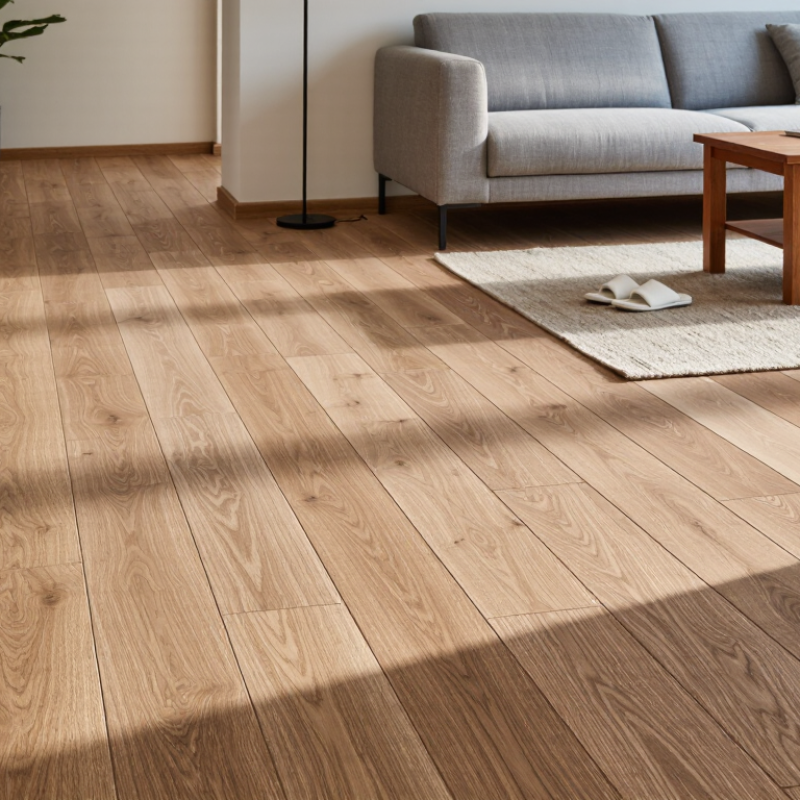
| Layered construction | Laminate planks are manufactured flooring products, typically made with a protective wear layer, a printed decorative layer, a fiberboard core, and a stabilizing backing layer. | The layered structure gives the floor its appearance and helps protect the surface. Materials and construction vary by product. |
| Printed design | A high-resolution image layer creates the appearance of materials such as wood or stone; the surface itself is not a solid wood or stone layer. | It offers a broad range of visual styles without using a full-thickness wood or stone surface. |
| Wear layer | A clear top layer helps resist everyday surface wear, such as scuffs and scratches. Performance depends on the product’s construction and use conditions. | Useful in busy households, but no laminate surface is completely scratch-proof. Use protective pads and keep grit off the floor. |
| Fiberboard core | Many laminate planks use a high-density or medium-density fiberboard core made from wood fibers and binders. | The core provides structure, but swelling can occur if moisture reaches it. Follow the product’s moisture and installation instructions. |
| Click-lock installation | Many planks connect along their edges and are installed as a floating floor, rather than being fixed directly to the subfloor. | This can make installation accessible to experienced DIYers. A flat, clean subfloor and required expansion gaps are important. |
| Moisture performance | Some products have water-resistant features, but protection levels and allowed exposure times differ. Standard laminate is not inherently waterproof. | Wipe spills promptly and check the product’s instructions before using laminate in kitchens, bathrooms, basements, or other moisture-prone areas. |
| Care and cleaning | Routine care generally includes sweeping or vacuuming with a hard-floor setting and cleaning with a lightly damp mop and an approved cleaner. | Avoid standing water, soaking wet mops, and abrasive cleaners unless the flooring instructions specifically allow them. |
| Repair and refinishing | Unlike solid hardwood, laminate generally cannot be sanded and refinished. A damaged plank may need to be replaced, depending on the installation and product design. | Keep spare planks from the same production batch when possible, and review repair guidance before installation. |
| Comfort and sound | Laminate is a hard-surface floor. Underlayment may be required or included, depending on the product and subfloor. | The right underlayment can help with sound and feel, but only use materials permitted by the flooring instructions. |
| A practical choice when | You want a plank-style floor with a wood- or stone-inspired look, a protective surface, and an installation method that may suit a floating-floor project. | Compare wear ratings, warranty terms, moisture guidance, maintenance instructions, and total installed cost before choosing. |