| Weight and stiffness | Carbon fiber composites can provide high stiffness for their weight, but actual performance depends on the fiber direction, resin system, laminate design, and thickness. | Useful when reducing component mass is important and the part can be designed around the material’s directional properties. | Compare the sheet’s areal weight, thickness, laminate construction, and published mechanical data with the requirements of the finished part. |
| Fiber orientation | Unidirectional laminates are strongest and stiffest mainly along the fiber direction. Woven and multi-directional laminates distribute properties across more than one direction. | Choose a directional laminate for loads that are well understood; consider a balanced multi-directional layup when loads come from several directions. | Check the stated fiber orientation and layup schedule. Do not assume that a sheet is equally strong in every direction. |
| Thickness and stiffness | Thickness affects bending stiffness, weight, fit, and edge details. A thicker sheet is not automatically the best choice for every design. | Appropriate when the required stiffness and available space can be met by a standard sheet thickness. | Confirm actual thickness tolerance, flatness, required cut size, and whether the part needs reinforcement or a different laminate. |
| Strength and loading | Strength varies with laminate design and loading type. Impact, holes, cut edges, joints, and concentrated loads can reduce the performance of a finished component. | Suitable for engineered parts where loads and attachment details can be assessed before fabrication. | Review tensile, flexural, and compression data where relevant. For safety-critical parts, use qualified engineering analysis and testing. |
| Temperature and environment | The resin matrix influences service temperature, moisture resistance, and chemical compatibility. Carbon fiber itself does not determine all environmental limits. | Useful when the selected resin system is compatible with the operating environment. | Check the manufacturer’s stated service-temperature limits and compatibility information for heat, moisture, UV exposure, and chemicals. |
| Electrical and galvanic considerations | Carbon fiber is electrically conductive. Direct contact with some metals, especially in the presence of moisture, can increase galvanic corrosion risk. | Suitable where electrical conductivity is acceptable or can be incorporated into the design. | Plan electrical insulation and suitable isolation layers or coatings where contact with dissimilar metals is possible. |
| Fabrication and finishing | Cutting or drilling composite sheets can produce fine dust and may expose fibers at edges. Machining requirements depend on the laminate and finish. | Practical for projects with suitable cutting tools, dust controls, and edge-finishing methods. | Use appropriate dust extraction and personal protective equipment. Follow supplier guidance for cutting, drilling, bonding, and finishing. |
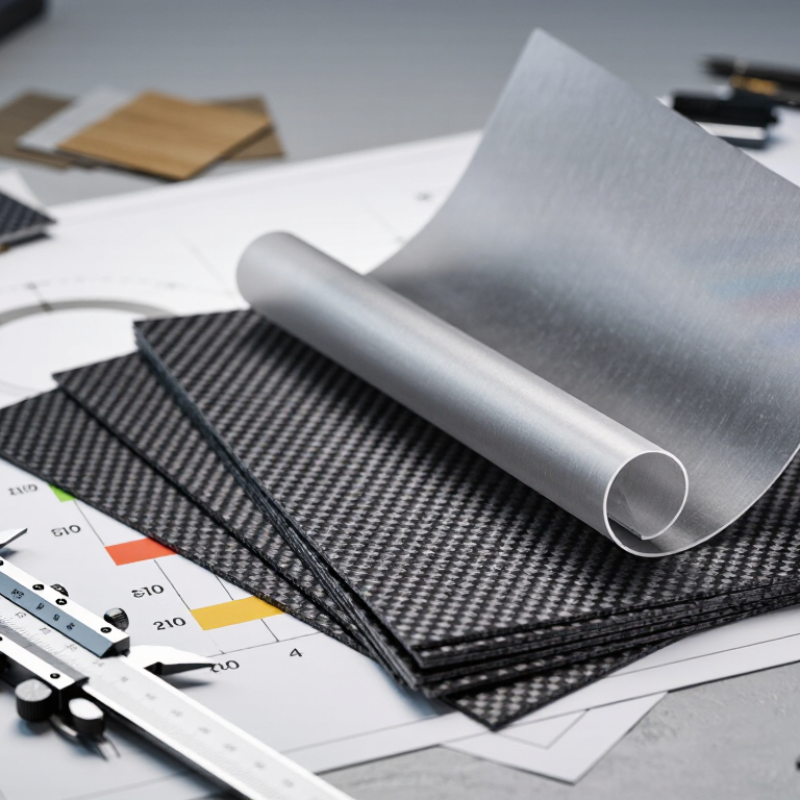
| Appearance and surface finish | Visible weave, surface coating, and gloss vary by sheet construction. A cosmetic surface does not by itself indicate structural performance. | Useful when a lightweight component also needs a distinctive composite appearance. | Specify the required surface finish, visible-side orientation, and acceptable cosmetic defects separately from mechanical requirements. |
| Cost and material efficiency | Material cost depends on thickness, fiber type, laminate construction, finish, and sheet size. Cutting waste can affect the overall project cost. | Most attractive when its weight, stiffness, or other performance benefits justify the material and fabrication costs. | Compare total part cost, including cutting, finishing, fastening, protective measures, and material waste—not just the sheet price. |