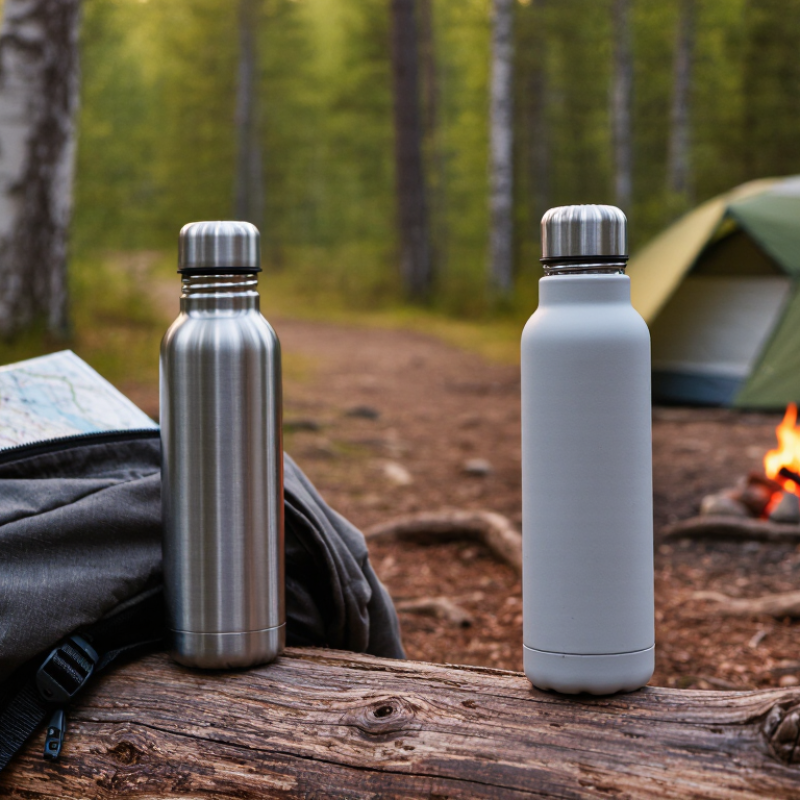
| Typical construction | Rigid, reusable container, commonly made from metal or durable plastic; often designed with a wide body and screw cap. | Usually lightweight, single-use PET plastic with a narrow opening and a screw cap. | Typically double-wall stainless steel with a vacuum-insulated space between the walls. | Flexible plastic reservoir with a drinking tube, carried inside a backpack. | Rigid glass vessel, often protected by a silicone sleeve or fabric cover. |
| Ease of carrying outdoors | Often easy to pack and carry; some designs include a cap loop, pouch, or attachment point. | Very light and convenient, but the bottle can crumple or deform as it is used. | Convenient for day trips, though steel construction and insulation generally make it heavier and bulkier. | Useful when hands-free drinking is important; usually requires a compatible backpack or carrier. | Suitable for careful transport, but its weight and breakability make it less practical for rough activities. |
| Resistance to bumps | Generally a sturdy choice, but resistance to dents, cracks, and leaks depends on the material, cap, and construction. | Can be punctured, crushed, or damaged more easily than most reusable bottles. | Often robust, but the outer steel can dent and the vacuum insulation can be compromised by severe damage. | Flexible and less likely to shatter, but the reservoir or tube can be punctured or damaged. | Can break if dropped or struck, even when covered by a protective sleeve. |
| Temperature retention | Usually limited unless the bottle is specifically double-wall insulated. | Little temperature retention; the drink warms or cools toward the surrounding temperature. | Usually the strongest option here for keeping drinks hot or cold, though performance varies by design and use. | Generally offers little insulation unless used with an insulating sleeve or backpack compartment. | Usually offers little temperature retention; glass itself is not vacuum insulation. |
| Refilling and cleaning | A wide opening on many models makes filling and washing easier; narrow-neck designs can be harder to clean inside. | Can be refilled in some situations, but disposable bottles are not designed for long-term repeated use or thorough cleaning. | A wide-mouth model is easier to clean; narrow openings and complex lids may need extra attention. | Can be awkward to clean and dry, especially the tube and bite valve; follow the manufacturer’s cleaning instructions. | The smooth interior is generally easy to wash, but the bottle needs careful handling during cleaning. |
| Drinking while moving | Usually requires stopping or using both hands unless the cap or drinking system is designed for one-handed use. | Simple to drink from when stopped; usually not hands-free. | Often requires unscrewing or opening a lid, so it is most convenient when stationary. | Designed for hands-free sipping through a tube, making it useful while walking or cycling. | Usually best used when stationary because it requires careful handling. |
| Best suited to | Hiking, camping, and everyday outdoor use when a reusable, relatively rugged container is preferred. | Occasional convenience or situations where a lightweight bottle is needed temporarily. | Trips where keeping a drink hot or cold for longer is a priority. | Long hikes, running, or cycling when frequent hands-free access to water is helpful. | Everyday use or short outings where taste preference and careful handling matter more than impact resistance. |
| Main trade-off | Insulation, weight, and leak resistance vary by model; check the material, cap design, and cleaning instructions. | Less durable for repeated outdoor use and creates more packaging waste when discarded after use. | Can be heavier and may take up more space than a simple single-wall bottle. | Requires a compatible pack and more involved cleaning than a basic bottle. | Heavier and more breakable than most plastic or metal alternatives. |