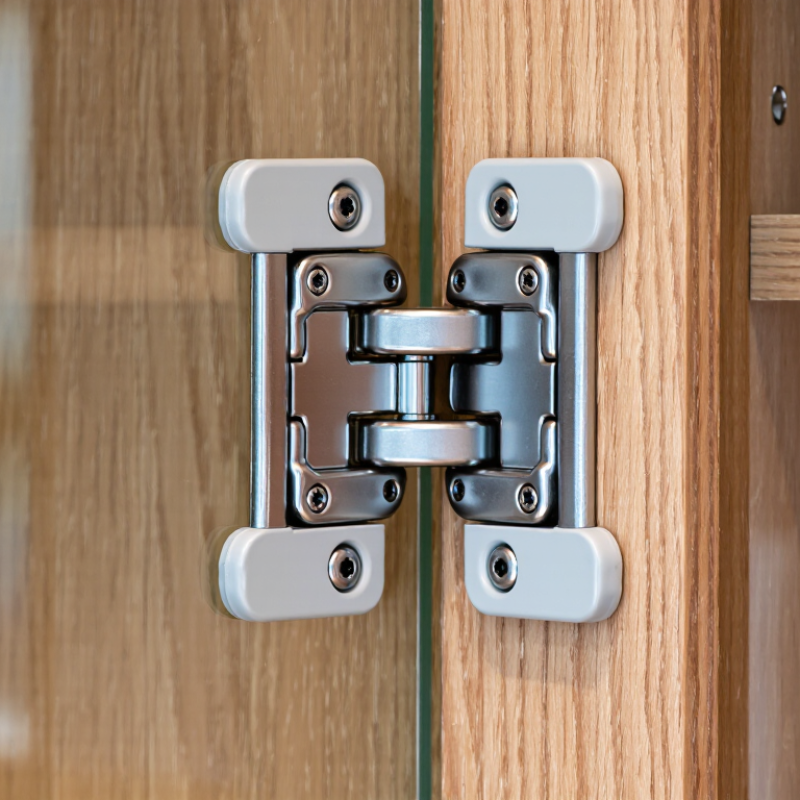
| Hinge body and pivot | Supports the door and lets it rotate open and closed. | Connects the glass-side fitting to a cabinet-side mounting plate or frame. | Often made from plated steel, stainless steel, or zinc alloy; construction varies by hinge design. | Confirm whether the hinge is intended for the door’s thickness, weight, and opening direction. |
| Glass clamp or holder | Grips the edge or face of the glass door and transfers its load to the hinge. | A clamp-style hinge holds the glass with screws and protective liners, usually without requiring a hole in the glass. | Clamp dimensions and compatible glass-thickness ranges vary by model. | Check the manufacturer’s stated glass-thickness range; do not assume clamp hinges fit every glass panel. |
| Protective pads or gaskets | Cushion the glass and help prevent direct contact with hard metal surfaces. | Placed between the glass and the clamp or holder. | Commonly made from rubber, plastic, or another resilient material. | Use the specified liners and keep them clean and correctly positioned to reduce the risk of slipping or damage. |
| Pre-drilled glass hole | Provides an attachment point for hinges designed to use a through-glass fitting. | A bolt or fitting passes through a hole made to the hinge’s required dimensions. | Hole diameter, position, and edge clearance are specific to the fitting and glass design. | Glass holes must be made before tempering. Tempered glass generally cannot be drilled or cut after tempering without breaking. |
| Cabinet-side mounting plate | Anchors the hinge assembly to the cabinet wall, face frame, or cabinet frame. | It does not normally attach to the glass; it connects to the hinge arm on the cabinet side. | May be secured with screws; mounting style depends on cabinet construction. | Use suitable fasteners and a solid fixing point for the cabinet material and expected door load. |
| Fasteners and tightening points | Secure the hinge parts and, on clamp designs, hold the glass in position. | Clamp screws apply pressure through the protective liners; drilled-glass designs use their specified fittings. | Fastener type, size, and tightening method vary by hinge design. | Tighten evenly and follow the fitting instructions. Excessive force can damage glass or its protective pads. |
| Adjustment mechanism | Helps align the door and set its position relative to the cabinet. | Adjustment is usually made at the hinge arm or mounting plate, rather than by altering the glass. | Some concealed cabinet hinges provide lateral, depth, or height adjustment; not all glass hinges offer every adjustment. | Check the available adjustment directions before installation, especially when aligning multiple doors. |
| Closing feature | Controls how the door closes; some hinges close by spring action or provide a soft-close effect. | Closing action operates through the hinge mechanism and does not change the glass-to-hinge connection. | Feature availability depends on hinge type and design. | Choose a closing feature compatible with the door’s size, weight, and intended use. |
| Glass-to-glass connection | Joins a glass door or panel to another glass panel, such as at a corner. | Purpose-designed glass-to-glass hinges use clamps or specified glass fittings on both panels. | Available designs differ in opening angle, panel arrangement, and installation requirements. | Verify the hinge is specifically rated for the panel layout; a glass-to-cabinet hinge is not automatically suitable. |