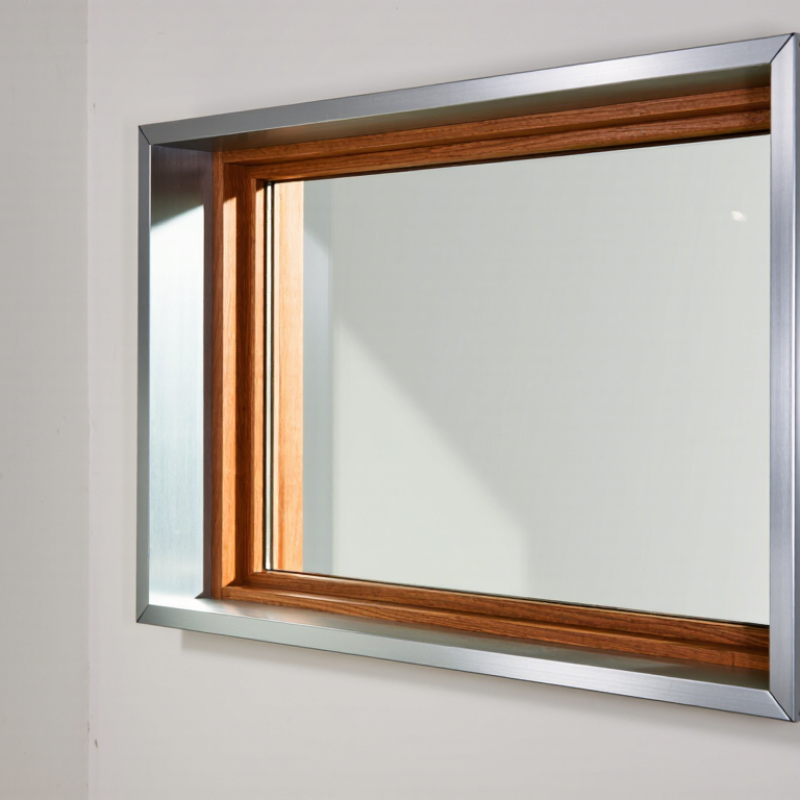
| Typical thermal conductivity | About 0.12 W/(m·K) is a representative value for dry wood; actual values vary by species, density, grain direction, and moisture content. | About 205 W/(m·K) is a commonly cited reference value for aluminum; aluminum alloys vary, and many have lower conductivity than pure aluminum. | Aluminum conducts heat far more readily than wood. The exterior cladding is usually a relatively thin component, but frame design and thermal breaks can affect heat flow through the window. |
| Thermal expansion | Expansion and shrinkage vary with grain direction and moisture changes; movement across the grain is generally greater than along it. | Aluminum’s linear thermal expansion coefficient is approximately 23 × 10−6 per °C. | The materials respond differently to temperature and humidity. Cladding attachment and detailing need to accommodate movement. |
| Moisture response | Wood can absorb or release moisture, causing dimensional changes. Keeping it protected and properly sealed helps reduce moisture-related damage. | Aluminum does not absorb water like wood, though finishes, joints, and surrounding materials still need appropriate drainage and detailing. | The exterior cladding helps shield the wood from weather exposure, while the wood interior remains a natural, moisture-sensitive material. |
| Corrosion and durability | Wood can be durable when protected from prolonged wetting and maintained appropriately; its durability depends on species, finish, and exposure. | Aluminum naturally forms a thin oxide layer. Corrosion can still occur in aggressive environments, and coatings can be scratched or damaged. | Cladding offers an exterior protective layer, but good installation, drainage, and periodic inspection remain important. |
| Maintenance considerations | The interior wood finish may need cleaning and eventual refinishing, depending on use, sunlight, and the finish system. | The exterior surface generally needs routine cleaning and inspection; damaged coatings or joints should be addressed. | Maintenance is often reduced on the weather-facing side compared with fully exposed exterior wood, but it is not eliminated. |
| Appearance and use | Provides a natural interior surface that can be stained or painted. | Provides a durable exterior surface available in varied colors and finishes. | The combination is intended to provide a wood interior appearance with a weather-resistant exterior surface. |
| Window energy performance | Wood’s relatively low conductivity can help limit heat flow through the frame material. | Aluminum’s high conductivity can increase heat flow if it creates a continuous path from exterior to interior. | Do not infer a window’s U-factor from material conductivity alone. Compare tested whole-window ratings, which account for the frame, glazing, spacers, and other design details. |