20% off Demo Text

Top Wholesale Home Theater Seats Suppliers?

Choosing the right Wholesale Home Theater Seats supplier takes more than comparing catalog prices. Buyers need to examine frame construction, upholstery options, reclining mechanisms, carton protection, and replacement-part availability. A chair may look impressive under showroom lighting, but loose stitching or a noisy motor can change the customer experience quickly. Details matter.

For this guide, the named expert and quotation are illustrative, not a verified interview or sourced attribution. Fictional seating procurement specialist Daniel Mercer puts the principle this way: “A reliable supplier proves quality in the parts customers touch—and the service they need later.” That means asking for material samples, clear product specifications, warranty terms, and realistic production timelines. A short video of the reclining mechanism can help, too. Still, samples cannot show every issue. They are a starting point, not a guarantee.

The sections ahead will help importers, retailers, and project buyers compare suppliers with practical questions. We will consider customization, minimum order quantities, shipping protection, communication, and after-sales support. These factors can matter as much as the seat’s finish or cupholder design. Some supplier pages promise broad capabilities without showing much evidence. That deserves a closer look. A careful comparison can reveal which partners are prepared for repeat orders—and which may suit only a small trial.

Top Wholesale Home Theater Seats Suppliers?

Understanding Wholesale Home Theater Seat Suppliers

Understanding Wholesale Home Theater Seat Suppliers

Choosing a wholesale supplier means checking more than the catalog.

Grand View Research valued the global home theater market at about USD 10.5 billion in 2023 and forecast growth through 2030. That figure covers the broader market, not seating alone, so it should not be treated as a seat-sales estimate.

It does suggest that buyers should verify whether a supplier can support changing project needs. Ask for production capacity, minimum order quantities, sample availability, and realistic lead times. Get those details in writing.

Inspect the chair, not just the brochure. Measure seat width, recline clearance, and row spacing against the room plan; a few centimeters can disrupt an aisle. Request upholstery specifications, frame details, load testing records, and warranty terms.

Check how replacement parts are ordered and whether cartons protect the armrests during shipment. Small details matter. A low unit price can become costly if packaging, freight, or assembly requirements were left out of the quote.

One weakness in supplier comparisons is relying too heavily on sample quality; confirm that bulk production uses the same materials and checks. Ask for dated inspection records, then compare them with a production sample before committing.

Supplier Types and Their Product Offerings

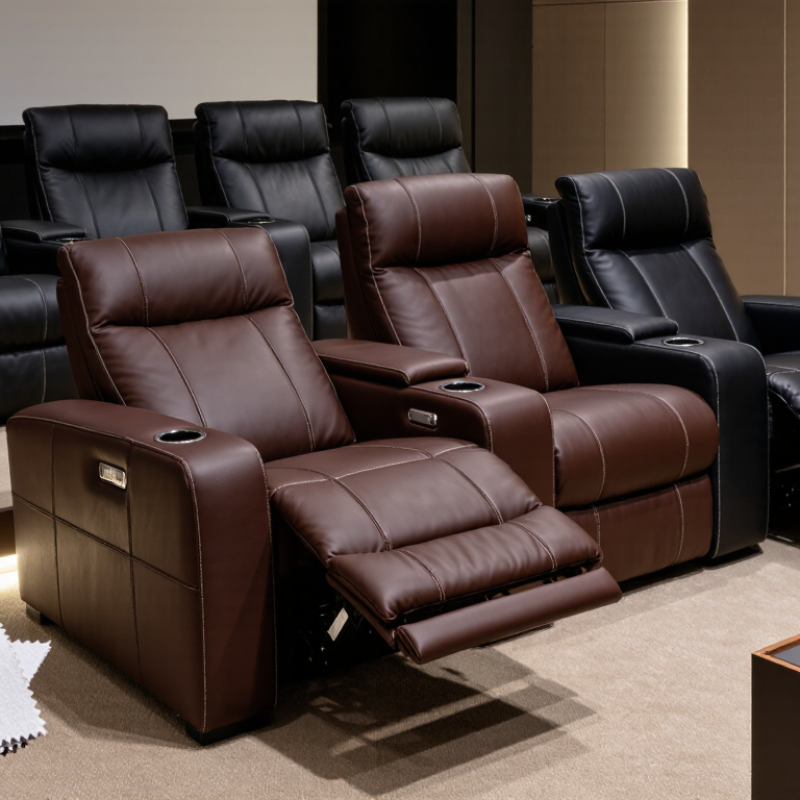
Wholesale Home Theater Seating suppliers generally fall into three groups. Direct manufacturers offer the widest customization, including power recline, wall-hugging frames, cup holders, and stitched upholstery. Contract seating specialists focus on repeatable dimensions, durable mechanisms, and coordinated rows for larger rooms. Distributors usually carry ready-to-ship models, replacement parts, and mixed product lines. Their stock can suit smaller projects, but upholstery and control options may be limited. Fit varies.

Products range from compact two-seat loveseats to tiered rows with shared armrests and USB charging. Ask suppliers for seat width, recline clearance, carton dimensions, fabric abrasion ratings, and spare-parts availability. A power seat needs room behind or beneath its frame; measure the doorway too.

The Motion Picture Association’s 2023 THEME Report recorded $33.9 billion in worldwide theatrical box office, 30% above 2022. That figure signals cinema activity, not home-seat sales, so it should not be treated as a seating-demand forecast.

For accurate comparison, request written specifications and sample upholstery. One detail is easy to miss: advertised dimensions may exclude fully reclined clearance.

Key Criteria for Comparing Suppliers

When comparing wholesale home theater seat suppliers, inspect more than catalog photos. Request frame materials, foam density, upholstery abrasion results, and written load-test records. ANSI/BIFMA X5.4-2020 covers safety and durability testing for public and lounge seating; ask whether comparable methods are used for theater recliners. Small details matter. Sit in a sample, extend the footrest repeatedly, and listen for uneven movement or loose joints. Ask how replacement parts are handled after delivery, not only during the warranty period.

Capacity and consistency also deserve evidence. Grand View Research estimated the U.S. home furniture market at $139.32 billion in 2023, illustrating the scale of the category, but market growth alone says little about an individual supplier. Request production lead times, defect-rate records, carton dimensions, and inspection procedures. Compare like with like: a low quote may exclude freight, protective packaging, or custom upholstery. Check whether colors and stitching stay consistent across separate production runs. A spreadsheet can still miss a wobbly armrest or a slow service reply. That is a real weakness in remote sourcing, so order a pre-production sample and document any changes before approving volume.

Top Wholesale Home Theater Seats Suppliers? - Key Criteria for Comparing Suppliers

Comparison Criterion What to Compare Evidence to Request Why It Matters
Product Range and Configuration Seat styles, row layouts, console options, power or manual recline, and available upholstery and color choices. Current product specifications, configuration drawings, and a written list of available options. A clear range helps confirm that the supplier can meet the project’s layout and finish requirements.
Dimensions and Installation Fit Overall width, depth, and height; reclined footprint; row spacing; wall clearance; and access requirements. Dimensioned drawings showing both upright and fully reclined positions, plus installation guidance. Seat measurements affect room capacity, circulation, sightlines, and whether seats can be installed through doors and corridors.
Frame and Mechanism Frame materials, recliner mechanism type, moving parts, operating method, and stated load capacity. Material specifications, mechanism details, load-capacity documentation, and available test reports. Construction and mechanism details help buyers assess expected use, maintenance needs, and suitability for the intended setting.
Upholstery and Wear Upholstery material, cleaning instructions, color consistency, and abrasion-test results where available. Material samples, care instructions, and test results that identify the test method and material tested. Comparisons are meaningful only when materials and test methods are clearly identified; cleaning needs also vary by upholstery type.
Safety and Compliance Applicable fire, electrical, and product-safety requirements for the destination market and intended installation. Relevant certificates or test reports, with the product model, tested component, standard, and report date identified. Requirements differ by market and product configuration, so buyers should confirm that documentation applies to the exact items being purchased.
Customization and Samples Options for upholstery, colors, embroidery, consoles, accessories, and project-specific layouts. Physical samples, approved finish references, and a written specification for the final configuration. Approved samples and specifications reduce the risk of differences between the selected finish and delivered goods.
Minimum Order and Lead Time Minimum order quantity, production lead time, sample lead time, and how schedules change with customization or order size. A dated quotation and production schedule stating quantities, milestones, and assumptions. Lead times and minimum quantities vary by product and order; written schedules make supplier comparisons more reliable.
Wholesale Pricing and Total Cost Unit price by quantity, customization charges, packaging, tooling if applicable, payment terms, and shipping costs. An itemized quotation with currency, validity period, order quantity, delivery terms, and included or excluded charges. The lowest unit price may not represent the lowest delivered cost; compare quotations on the same specification and delivery basis.
Packaging and Freight Readiness Carton dimensions and weight, protective packaging, shipment method, and estimated shipment volume. Packing specification, carton list, and shipment details for the quoted order quantity. Packed dimensions and weights help buyers estimate freight, handling requirements, and the space needed for receiving and storage.
Warranty, Parts, and After-Sales Support Warranty duration and coverage, exclusions, replacement-part availability, claim process, and support response arrangements. Written warranty terms, parts list, and instructions for reporting defects or requesting service. Clear support terms help buyers understand coverage and plan for maintenance over the life of the seating.
Quality Control and Order Consistency Inspection steps, production checks, handling of defects, and methods for keeping finishes and specifications consistent across a bulk order. Quality-control procedure, inspection records where available, and agreed acceptance criteria in the purchase documents. Documented acceptance criteria make it easier to inspect deliveries and resolve specification or workmanship issues.

Comparison note: Supplier terms, product specifications, and regulatory requirements vary. Request current documentation and compare quotations using the same seat configuration, quantity, destination, and delivery terms.

Leading Suppliers and Their Distinctive Strengths

Wholesale home theater seating suppliers often stand out through production capacity, customization, or dependable quality control. A factory-focused supplier may handle large orders and offer consistent frame construction across multiple shipments. Ask for load ratings, frame materials, and inspection records, not just polished product photos. Details matter.

A customization-led supplier can adapt seat width, recline style, upholstery, and console features for different room layouts. For example, a narrow row may need slimmer armrests to preserve aisle space. Request a sample swatch and a written specification before approving a bulk order. Colors can look different under showroom lighting.

Some suppliers are especially strong in packaging and logistics. They may provide carton dimensions, pallet plans, and clear lead-time updates, which help buyers coordinate warehouse space and installation crews. Confirm how damaged components are reported and replaced. Delays still happen. A supplier’s response process can reveal more than its sales pitch. Compare quoted specifications carefully; small differences in foam density or mechanism design may affect comfort over time. No supplier gets every detail right, and buyers should leave room for a little rechecking.

Wholesale Home Theater Seating: Supplier Strengths to Compare

A practical buyer-evaluation rubric for comparing suppliers on capabilities that matter in wholesale orders.

Scores are illustrative planning weights on a 1–5 scale, not verified ratings of specific suppliers or market research. Confirm customization options, order minimums, lead times, warranty terms, and upholstery choices directly with each supplier.

Ordering, Shipping, and After-Sales Support

For wholesale home theater seats, confirm more than the unit price. Ask suppliers to state carton dimensions, packed weight, production lead time, and minimum order quantity in writing. Request a sample or detailed photos of stitching, recliner mechanisms, and cable-access points before approving a large run. A small mismatch in color or seat width can complicate installation. It is easy to overlook.

Shipping deserves equal attention. The American Trucking Associations’ 2024 American Trucking Trends report says trucks carried 72.7% of U.S. domestic freight by weight in 2023. For bulky seating, clarify whether the quote covers delivery to a warehouse, a loading dock, or the final site. Confirm palletization, liftgate needs, appointment fees, and how visible transit damage must be documented. Take photos before discarding packaging. This step can save time, though it does not prevent every dispute.

After-sales terms should name the warranty period, covered components, replacement-part process, and response time. Salesforce’s 2023 State of the Connected Customer report found that 88% of surveyed customers consider experience as important as products or services. That makes clear support procedures commercially relevant, not just courteous. Ask who handles a faulty motor and whether parts can ship separately. I would still leave room for uncertainty: written policies can be vague, so test them with specific scenarios before placing the order.