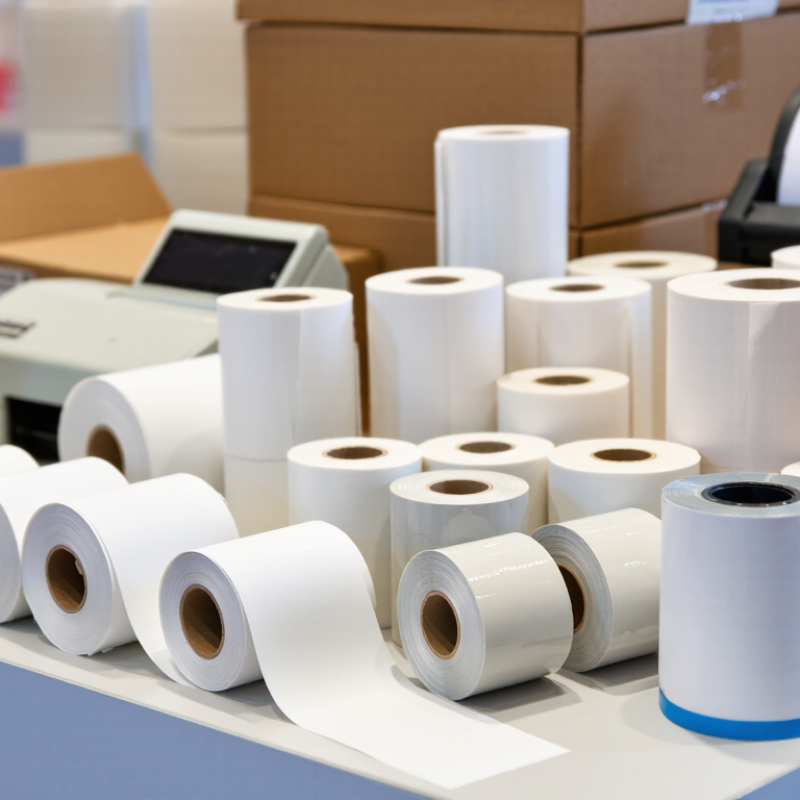
| Standard direct thermal receipt paper | A heat-sensitive coating darkens where the printer’s thermal head applies heat. It requires no ink or toner. | Often 57–58 mm or 80 mm; roll diameter and core size vary by printer. | Retail and restaurant receipts, point-of-sale transactions, and payment terminals. | Check the printer’s specified width, maximum roll diameter, core size, and paper compatibility. Image life can be affected by heat, light, friction, and some chemicals. |
| Top-coated thermal paper | Has a protective layer over the heat-sensitive coating. The added layer can help resist moisture, oils, abrasion, or handling, depending on the paper’s formulation. | Available in receipt and label-roll widths; exact sizes depend on the printer and application. | Receipts or records that may be handled frequently or exposed to more demanding conditions. | “Top-coated” does not mean permanently archival or waterproof. Confirm the product’s tested resistance and the printer’s compatibility. |
| Direct thermal label stock | Uses heat-sensitive face material, typically supplied as labels on a roll. Many versions include an adhesive and release liner. | Widths vary widely with label size and printer; narrow shipping and product labels are common. | Shipping, inventory, shelf, food-date, and identification labels. | Match label width, gap or black-mark sensing, roll direction, core, and outer diameter to the printer. Direct thermal labels can fade with prolonged heat, light, or friction. |
| Linerless thermal paper | Direct thermal material with a release surface and adhesive, supplied without a separate backing liner. The roll can be cut to the required label length. | Roll widths are application-specific and must match the printer and cutter. | Variable-length receipts or labels, including some food-service and logistics workflows. | Requires a printer designed for linerless media. Check adhesive behavior, cutter compatibility, and whether the media can be repositioned or removed cleanly. |
| Synthetic direct thermal media | Uses a synthetic face material rather than conventional paper, with a heat-sensitive imaging layer. | Commonly supplied in application-specific label widths rather than one standard roll size. | Labels needing greater tear or moisture resistance than ordinary paper labels can provide. | Resistance varies by material and coating. Verify printer compatibility, print settings, adhesive requirements, and environmental performance. |
| Ticket and entry thermal rolls | Direct thermal paper converted into rolls for ticket printers; some formats include marks or other features for printer sensing. | Width, core, and roll diameter depend on the ticket printer; narrower ticket formats are common. | Queue, event, parking, and transport tickets. | Confirm sensing method, ticket length, roll winding direction, and any required security or durability features. |
| Kiosk and ATM thermal rolls | Direct thermal paper supplied in larger rolls for printers designed for unattended or high-volume use. | Widths and diameters vary by equipment; some systems use wider media than standard receipt printers. | Self-service kiosks, information terminals, and automated transaction records. | Check the machine’s maximum roll diameter, core, width, paper weight, and loading requirements. Consider storage conditions and the required readability period. |