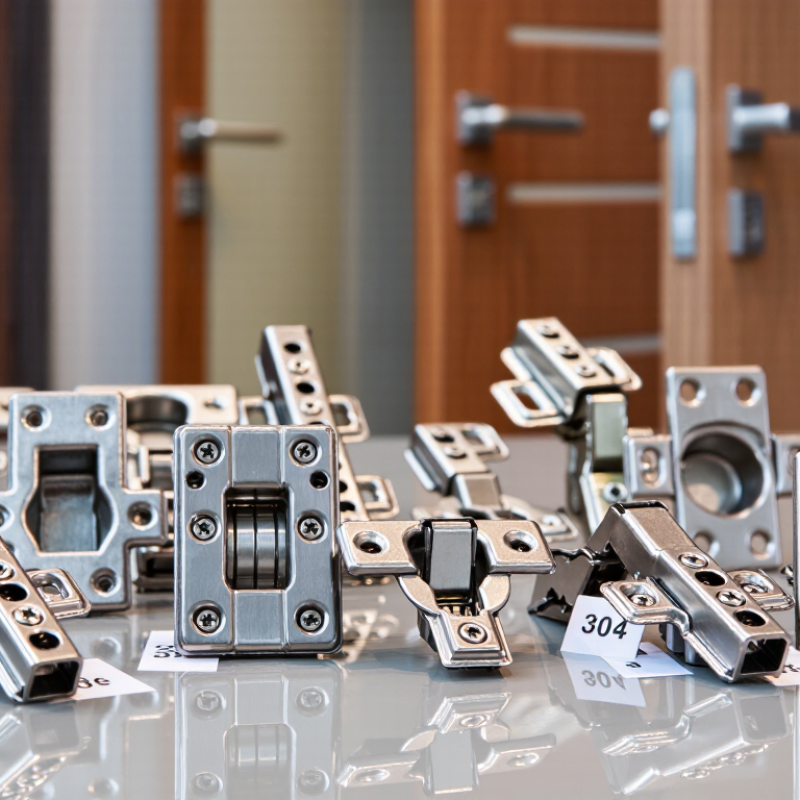
| Basic Definition | A mechanical bearing device that connects a door to its frame and allows controlled rotation around a hinge pin. | The hinge transfers the door weight and operating forces to the frame while maintaining alignment. |
| Most Common Stainless Steel Grades | AISI 304 for general indoor and outdoor use; AISI 316 for marine, coastal, chemical, and high-chloride environments; AISI 201 for lower-cost indoor applications. | The grade affects corrosion resistance, service life, cost, and suitability for demanding environments. |
| Typical Hinge Types | Butt hinges, ball-bearing hinges, spring hinges, continuous hinges, lift-off hinges, weld-on hinges, and concealed hinges. | Different designs address load distribution, self-closing requirements, security, installation method, and appearance. |
| Common Door Hinge Sizes | Typical butt-hinge heights are approximately 75 mm, 100 mm, 102 mm, 114 mm, or 127 mm; common widths are approximately 63 mm to 102 mm. | Correct dimensions help match the hinge to the door thickness, frame preparation, screw pattern, and required load rating. |
| Load Capacity | Light-duty hinges may support lightweight interior doors, while heavy-duty ball-bearing or continuous hinges are used for heavier commercial and industrial doors. Capacity must be confirmed from the product test rating. | Door weight, width, frequency of use, number of hinges, fasteners, and installation quality all influence actual performance. |
| Recommended Hinge Quantity | Two hinges are commonly used on light interior doors; three or more are often specified for taller, heavier, high-use, fire-rated, or security doors. | Additional hinges can improve weight distribution and reduce sag, but the manufacturer’s installation instructions should control. |
| Surface Finishes | Brushed satin, polished, matte, bead-blasted, and passivated finishes are commonly available. | The finish influences appearance, cleanability, surface protection, and resistance to visible fingerprints or scratches. |
| Corrosion Resistance | 304 stainless steel generally suits normal indoor and outdoor conditions; 316 stainless steel provides improved resistance to chlorides and marine exposure. | Stainless steel forms a protective chromium-oxide film, but contamination, poor drainage, salt, and harsh chemicals can still cause staining or corrosion. |
| Bearing Options | Plain bearing, washer bearing, ball bearing, and concealed bearing arrangements are commonly used. | Ball-bearing and other low-friction designs are useful for heavy doors and frequent traffic because they reduce operating resistance. |
| Fastener Compatibility | Stainless steel screws are typically selected for stainless steel hinges; fastener size and thread type depend on the door and frame material. | Compatible fasteners reduce galvanic corrosion risk and help maintain the required pull-out and shear strength. |
| Typical Applications | Residential entrances, commercial buildings, hospitals, food-processing areas, hotels, schools, public facilities, marine locations, and industrial enclosures. | Stainless steel is selected where durability, hygiene, moisture resistance, and a clean architectural appearance are important. |
| Hygiene and Cleanability | Smooth stainless steel surfaces can be cleaned with suitable neutral detergents and soft materials. | The material is non-porous and easy to maintain, making it suitable for healthcare, catering, and food-related environments. |
| Standards and Testing | Depending on the market and application, buyers may request testing or compliance related to architectural hardware, fire doors, accessibility, corrosion resistance, and cycle durability. | Verified testing provides evidence that the hinge meets performance requirements rather than relying only on material descriptions. |
| Supplier Qualification Criteria | Material certificates, dimensional drawings, load ratings, inspection records, finish samples, quality-control procedures, and traceability documentation. | These documents help purchasers compare suppliers objectively and confirm consistency between samples and production batches. |
| Customization Options | Custom height and width, hole patterns, corner profiles, thickness, pin design, finish, bearing type, and packaging are commonly available. | Customization allows the hinge to fit special doors, frames, architectural requirements, and installation constraints. |
| Maintenance Requirements | Inspect screws and alignment periodically, remove corrosive deposits, and lubricate only when recommended for the specific bearing design. | Routine maintenance helps prevent noise, binding, loose fasteners, premature wear, and door sag. |