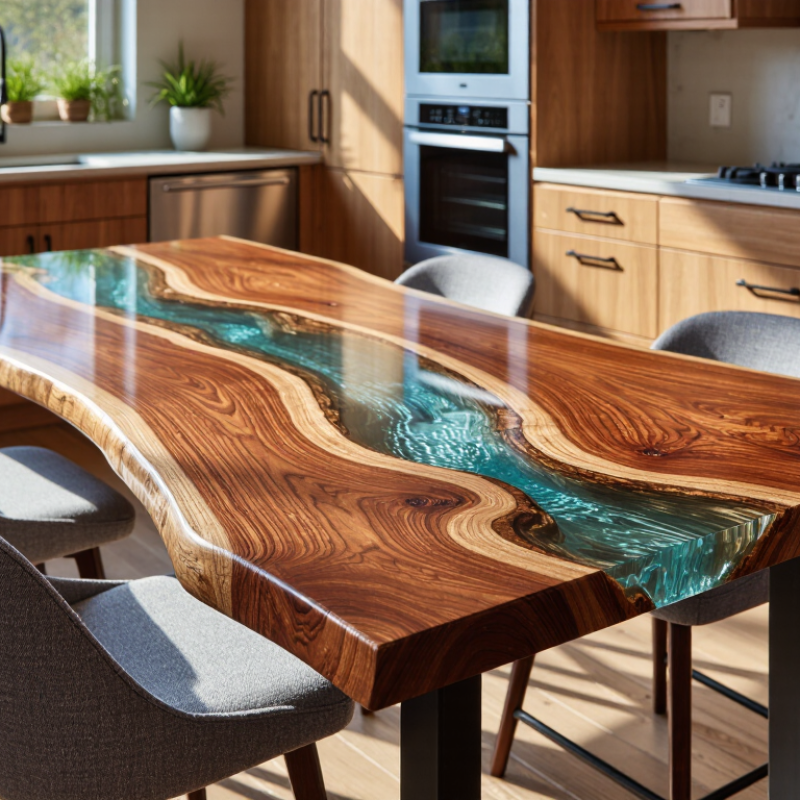
| Epoxy Resin System | Two-component casting epoxy consisting of resin and hardener | Mix ratio: commonly 1:1 or 2:1 by volume
Working time: usually 20–60 minutes, depending on formulation and temperature | Encapsulates wood, fills natural voids, and creates a clear or colored table surface | Accurate proportioning, thorough low-shear mixing, controlled temperature, and complete bubble removal | Request the technical data sheet, mix-ratio instructions, working-time information, and cured-surface test samples |
| Deep-Pour Resin | Low-viscosity epoxy formulated for thicker pours | Typical single-pour depth: approximately 25–50 mm, depending on the product and conditions | Fills river-table channels, large knots, and deep gaps while reducing excessive heat buildup | Layered pouring, temperature monitoring, staged curing, and careful control of exothermic heat | Confirm the manufacturer’s maximum pour depth, recommended ambient temperature, and recoat window |
| Tabletop Wood | Kiln-dried hardwood slabs or reclaimed structural timber | Target moisture content: generally about 6–10% for interior furniture, adjusted for local climate | Provides structural support, natural grain, color variation, and the main visual character of the table | Stable boards, properly acclimatized timber, sound grain, repaired defects, and accurately machined edges | Ask for moisture readings, wood species, slab thickness, drying method, and photographs of both faces |
| Wood Preparation | Planing, sanding, crack cleaning, and sealing of porous surfaces | Common sanding sequence: progressive abrasive grades, often finishing around P180–P320 before coating | Improves resin adhesion, reduces trapped air, and creates a level surface for final finishing | Clean voids, stable joints, sealed end grain, even thickness, and no loose bark or contaminated areas | Inspect close-up images for dust, bark separation, open cracks, uneven edges, and resin-starved areas |
| Pigments and Colorants | Opaque pigments, transparent dyes, mica powders, or mineral-style additives | Usage: must remain within the resin system’s stated loading limit to preserve curing performance | Creates river effects, solid colors, translucent depth, stone-like patterns, or custom visual accents | Even dispersion, consistent color between pours, controlled opacity, and compatibility with the epoxy chemistry | Request a cured color sample and confirm whether the colorant is suitable for epoxy and indoor furniture use |
| Reinforcement and Support | Embedded metal rods, underside battens, breadboard ends, or concealed support frames | Design principle: reinforcement should stabilize movement without preventing normal seasonal wood expansion | Reduces warping risk and supports wide slabs or tables with large resin-filled openings | Correctly positioned supports, clean recesses, concealed fasteners, and allowance for wood movement | Review underside photographs, support material, attachment method, and the supplier’s approach to wood movement |
| Surface Finish | UV-resistant clear coat, hardwax oil, polyurethane, or compatible furniture coating | Finish goals: stain resistance, abrasion resistance, suitable gloss level, and easier maintenance | Protects the cured epoxy and wood from routine spills, moisture, scratches, and household wear | Uniform sheen, smooth edges, no fisheyes, no sanding swirls, and fully cured coating before shipment | Ask for the finish type, maintenance instructions, curing time, repair process, and resistance-test information |
| Edge Treatment | Rounded, chamfered, live, or square edge profile | Common comfort detail: a small eased or rounded edge is often used on dining surfaces | Improves handling comfort, reduces sharp corners, and affects the table’s visual style | Continuous profile, symmetrical machining, smooth hand-sanding, and consistent edge finish around the perimeter | Specify edge dimensions, corner radius, profile drawings, and photographs taken from multiple angles |
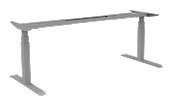
| Base and Hardware | Powder-coated steel, stainless steel, solid wood, or engineered support structures | Key factors: load capacity, corrosion resistance, dimensional stability, and floor protection | Transfers tabletop weight safely and establishes legroom, height, and overall table stability | Accurate welds or joinery, level feet, concealed fasteners, rigid connections, and carefully protected surfaces | Confirm base dimensions, material thickness, load rating, assembly method, and replacement-hardware availability |
| Curing and Workshop Conditions | Clean, dry, temperature-controlled production environment | Typical working range: many epoxy systems perform best around 20–25°C, subject to the product data sheet | Controls viscosity, curing speed, surface quality, and the likelihood of bubbles or blush | Dust control, stable humidity, level casting surface, documented cure periods, and protected post-cure storage | Request production-condition details, curing schedule, quality-control photographs, and a final inspection checklist |
| Dimensional Accuracy | Finished tabletop length, width, thickness, and flatness | Important measurements: overall dimensions, diagonal squareness, thickness consistency, and underside flatness | Ensures compatibility with the intended room, base, seating arrangement, and installation location | Use of templates, calibrated tools, level checks, controlled machining, and documented final measurements | Provide a dimensioned drawing and require final measurements before dispatch |
| Packaging and International Delivery | Protective foam, corner guards, moisture-resistant wrapping, and reinforced crate packaging | Critical protection: secure immobilization, impact resistance, moisture control, and clear handling labels | Reduces the risk of scratches, edge damage, movement, and moisture exposure during long-distance transport | Custom-fit packaging, photographic packing records, shock protection, and separate protection for detachable bases | Confirm shipping dimensions, gross weight, insurance coverage, inspection procedure, and damage-claim terms |
| Supplier Documentation | Material specifications, care guide, warranty terms, and compliance documents | Useful records: resin technical data sheet, wood moisture record, finish details, packing list, and inspection report | Supports traceability, installation, maintenance, and resolution of quality issues after delivery | Clear documentation, consistent specifications, transparent tolerances, and written after-sales procedures | Check whether all documents match the final product, selected materials, dimensions, and delivery conditions |
| Sustainability Considerations | Responsibly sourced wood, reclaimed timber, low-waste fabrication, and repairable components | Assessment areas: wood origin, offcut utilization, coating emissions information, packaging materials, and product lifespan | Helps reduce material waste and supports longer service life through repair and refinishing | Traceable timber information, efficient cutting plans, reusable packaging options, and replaceable hardware | Request wood-origin information, recycled-content details where applicable, packaging policy, and repair options |