| 1 | Food-Safety Management | A documented HACCP-based food-safety system, supported by a valid ISO 22000, FSSC 22000, BRCGS, or equivalent certification where applicable. | Reduces biological, chemical, and physical hazards across raw-material handling, processing, packaging, and storage. | Current certificate, audit report, hazard-control plan, and corrective-action records. |
| 2 | Raw-Material Control | Approved suppliers, incoming inspection, allergen declarations, and traceability for onions, flour or starch, edible oil, cheese seasoning, and packaging materials. | Consistent raw materials are essential for ring shape, adhesion, flavour, colour, and shelf stability. | Supplier list, specifications, certificates of analysis, allergen controls, and traceability test results. |
| 3 | Ring Shape and Coating Uniformity | Controlled forming, battering, breading, and sieving processes with defined specifications for diameter, thickness, coating coverage, and breakage rate. | Uniform pieces deliver predictable cooking performance and a consistent consumer experience. | Product specification, in-process inspection records, sample measurements, and defect-rate data. |
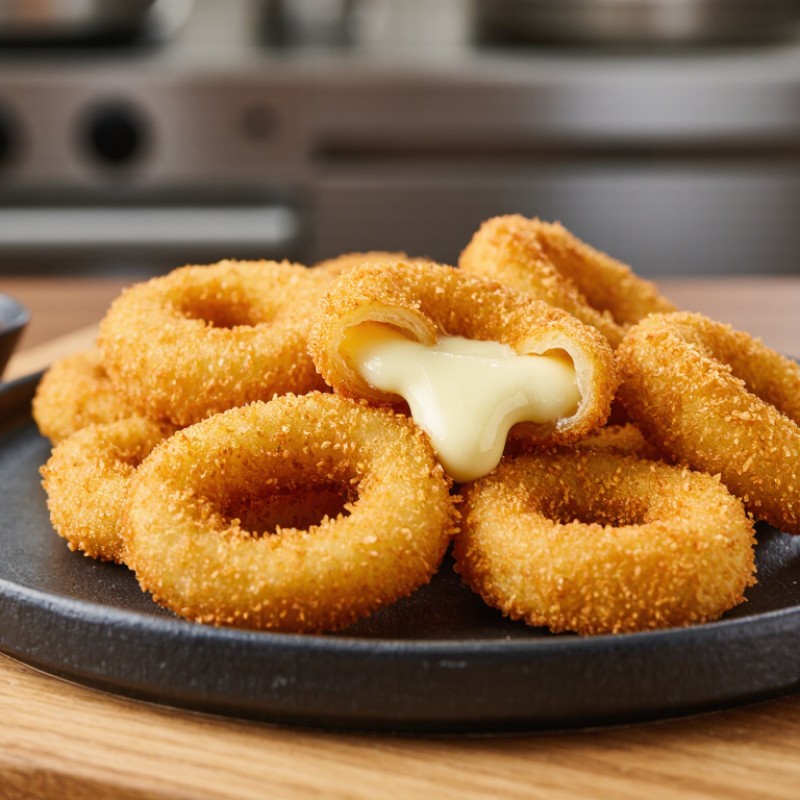
| 4 | Cheese-Flavour Performance | A controlled seasoning system with a defined cheese flavour profile, powder adhesion standard, salt level, and colour specification. | Stable flavour intensity and even seasoning help reduce batch-to-batch variation. | Seasoning formula approval, sensory evaluation records, ingredient specifications, and batch comparison samples. |
| 5 | Process and Frying Control | Monitored batter temperature, frying temperature, residence time, oil quality, filtration, and changeover procedures. | Proper process control supports crispness, colour, flavour, and food-safety compliance. | Process-control charts, oil-polar-compound or equivalent testing records, and equipment-maintenance logs. |
| 6 | Moisture, Texture, and Shelf Life | Validated moisture and water-activity controls, protective packaging, and real-time or accelerated shelf-life testing for the intended storage conditions. | Maintains crunchiness and limits quality deterioration during transportation and storage. | Water-activity results, texture testing, shelf-life protocol, packaging-barrier data, and retention samples. |
| 7 | Testing and Quality Assurance | Routine testing for microbiology, allergens, foreign materials, net weight, packaging integrity, and applicable chemical contaminants. | Independent verification confirms that finished products meet legal and customer specifications. | Recent laboratory reports, calibration records, test methods, and third-party inspection results. |
| 8 | Production Capacity and Flexibility | Documented capacity for forming, coating, frying or baking, seasoning, and packing, with changeover capability for different specifications. | Supports stable supply, trial orders, seasonal demand, and private-label or food-service requirements. | Production-flow chart, equipment list, monthly capacity statement, lead-time history, and planned-maintenance schedule. |
| 9 | Packaging and Export Readiness | Packaging suitable for the product’s moisture and oxygen sensitivity, correct date coding, export documentation, and compliance with the destination market. | Good packaging and documentation protect product quality and reduce customs or receiving delays. | Packaging specification, carton and pallet details, label artwork, product dossier, and export-document samples. |
| 10 | Traceability and Customer Support | A documented lot-code system with rapid recall capability, complaint handling, corrective action, product development, and technical support. | Strong after-sales systems demonstrate operational maturity and protect long-term supply relationships. | Mock-recall results, complaint-response procedure, corrective-action reports, technical data sheets, and sample-development records. |