China Top 10 Fitness Tracker Watches Manufacturers?
China has become a major production and innovation center for Fitness Tracker Watches. Its manufacturers serve global brands, retailers, hospitals, sports teams, and everyday users. The market now includes established technology companies, specialist wearable developers, and experienced original equipment manufacturers.
Industry data shows why this sector deserves careful attention. IDC’s Worldwide Quarterly Wearable Device Tracker reported approximately 537.9 million wearable devices shipped globally in 2024, reflecting strong annual growth. Counterpoint Research also reported that China’s smartwatch market grew by about 23% in 2024, even while global demand remained uneven. These figures suggest meaningful opportunity, but they do not guarantee consistent product quality.
This guide reviews China’s top 10 Fitness Tracker Watches manufacturers through practical purchasing criteria. These include sensor accuracy, battery performance, software stability, waterproof testing, production capacity, certifications, and after-sales support. A good device should record a morning walk reliably, remain comfortable during sleep, and synchronize data without repeated connection failures. Small details matter.
The ranking is not an official industry standard. It combines market visibility, manufacturing experience, technology capability, export activity, and publicly available company information. Some manufacturers disclose limited data, so comparisons require caution. That limitation is worth acknowledging.
Readers should also distinguish between a factory and a consumer brand. A factory may produce excellent hardware but offer weak application support. Conversely, a recognized brand may outsource much of its production. Reviewing both sides creates a more realistic picture for importers, distributors, and private-label buyers seeking dependable Fitness Tracker Watches from China.
What Defines a Leading Fitness Tracker Watch Manufacturer in China?
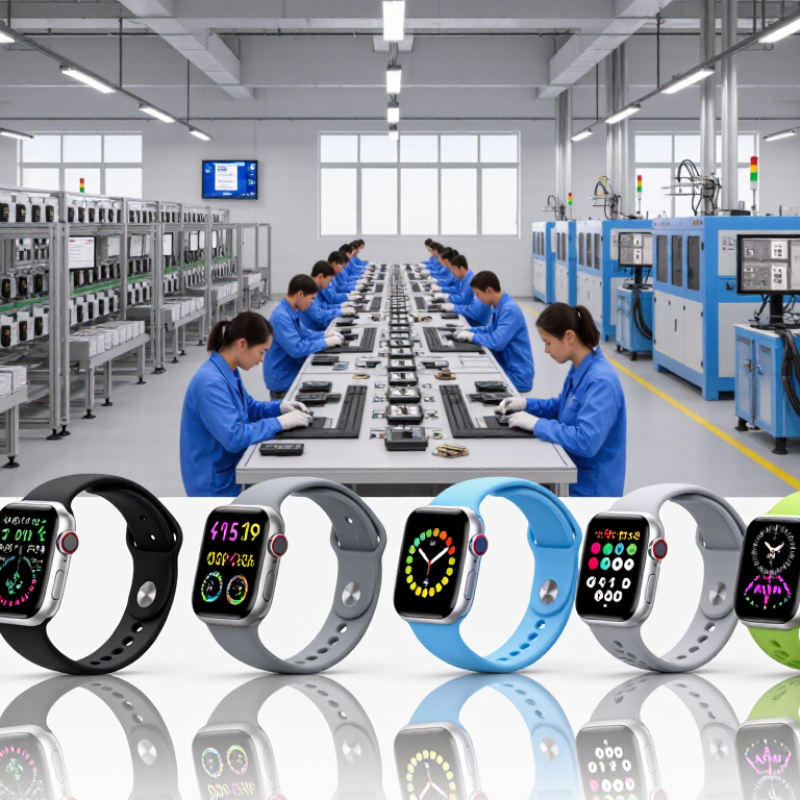
A leading Chinese fitness tracker watch manufacturer is defined by more than factory capacity. It must convert health-related requirements into stable, testable products. IDC’s Worldwide Quarterly Wearable Device Tracker reported 537.7 million wearable-device shipments globally in 2024, an 11.1% annual increase. This growth raises buyer expectations for accuracy, comfort, and dependable software.
Strong manufacturers show sensor calibration records, battery-cycle results, waterproof testing, and traceable quality checks. They test heart-rate readings during walking, interval training, and recovery, not only in a laboratory. Firmware updates should improve performance without creating new failures. App data protection also matters. Counterpoint Research reported strong growth in China’s smartwatch market during early 2024, increasing pressure on suppliers to deliver quickly. Speed helps. It can also hide weak verification.
Look for evidence, not polished samples.
Tips: Ask for production audit reports, sample test data, and failure-rate records. Check whether the supplier can support firmware updates after delivery. Request independent verification for health-related functions, because marketing claims are not clinical proof. A manufacturer that admits measurement limits may be more reliable than one promising perfect accuracy. Even experienced buyers sometimes overlook long-term app support, which can quietly determine whether a watch remains useful after the first year.
China’s Top 10 Fitness Tracker Watch Manufacturers
China’s Top 10 Fitness Tracker Watch Manufacturers
China’s top 10 fitness tracker watch manufacturers usually stand out through production depth, testing discipline, and flexible customization. The strongest factories often support heart-rate tracking, sleep analysis, step counting, GPS functions, and water-resistant designs. They also provide app integration, sample development, and stable mass production. In practice, factory location matters. Shenzhen suppliers often respond quickly to hardware changes, while factories in coastal manufacturing zones may offer stronger assembly capacity. A reliable manufacturer should share audit records, product specifications, testing reports, and clear delivery schedules. Unclear answers deserve caution.
Tips: Request a working sample before placing a large order. Test charging time, screen brightness, sensor consistency, strap comfort, and Bluetooth stability. Ask how rejected units are handled. Small details reveal factory discipline.
Professional buyers should compare these ten manufacturers by more than price. Check their experience with similar watch models, firmware updates, packaging control, and after-sales communication. Compliance documents should match the destination market and product claims. Battery safety also needs careful verification. A low quotation can hide weak components, unstable software, or expensive rework. No supplier is perfect. Even experienced factories can miss a minor sensor error during a rushed inspection. A second sample review may prevent a larger problem. This shortlist should support careful verification, not replace it.
Core Products and Technologies Offered by Each Manufacturer
China’s leading fitness tracker watch manufacturers offer more than step counting. One focuses on slim watches with AMOLED displays, optical heart-rate sensors, and continuous blood oxygen estimates. Another develops rugged models with GPS, altimeters, and water resistance for hiking or swimming. Several factories provide compact bands with sleep tracking, menstrual health tools, and week-long battery performance.
Core technologies vary across the group. Some manufacturers build multi-sensor platforms using accelerometers, gyroscopes, skin-temperature sensors, and improved heart-rate algorithms.
Others specialize in low-power chips, magnetic charging systems, or lightweight aluminum cases. Many also support Bluetooth calling, notification control, and companion apps that display daily trends through simple charts.
Accurate GPS matters.
Manufacturing capability is another key difference. Experienced suppliers often combine in-house design, injection molding, firmware development, and automated testing. They may also offer OEM and ODM services, allowing buyers to adjust straps, screens, software language, and packaging.
However, health readings should not be treated as medical diagnoses. Sensor accuracy can change with loose fit, skin movement, or exercise intensity. Some published battery claims also appear optimistic in real use. Independent testing, app security reviews, and certification checks remain essential before selecting a supplier.
How to Compare Quality, Certification, Pricing, and Customization
When comparing China’s top fitness tracker watch manufacturers, look beyond catalog photos and unit prices. A reliable supplier should explain its factory process, testing records, and production limits clearly. Request three samples from different batches, then check heart-rate readings, screen brightness, charging stability, and strap comfort. Small details matter during daily use.
Certification needs careful verification. Ask for valid ISO 9001 records, CE, FCC, RoHS, and REACH documentation when applicable. Products making medical or health-related claims may require stricter evidence and review. Confirm that certificates match the exact model, battery, and factory address. An experienced buyer should also review transport documents, software security practices, and warranty procedures. A certificate alone does not prove consistent quality.
Pricing should include tooling, packaging, app changes, testing, shipping, and minimum order quantities. The cheapest quotation often excludes important costs. For customization, discuss sensor choices, firmware functions, language settings, watch faces, packaging, and data integration before signing specifications. Ask whether the manufacturer owns the software team or depends on outside contractors. Factory audits and independent laboratory tests add confidence, but they are not perfect. A polished sample can still hide weak batch control. My own comparison would leave room for retesting after mass production, because real users expose problems that showroom demonstrations miss.