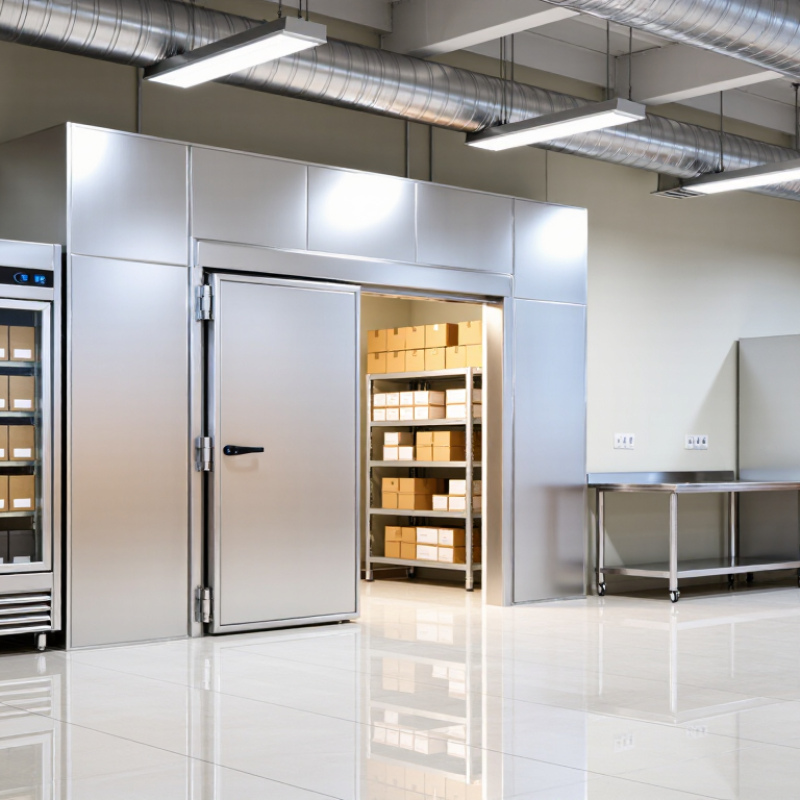
| 1 | Walk-In Freezer Room | About −18°C to −23°C (0°F to −10°F) | Room-sized; commonly configured from a few cubic metres upward | Bulk frozen-food storage for restaurants, hotels, institutions, and food distributors | Requires suitable floor, insulation, door seals, temperature monitoring, and enough clearance for airflow and safe access. |
| 2 | Reach-In Upright Freezer | About −18°C to −23°C (0°F to −10°F) | Typically one to three doors; roughly 500–1,500 L gross volume per cabinet | Frequently accessed ingredients and packaged frozen stock in kitchens and service areas | Choose shelves or tray supports to suit the load. Door-opening frequency and warm product loading affect recovery time. |
| 3 | Undercounter Freezer | About −18°C to −23°C (0°F to −10°F) | Compact cabinet; commonly about 100–300 L gross volume | Point-of-use frozen storage where floor space is limited | Convenient for smaller inventories, but has less capacity than upright or walk-in formats. Maintain ventilation around the refrigeration system. |
| 4 | Chest / Top-Opening Freezer | About −18°C to −25°C (0°F to −13°F) | Commonly about 200–700 L gross volume | Bulk or reserve storage in shops, kitchens, and back-of-house areas | The top-opening design can limit cold-air loss during access, but product organization and retrieval may be less convenient. |
| 5 | Glass-Door Merchandising Freezer | Often about −18°C to −23°C (0°F to −10°F) | Upright display cabinets; capacity varies substantially by cabinet size | Displaying packaged frozen products for customer selection | Designed for product visibility and frequent access. Confirm that the unit is intended for the site’s ambient temperature and sales conditions. |
| 6 | Blast Freezer | Air temperature commonly around −30°C to −40°C (−22°F to −40°F) during a freezing cycle | Tray- or trolley-based; specified by batch load and tray count | Rapidly chilling or freezing prepared food before transfer to frozen storage | Cycle performance depends on product type, portion size, loading pattern, and starting temperature. It is a process unit, not a substitute for long-term storage. |
| 7 | Plate Freezer | Typically uses refrigerated plates around −35°C to −40°C (−31°F to −40°F) | Specified by plate area, product dimensions, and batch or continuous throughput | Rapid contact freezing of flat or regularly shaped packaged products | Works best when packages make good contact with the plates. Product shape and thickness influence freezing time. |
| 8 | Ice-Cream / Hardening Freezer | Often around −23°C to −29°C (−10°F to −20°F); hardening applications may use lower temperatures | Cabinet, chest, or room format, depending on production and sales volume | Holding or hardening ice cream and other temperature-sensitive frozen desserts | Stable temperature is important for texture and product quality. Select a unit for the intended hardening process or holding duty. |
| 9 | Low-Temperature Laboratory Freezer | Common models operate near −40°C to −86°C (−40°F to −123°F) | Upright or chest cabinets; capacity is model- and application-specific | Research, laboratory, or specialty storage requiring temperatures below conventional food-freezer ranges | Not generally intended for routine food storage. Check temperature uniformity, alarms, backup arrangements, and sample-specific requirements. |
| 10 | Refrigerated Container Freezer | Commonly designed to maintain cargo near −18°C (0°F); operating limits depend on the container system | Large transport-container format, commonly around 20 or 40 feet in length | Temporary, mobile, or transport-related frozen storage for commercial goods | Requires a suitable power supply, airflow around cargo, monitoring, and contingency planning for interruptions or equipment faults. |