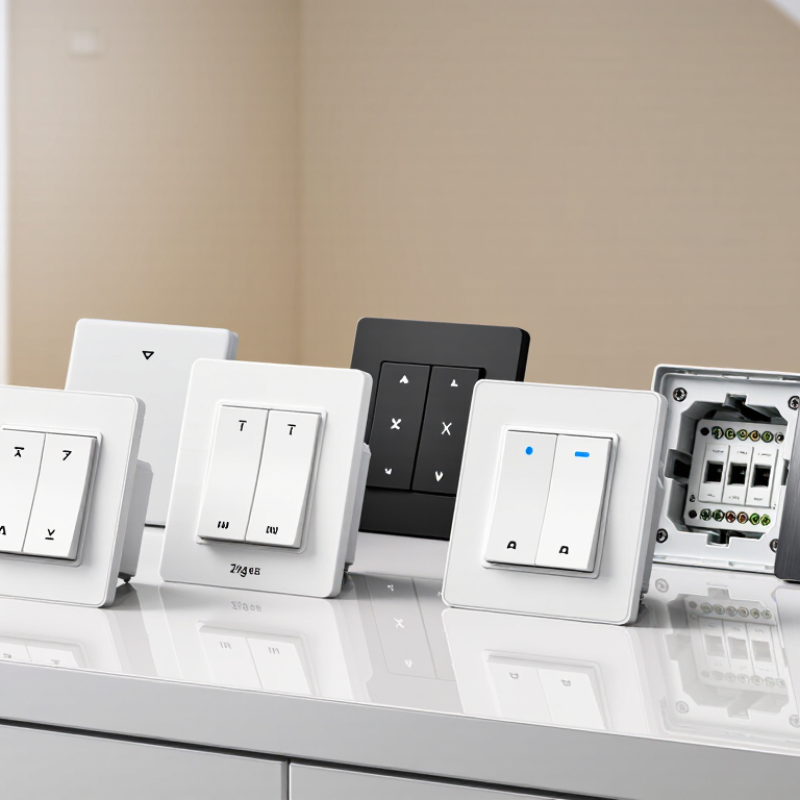
| 1 | Universal Zigbee 3.0 Dimmer | Zigbee 3.0 | Usually required | 1 channel | Dimmable LED, CFL, and incandescent lighting | Typically up to 150 W LED or 300 W incandescent | Single-pole; some installations support multi-way control | Brightness adjustment, scene control, scheduling, energy monitoring on selected designs | Living rooms, bedrooms, and other areas requiring adjustable lighting |
| 2 | No-Neutral On/Off Switch | Zigbee 3.0 | Not required on compatible loads | 1 channel | LED and general lighting loads | Commonly 3–5 A for LED loads | Single-pole; may require a bypass component with very low-wattage LEDs | Remote switching, timers, scenes, and voice-assistant integration through a hub | Older homes where a neutral conductor is unavailable |
| 3 | Two-Channel Relay Switch | Zigbee 3.0 | Usually required | 2 independent channels | Lights, exhaust fans, and other resistive loads | Commonly 5–10 A per channel, depending on the design | Two-load, single-location installation | Independent scheduling, grouped scenes, automation, and status reporting | Bathrooms, kitchens, and rooms with two separately controlled loads |
| 4 | Four-Button Scene Controller | Zigbee 3.0 | No load neutral required; battery or line-powered design | Four scene buttons | Control-only device; does not directly switch a load | Not applicable | Wall-mounted wireless controller | Single press, double press, hold actions, scene activation, and centralized control | Whole-home scenes such as Away, Movie, Night, and All Off |
| 5 | Single-Pole Heavy-Duty Relay | Zigbee 3.0 | Required | 1 channel | Lighting, fans, and compatible resistive appliances | Often rated around 10–15 A at residential mains voltage | Single-pole; load compatibility must be verified before installation | Remote on/off control, countdown timers, automation, and power-state recovery | Higher-load lighting circuits and selected household equipment |
| 6 | Two-Way or Multi-Way Compatible Switch | Zigbee 3.0 | Usually required | 1 channel | Standard lighting circuits | Typically 5–10 A, depending on the electrical design | Single-pole, two-way, or multi-way arrangement with compatible companion controls | Remote operation from multiple locations, scenes, schedules, and state synchronization | Hallways, staircases, and large rooms with more than one control point |
| 7 | Fan and Light Combination Switch | Zigbee 3.0 | Required | 2 channels | Light plus fan motor | Light channel often up to 5 A; fan channel is commonly lower and motor-specific | Separate load wires for the light and fan | Independent fan and light control, schedules, scenes, and automation | Bathrooms, bedrooms, and utility areas with combined fan-light fixtures |
| 8 | Energy-Monitoring Wall Relay | Zigbee 3.0 | Required | 1 channel | Lighting and compatible general-purpose loads | Commonly 10–16 A, subject to local electrical requirements | Single-pole line and load connection | On/off control, voltage and current reporting, power-use estimates, and automation | Users who want operational control and basic circuit-level energy data |
| 9 | Battery-Powered Wireless Wall Switch | Zigbee 3.0 | Not applicable | 1–4 configurable buttons | Control-only device; switches another Zigbee actuator | Not applicable | Surface-mounted or retrofit installation without mains wiring | Tap, double-tap, and hold commands; scenes and room-to-room control | Rental properties, retrofit projects, and locations without existing wiring |
| 10 | Compact In-Wall Micro Relay | Zigbee 3.0 | Usually required | 1 channel | Lighting and small compatible loads | Often approximately 5–10 A, depending on enclosure and relay design | Installed behind an existing mechanical wall switch | Retains manual control while adding remote switching, scenes, and schedules | Retrofit installations where the existing wall plate should be preserved |