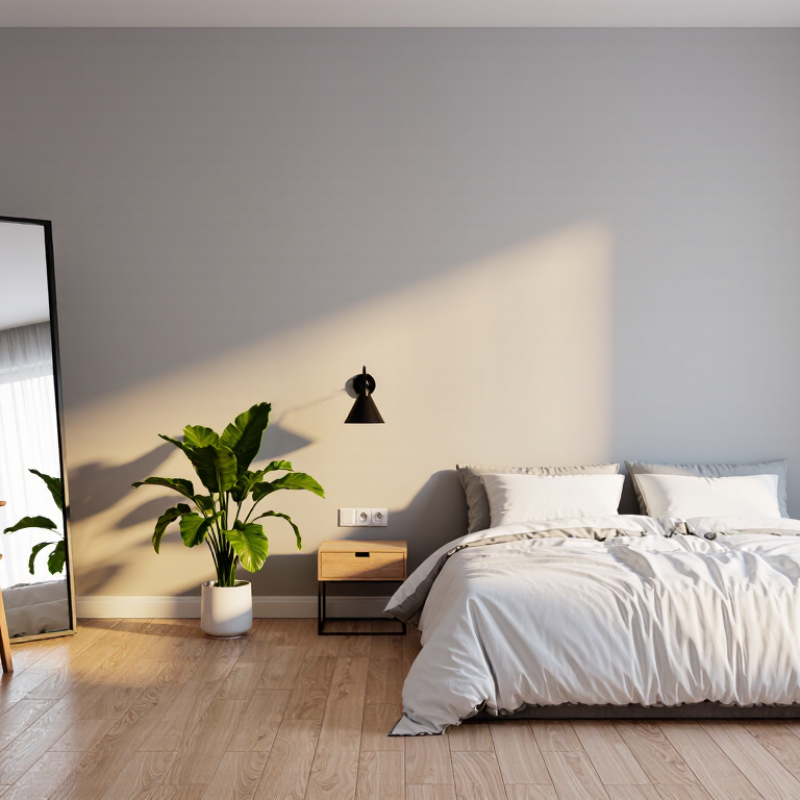
| 1. Measure the wall area | Bedroom, dressing area, or hallway | Available wall height and width, including nearby trim, switches, and furniture | Compare the mirror’s full frame dimensions with the clear wall area; leave visible space around it where possible. | Checking the frame size—not just the glass—helps prevent an awkward fit or blocked fixtures. |
| 2. Confirm full-length viewing needs | Bedroom or dressing area | Mirror height and the distance available for standing back | A mirror around 150–180 cm tall is a common full-length option. Allow roughly 1.5–2 m of viewing distance when the room permits. | A taller mirror and enough viewing distance make it easier to see an outfit from head to toe. |
| 3. Check the walking path | Entryway, corridor, or beside a doorway | Door swing, foot traffic, and the space in front of the mirror | Keep the mirror clear of door movement and avoid narrowing the main route. About 75–90 cm of clear passage is a useful planning target where space allows. | A clear route reduces bumps and makes the mirror more convenient to use. |
| 4. Choose a suitable location | Near a wardrobe or dressing area | How easily the mirror can be reached while getting dressed | Place it where you can step back without moving furniture, while keeping it away from areas likely to be struck by doors or drawers. | A practical location encourages regular use and reduces the chance of accidental damage. |
| 5. Assess the light | Near a window or room light source | Natural light, shadows, and reflections from lamps or windows | Try the proposed position at different times of day. Avoid placing the mirror where direct light creates distracting glare. | Even, comfortable lighting makes reflections easier to use for dressing and grooming. |
| 6. Plan for safe support | Against a wall or in a high-traffic room | Mirror weight, wall material, and whether it will be mounted or leaned | Follow the mirror’s installation instructions. Secure a leaning mirror with an appropriate anti-tip device; choose fixings suited to the wall and mirror weight. | Proper support helps prevent the mirror from tipping or pulling away from the wall. |
| 7. Check nearby surfaces and use | Bathroom-adjacent area, dressing room, or shared space | Humidity, heat sources, furniture edges, and the mirror’s daily-use purpose | Keep the mirror away from direct heat and frequent splashes unless it is designed for those conditions. Check that its width suits the intended view and available wall space. | Matching the mirror to its environment can help protect its frame and reflective surface over time. |