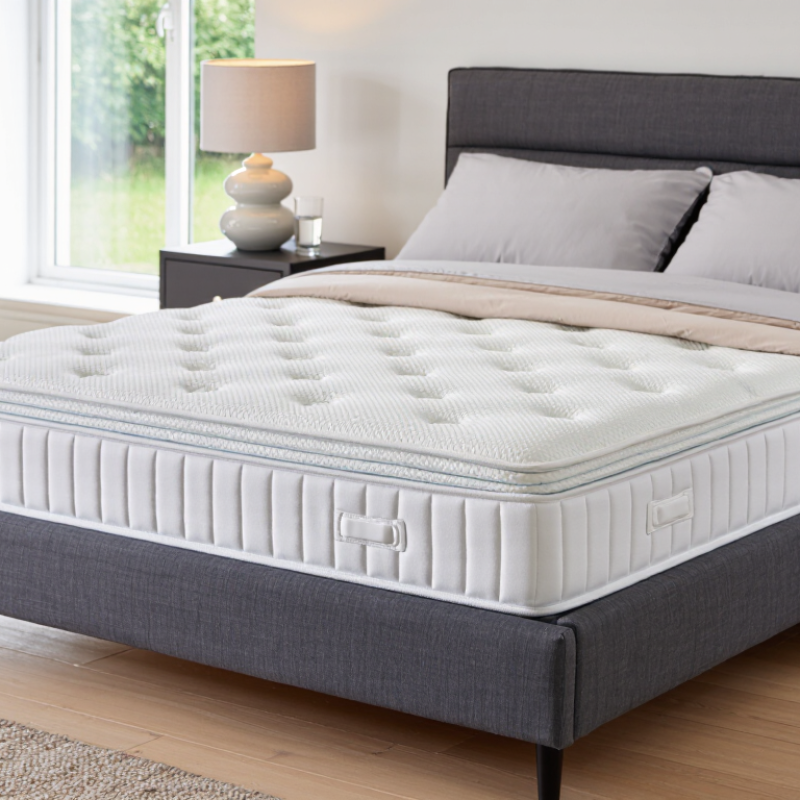
| 1 | Confirm the King Size | Check the advertised dimensions before ordering. | A standard king mattress is generally 76 inches wide by 80 inches long, although small manufacturing tolerances may occur. | Do not confuse a standard king with a California king, which is typically 72 inches wide by 84 inches long. |
| 2 | Match Firmness to Sleep Position | Review the firmness scale, construction details, and return policy. | Side sleepers often prefer cushioning around the shoulders and hips. Back and stomach sleepers commonly need stronger support to reduce excessive sinking. | Firmness is subjective and can vary with body weight, sleeping posture, and the mattress foundation. |
| 3 | Evaluate Support and Spinal Alignment | Look for stable edge support, suitable coil or foam density, and a compatible base. | A supportive mattress should keep the body relatively level without creating excessive pressure at the shoulders, hips, or lower back. | Manufacturer specifications should explain the support system; marketing terms alone are not proof of performance. |
| 4 | Verify CertiPUR-US Foam Certification | Check whether the exact foam component is listed in the current certification directory or supported by valid documentation. | CertiPUR-US certification applies to certain flexible polyurethane foams and addresses emissions, content, durability, and restricted substances. | Certification of foam does not automatically certify the entire mattress, cover, springs, adhesives, or finished product. |
| 5 | Verify GOTS Claims | Confirm the certificate scope, facility information, and the percentage of certified organic fibers claimed. | GOTS covers organic textile fibers and includes processing, manufacturing, environmental, and social criteria within its certification scope. | A cover labeled “organic” is not necessarily GOTS certified, and GOTS certification may apply only to specific textile components. |
| 6 | Assess Temperature Regulation | Review the cover fabric, ventilation features, coil layout, and foam design. | Breathable covers, ventilated layers, and open coil systems may improve airflow compared with dense, non-ventilated materials. | No mattress can guarantee a cool sleep environment because room temperature, bedding, and personal physiology also matter. |
| 7 | Check Motion Isolation | Look for individually encased coils or cushioning foam layers if partners have different sleep schedules. | Foam comfort layers and separately wrapped coils can help reduce the transfer of movement across the bed. | Motion isolation may reduce disturbance but cannot eliminate movement completely, especially on a large king-size surface. |
| 8 | Review the 120-Night Trial | Confirm the trial length, required break-in period, pickup or return process, and refund conditions. | A 120-night trial provides time to assess comfort after the initial adjustment period, which may take several weeks. | Trial periods are retailer policies, not universal legal standards. Some require a minimum number of nights before a return. |
| 9 | Examine 10-Year Warranty Coverage | Read the warranty document for covered defects, sagging limits, exclusions, and prorated charges. | A 10-year limited warranty commonly addresses manufacturing defects and may specify a minimum visible indentation threshold. | A warranty may exclude normal comfort changes, stains, misuse, unsuitable foundations, and ordinary wear. A trial period is separate from a warranty. |
| 10 | Confirm Foundation and Delivery Requirements | Check slat spacing, center support, weight limits, setup instructions, and compressed-delivery conditions. | A king mattress usually requires a properly supported frame or foundation with adequate center support to prevent damage and preserve warranty eligibility. | Inspect the package promptly, allow compressed materials to expand as instructed, and retain the receipt and warranty documents. |