| 1 | Choose a suitable seat height | Measure the intended users and compare their leg length with the stool height. When seated, children should be able to place their feet securely on the floor or a suitable foot support. | A stool that is too high or too low can be uncomfortable and may make getting on and off less stable. | Confirm the listed seat height for every model and test a sample with children of the intended age and size range. |
| 2 | Select durable materials | Consider solid wood, plywood, metal, or molded plastic. Check for sturdy joints, smooth surfaces, and finishes intended for the product’s use. | Material quality and construction affect how well stools withstand regular use, cleaning, and movement. | Inspect a sample for cracks, rough edges, loose joints, or damage. Ask suppliers for care instructions and material specifications. |
| 3 | Check stability and weight capacity | Look for a level base, a footprint that suits the setting, and a clearly stated maximum load. Follow the maker’s instructions for use. | A stable design and a suitable stated load limit help reduce the risk of tipping or structural failure. | Request the rated capacity and relevant product test documentation. Do not assume that stools with similar dimensions have the same capacity. |
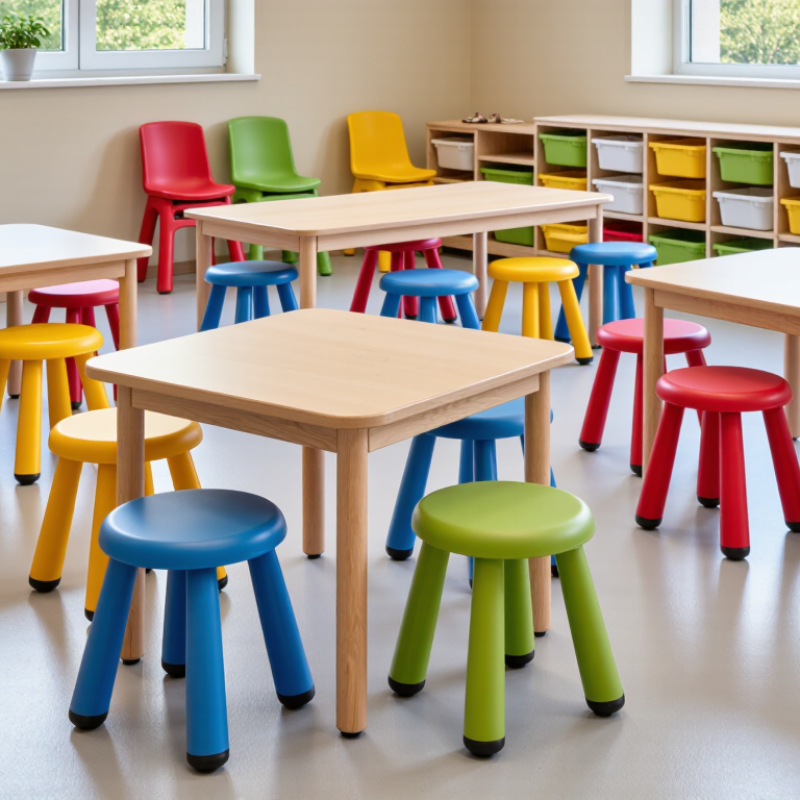
| 4 | Look for child-friendly details | Prefer rounded corners, smooth edges, and a seat shape that is comfortable for the intended use. Check that handles or openings do not create pinch points. | Thoughtful details can make stools more comfortable to handle and help reduce bumps or pinched fingers during ordinary use. | Review product photos and inspect a physical sample, including edges, cut-outs, handles, and underside details. |
| 5 | Check feet and floor contact | Look for non-slip feet or floor protectors that are firmly attached and appropriate for the floor surface. | Suitable feet can help limit sliding and reduce scratches on floors. Their effectiveness depends on the surface and condition. | Test samples on the actual floor type where possible, and ask whether replacement feet are available. |
| 6 | Consider cleaning and maintenance | Check whether the stool has smooth, accessible surfaces and follow the supplier’s recommended cleaning method. | In schools, childcare settings, and shared spaces, simple routine cleaning can help keep products presentable and ready for use. | Ask for written care guidance and confirm that the recommended cleaning products are practical for your facility. |
| 7 | Verify standards, consistency, and delivery | Ask which safety requirements apply in your location, and request supporting documents. Check dimensions, finish, packaging, and replacement-part options. | Requirements vary by market and product type. Consistent specifications and suitable packaging help avoid surprises when a large order arrives. | Approve a sample before ordering, confirm the exact specifications in writing, and arrange an inspection plan for the delivered batch. |