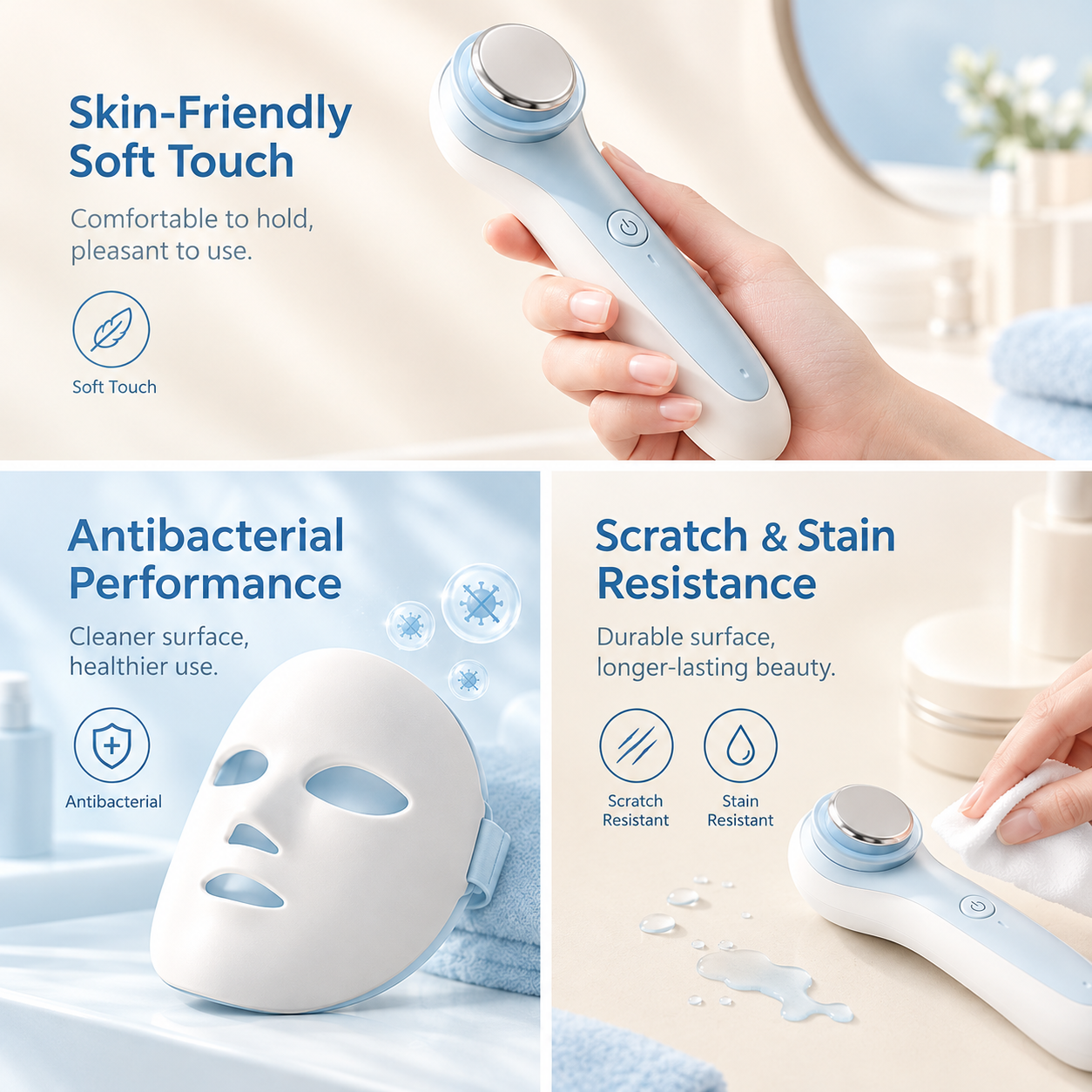
1. Skin-Friendly Soft Touch for Comfortable Use
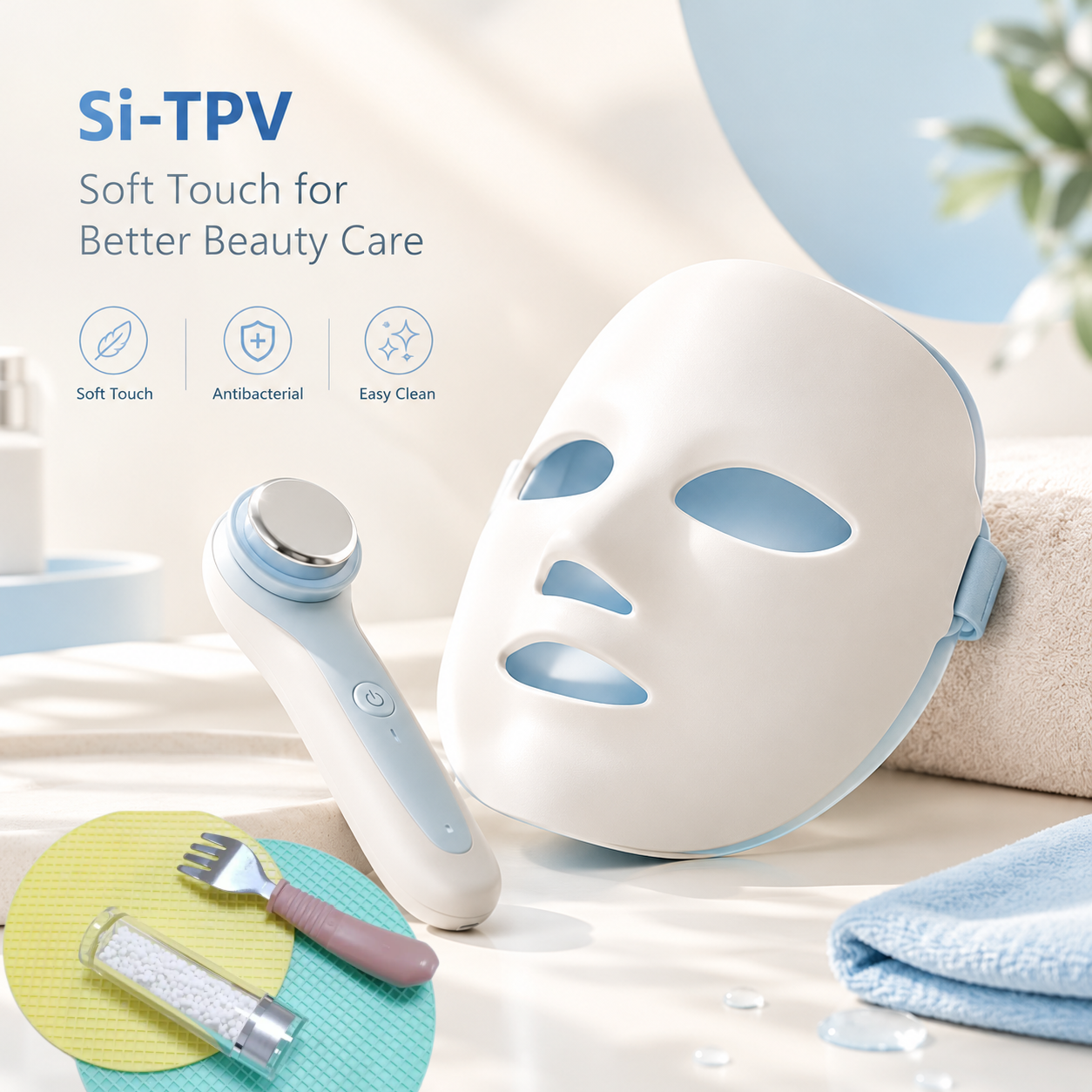
Comfort is an important consideration for beauty devices that are held in the hand or placed against the face. A soft, smooth surface can improve the tactile experience during skincare routines and make products feel more comfortable to handle.
Si-TPV soft-touch elastomers offer a silky, soft-touch feel for suitable applications. Depending on the selected grade and product design, they can be considered for device housings, grip areas, contact components, and other parts where surface comfort contributes to the overall user experience.
For products intended for direct or prolonged skin contact, the suitability of the selected material should be evaluated against the intended use conditions and relevant skin-contact requirements.
2. Antibacterial Performance for Hygiene-Conscious Applications
Beauty devices are frequently handled and may be exposed to sweat, skin oils, and skincare residues. Maintaining surface hygiene is therefore an important consideration in material selection and product design.
Where antibacterial functionality is required, manufacturers should evaluate materials with relevant, verified antibacterial performance. Any antibacterial claim should be supported by appropriate test data for the selected material or finished product.
Antibacterial performance should also be distinguished from routine cleaning. Regardless of the material used, appropriate cleaning instructions and product design remain important for maintaining hygiene during everyday use.
3. Scratch and Stain Resistance for Better Appearance Retention
Beauty devices are often used daily, stored in bathrooms or cosmetic bags, and exposed to skincare formulations. These conditions can challenge surface durability and appearance.
Scratch resistance helps reduce visible surface damage caused by handling and contact with other objects. Stain resistance helps maintain a cleaner appearance when surfaces encounter cosmetics, facial oils, and other residues.
Si-TPV soft-touch elastomers can be evaluated for applications where scratch resistance and stain resistance are important. Actual performance depends on the grade, surface texture, substrate, processing conditions, and the substances encountered during use.