What Are the Most Popular Types of Fiberglass Sculpture?
Fiberglass Sculpture appears in parks, shopping centers, gardens, museums, and themed attractions. Its appeal comes partly from its balance of strength, manageable weight, and freedom of shape. A life-size horse beside a garden path, a bright fruit display in a market, or a polished abstract form in a hotel lobby can each draw attention in a different way. The material accepts detailed molds and varied finishes, from smooth gloss to textured surfaces that suggest stone, skin, or wood. Still, appearance alone does not explain why one type becomes popular. The setting, audience, maintenance needs, and installation scale all matter.
This guide explores common categories, including human figures, animals, abstract forms, oversized food and product replicas, and decorative garden pieces. Each serves a different purpose. Figurative sculptures may commemorate a person or create a welcoming landmark, while animal designs often bring energy to public and commercial spaces. Abstract works offer more room for interpretation. Product replicas can be memorable, though they may feel out of place when their scale overwhelms a space. The differences matter. Popularity also shifts with local taste and project goals, so no category is universally best. A glossy finish can look striking in a showroom but show scratches outdoors. Not every piece lasts. Understanding how these sculptures are designed, finished, and used helps buyers and designers compare options with clearer expectations—and ask better questions before choosing one.
Fiberglass Animal Sculptures
Fiberglass animal sculptures are popular because they can capture familiar forms without the weight of stone or metal. Artists shape the material over a form, then refine details such as a horse’s mane, a bird’s feather pattern, or the folds around an elephant’s trunk. The finish can be lifelike or deliberately playful. Small details matter. A slight change in posture can make a deer seem alert rather than stiff. Still, a perfectly smooth surface may feel oddly lifeless, so texture and proportion deserve careful attention.
For outdoor displays, a well-sealed finish helps protect the sculpture from moisture and sunlight, though durability depends on construction and upkeep. A broad, stable base is useful in windy locations, while indoor pieces can support more delicate poses. Color also changes how an animal reads: muted browns may suit a garden, while bright hues can energize a shop window or children’s space. Not every pose works. Before choosing a piece, consider its viewing distance, surroundings, and cleaning needs; dust can settle in feather grooves and beneath raised details.
Fiberglass Human Figures and Portraits
Fiberglass human figures and portraits are popular because they can capture recognizable faces while remaining lighter than many solid materials. Artists often begin with a clay model or a carefully prepared digital form, then create a mold for casting. Small details matter: the angle of a mouth, the fold beside an eye, or the way a jacket collar sits against the neck. These features help a figure feel specific rather than generic. They also take patience.
The material suits indoor displays and many sheltered outdoor settings, but the finish needs thoughtful planning. A smooth gel coat can give skin a polished look, while layered paint may create softer tones and subtle shadows. Hair and fabric often benefit from texture, though too much surface detail can make a portrait feel stiff. That balance is difficult. Fiberglass can reproduce a form consistently, yet it does not guarantee a convincing likeness; proportion, expression, and viewing distance still shape the result. I would also reconsider overly glossy finishes, since bright reflections can flatten facial features under strong lighting. Good portraits invite a closer look, but they should still read clearly from across the room.
Fiberglass Abstract and Decorative Sculptures
Fiberglass abstract and decorative sculptures are popular because they can take curved, flowing forms without the weight of many solid materials. Abstract pieces often use spirals, folded shapes, or smooth, wave-like surfaces. Their silhouettes can create a focal point in a lobby, garden, or open living area. Shape matters. A tall sculpture may suit a narrow corner, while a low, broad form can anchor a courtyard.
Decorative sculptures include lifelike animals, oversized flowers, playful figures, and geometric objects. Fiberglass accepts molded detail and painted finishes, but scale and surface quality matter more than novelty alone. A glossy finish can highlight curves, yet it may also reveal scratches or uneven areas in strong light. Matte finishes tend to soften reflections. Before choosing a piece, consider viewing distance, nearby colors, and whether wind or foot traffic could affect its placement. Even a carefully designed sculpture can feel slightly out of proportion once installed; a paper or cardboard mock-up can help test its size.
Tips: Ask how the sculpture is supported and finished, especially for outdoor use. Check seams and edges up close. Keep it simple. A restrained color or clear silhouette often lets the form speak for itself.
What Are the Most Popular Types of Fiberglass Sculpture?
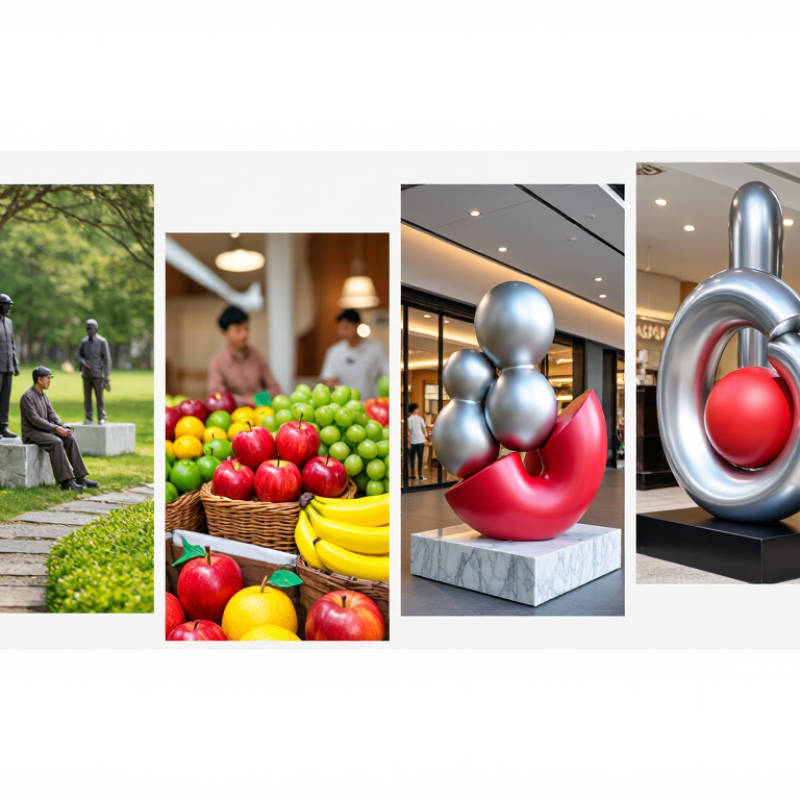
Abstract and decorative sculptures are among the most familiar forms, alongside figurative, animal, and oversized designs. The chart is a qualitative overview of commonly encountered forms, not a market-share ranking.
Fiberglass can be molded into many shapes and finished for indoor or outdoor display; the best form depends on the setting and design brief.
Fiberglass Architectural and Public Art Sculptures
Fiberglass architectural and public art sculptures can make entrances, plazas, and facades feel distinctive without adding the weight of stone or metal. The material can be shaped into sweeping canopies, textured wall panels, oversized figures, or abstract forms. It also allows designers to combine curved surfaces with crisp edges. That flexibility is useful when a sculpture must fit a specific site. Details matter.
For outdoor work, planning should account for wind, sun exposure, water drainage, and how the sculpture connects to its base. Strong internal supports and carefully sealed joints help prevent movement and moisture problems. A UV-resistant finish can reduce fading, but it does not eliminate maintenance. Small gaps count. Surfaces may need cleaning, and coatings can require repair after years of exposure. Scale matters, too: a piece that looks striking in a studio may overwhelm a narrow walkway or block sightlines in a busy plaza. A full-size mock-up can reveal these issues, though it may still miss how changing light alters the sculpture’s appearance. Public art works best when its form, finish, and placement respond to the people who encounter it every day.
Fiberglass Commercial and Themed Sculptures
Fiberglass commercial and themed sculptures turn ordinary spaces into landmarks. A giant sea creature beside a hotel entrance, or a bright mascot above a shop window, gives visitors an easy photo point. Fiberglass suits these projects because molds can produce expressive shapes, while reinforced construction supports large forms without the weight of solid stone. Surface finish matters. UV-resistant coatings can help outdoor colors last, but sun, rain, and cleaning still wear them down.
The demand for memorable attractions is visible in attendance figures. TEA and AECOM’s 2023 Theme Index reported 244.6 million visits across the world’s 25 most-attended theme parks, a 23.5% increase from 2022. That figure does not measure sculpture sales, but it shows the scale of audience-facing environments where themed objects can contribute to a visit. Grand View Research valued the global fiberglass market at about US$14.55 billion in 2023; this covers many applications, not sculpture alone.
Good design begins with the viewing distance. A roadside figure needs a clear silhouette, while a lobby centerpiece can reward close inspection with textured scales, seams, or painted eyes. Mounting points and access for repairs should be planned before fabrication. Small details matter. Yet spectacle can overpower a space. A huge sculpture may photograph well and still block circulation or feel out of place. That tension deserves attention.