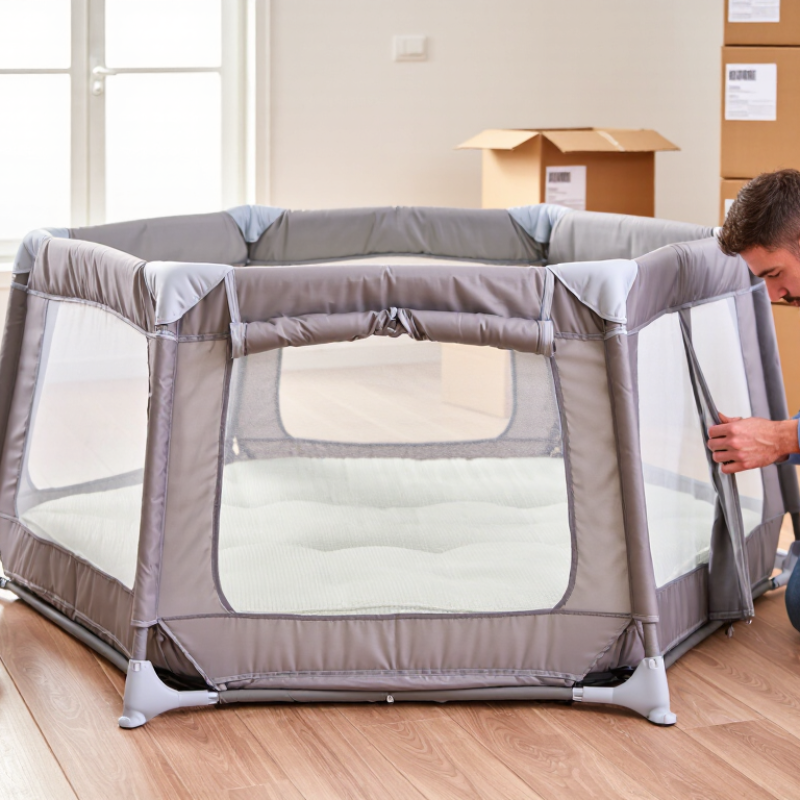
| 1 | Confirm the finished size and folded size before requesting quotations. | Common planning MOQ: 100–500 units for standard models; lower quantities may require a higher unit price. | A typical packed unit may weigh about 1.2–3.0 kg. Folded dimensions strongly affect air and courier charges. | Import duty is based on the destination country, tariff classification, customs value, and origin; request a destination-specific estimate. | Size changes can require updated product drawings and renewed safety or chemical-risk reviews. | A clear warranty should cover frame failure, stitching defects, and mesh separation for at least 6–12 months. | Medium |
| 2 | Compare EXW, FOB, and delivered quotations using the same product specification. | MOQ is often lower for stock or standard items and higher for customized packaging or colors. | FOB excludes main international freight; delivered pricing may include freight, customs handling, and local delivery. | Confirm whether VAT, GST, brokerage, port fees, and other destination charges are included. | Ask whether inspection and laboratory charges are included or billed separately. | Check whether return freight and replacement shipping are included in the warranty terms. | High |
| 3 | Calculate landed cost per sellable unit rather than comparing factory price alone. | Divide one-time setup, artwork, and inspection charges across the actual order quantity. | For small shipments, fixed documentation and handling charges can make freight per unit disproportionately high. | Use the customs value required by the importing country; do not assume duty equals a universal percentage. | Include sample testing, pre-shipment inspection, and any retesting caused by nonconformity. | Add an expected replacement reserve when warranty failure rates are not supported by historical data. | High |
| 4 | Request a sample that matches the mass-production materials and construction. | One to three samples are normally sufficient for initial evaluation, but sample fees may be higher than production pricing. | Courier sample shipments commonly cost more per kilogram than consolidated ocean freight. | Samples can still attract import taxes or brokerage charges depending on destination rules and declared value. | Test the exact production-representative sample for mesh strength, seams, openings, and stability. | A sample approval should be linked to written production specifications and the agreed defect-remedy process. | Medium |
| 5 | Check mesh openings, seam strength, and entrapment risks for the intended age group. | Safety modifications may affect the minimum run because new cutting patterns, tooling, or packaging may be required. | Reinforced seams or additional panels can increase packed weight and carton volume. | The applicable product category and child-safety requirements vary by destination market. | Typical evaluations may include mechanical and physical hazards, sharp points, accessible edges, and material safety. | Warranty claims should distinguish normal wear from failures caused by unsafe construction or manufacturing defects. | High |
| 6 | Specify material composition and request evidence for restricted-substance compliance. | Custom fabric blends, coatings, colors, or printed panels may require a larger MOQ than standard materials. | Heavier fabric and reinforced plastic or metal parts can raise both weight-based and volume-based freight. | Some customs systems apply different treatment based on material composition and product use. | Depending on the market, screening may cover substances such as lead, cadmium, phthalates, formaldehyde, or colorants. | Warranty language should cover premature coating failure, fabric tearing, corrosion, and color-transfer defects where relevant. | High |
| 7 | Optimize carton design without reducing product protection. | Retail cartons, barcode labels, inserts, and export cartons may have separate minimum quantities. | Reducing carton volume can lower dimensional-weight charges, especially for air and courier shipments. | Packaging materials may need separate declarations or recycling marks in some markets. | Drop, compression, and packaging integrity checks help reduce damage-related claims during transport. | Confirm whether transport damage is covered by warranty, cargo insurance, or the carrier claim process. | Medium |
| 8 | Select the transport mode according to order size, urgency, and replenishment frequency. | Small trial orders may be practical by courier or air; larger repeat orders are usually more suitable for consolidation or ocean freight. | Ocean freight generally has a lower cost per unit for larger shipments but involves longer transit and port-related charges. | Duty is normally unaffected by transport mode, while customs brokerage and terminal charges can vary. | Testing documents should be completed before dispatch to avoid storage and inspection delays at destination. | Longer transit increases the value of robust packaging and clearly defined damage-reporting deadlines. | High |
| 9 | Use a written pre-shipment inspection plan with measurable acceptance criteria. | Inspection cost is often easier to justify on medium or large orders; for small orders, it can materially increase unit cost. | Inspection does not normally change freight, but failed inspections can create rework, storage, and delayed-shipment costs. | Delays may increase customs storage or demurrage exposure if goods are already at the port. | Define sample size, critical defects, major defects, minor defects, dimensions, color tolerance, and function checks. | Require a corrective-action process and replacement or credit terms for confirmed production defects. | Medium |
| 10 | Negotiate warranty, spare parts, and after-sales support before placing the purchase order. | Replacement mesh panels, connectors, or carrying bags may have separate minimum quantities or setup charges. | Small replacement shipments can have a high freight cost per unit; consolidate spare parts with regular orders when possible. | Replacement goods may still require customs declarations, taxes, or brokerage depending on local rules. | Keep test reports, batch records, and complaint samples to support root-cause analysis. | Specify coverage period, exclusions, claim evidence, response time, remedy, and responsibility for return freight. | Medium |