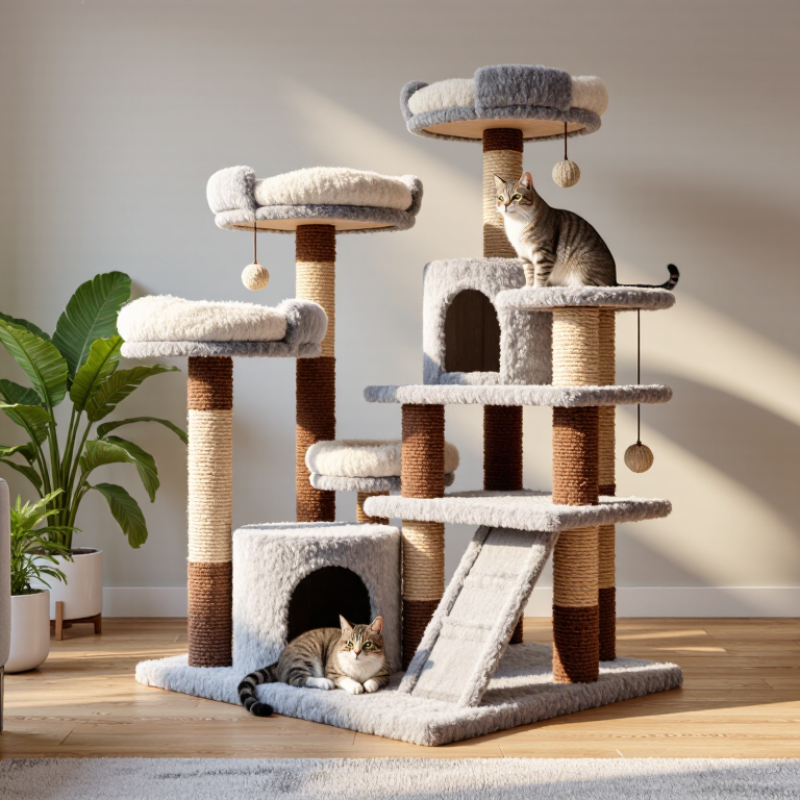
| Vertical Space | Elevated locations can help cats observe their surroundings, rest undisturbed, and choose distance from people or other animals. | Choose a structure with at least one elevated resting area and enough height for the cat to use it comfortably. | Place the tree where the cat can survey the room without being forced into a noisy, high-traffic area. Check that the highest platform is stable and accessible. | Essential |
| Number of Perches | Multiple resting options support choice and reduce competition in multi-cat households. | Provide more than one perch when possible, especially when two or more cats share the home. | Look for platforms at different heights and positions. Avoid a design with only one usable resting surface for several cats. | Essential |
| Perch Size and Comfort | Cats need adequate space to sit, rest, turn around, and adopt their preferred sleeping posture. | Select platforms that fit the cat’s body length and allow comfortable repositioning without hanging over the edge. | Compare each platform with the cat’s body size. Curled sleeping areas may be smaller, while lounging shelves should provide more usable surface area. | High |
| Safe Access and Escape Routes | Predictable movement paths and the ability to move away from another cat can reduce stress and avoid forced interactions. | Prefer staggered levels, wide transitions, and more than one direction of movement where the layout permits. | Check whether a larger or less confident cat could leave a perch without passing directly through another cat’s space. | High |
| Stability and Load Support | A wobbly or tipping structure may cause fear, injury, or avoidance of the entire resource. | Use a broad, weighted base and a rigid frame that remains stable during jumping, climbing, and turning. | Apply firm hand pressure from several directions before use. Recheck bolts, joints, and platforms regularly. | Essential |
| Scratching Opportunities | Scratching is normal feline behavior that supports claw maintenance, stretching, scent communication, and emotional expression. | Include both vertical and horizontal scratching surfaces when possible, with enough height for a full-body stretch. | Choose durable, securely attached material. Position the scratching areas near resting zones or locations where the cat already scratches. | High |
| Material, Grip, and Maintenance | Secure footing encourages use, while cleanable materials support hygiene and help preserve familiar household resources. | Prefer non-slip surfaces, firmly attached coverings, rounded edges, and removable or cleanable components. | Inspect for loose fibers, exposed staples, sharp edges, unstable fabric, and areas that cannot be cleaned after hair, dirt, or accidents. | High |
| Location and Household Placement | A well-designed tree may be ignored if it is placed beside frightening noises, unstable furniture, or an unavoidable conflict zone. | Place it near a socially useful but low-stress area, with a clear view and sufficient distance from food, litter boxes, and loud appliances. | Observe whether the cat can rest without being disturbed and whether the structure is away from hazards such as open windows, heaters, or fragile objects. | Essential |
| Individual Cat Needs | Age, mobility, body size, confidence, and health status affect how a cat climbs, jumps, and uses elevated resources. | Match platform height, spacing, and access difficulty to the individual cat rather than choosing the tallest design automatically. | For older, overweight, injured, or mobility-limited cats, add lower resting levels, ramps, or steps and avoid demanding jumps. | Essential |
| Resource Distribution for Multiple Cats | Separate, visually distributed resources can reduce competition and help each cat control access to resting and escape areas. | Use multiple resting places in different locations instead of relying on one central cat tree. | Observe whether one cat blocks the only route or perch. Add another elevated option in a separate area if access conflicts occur. | Essential |
| Cat Acceptance and Choice | Welfare-focused housing supports choice and control; a resource is useful only if the cat voluntarily uses it. | Allow gradual introduction and keep alternative resting places available. | Place familiar bedding or a toy nearby, avoid forcing the cat onto the tree, and monitor voluntary use over several days. | High |