| Lead in accessible components | For covered children’s products, the CPSIA total lead limit is 100 ppm (0.01%) in accessible component parts. | Request applicable test documentation for accessible materials, such as the mat surface, printed pattern, and any reachable trim or fasteners. |
| Lead in paint or surface coatings | The federal limit for lead in paint and similar surface coatings is 90 ppm (0.009%). | Ask whether colored or printed surface layers were assessed as coatings where the requirement applies. Do not treat the 100 ppm component limit as a substitute for the coating limit. |
| Restricted phthalates | For covered children’s toys and child care articles, each of eight specified phthalates is limited to 0.1% (1,000 ppm) in accessible component parts. | Check that documentation identifies the tested material and addresses DEHP, DBP, BBP, DINP, DIBP, DPENP, DHEXP, and DCHP, as applicable. |
| Product classification | CPSIA requirements depend on whether the item is a covered children’s product, toy, or child care article, including its intended use and design. | Confirm the product’s age grading, intended use, and applicable requirements with the responsible manufacturer or importer. A play mat is not automatically subject to every toy-specific rule. |
| Testing and certification | Applicable children’s product requirements may require testing by a CPSC-accepted third-party laboratory and a Children’s Product Certificate (CPC). | For covered products, request the CPC and supporting test reports. Check that the reports match the product materials, colors, and construction being purchased. |
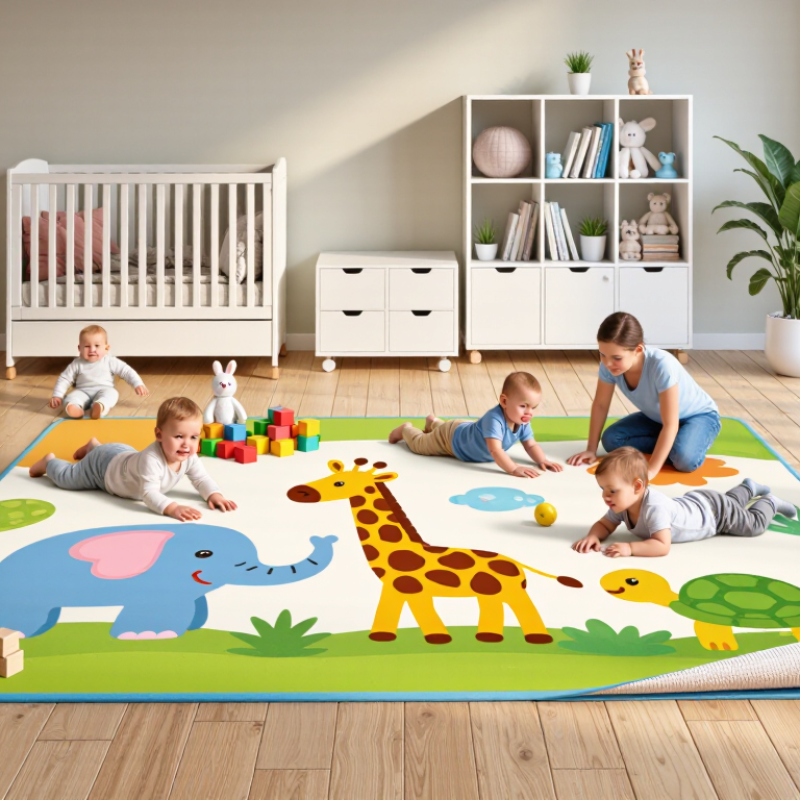
| Pattern inks and printed layers | Printed designs can contain separate inks, coatings, or laminated layers; applicable chemical limits are assessed against the relevant accessible materials. | Ask whether testing covers the actual printed or colored components, not only an unprinted base-material sample. |
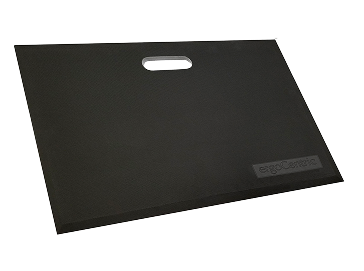
| Mat dimensions and coverage | There is no single CPSIA-mandated play-mat size. Dimensions should match the buyer’s intended floor area and use. | Compare the stated length and width with the available space. Confirm whether listed dimensions refer to the mat itself and whether multiple pieces or edge sections are included. |
| Thickness and surface construction | There is no universal CPSIA thickness requirement for children’s play mats. | Request the stated thickness and material construction. Check product information for seams, layered surfaces, and any care or use limitations. |
| Pattern legibility and color consistency | Pattern quality is a purchasing specification rather than a CPSIA chemical limit. | Review a production sample or clear photographs for readable graphics, consistent printing, and visible peeling, cracking, or transfer of the design. |
| Documentation and traceability | Children’s product certificates identify the product and applicable rules and provide manufacturer or importer and testing information. | Match product identifiers, material descriptions, and report dates to the goods being ordered; retain the records with purchase and quality documentation. |
| Regulatory source | CPSIA lead and phthalate provisions are administered by the U.S. Consumer Product Safety Commission (CPSC). | Confirm current requirements and product-specific applicability with official CPSC guidance or qualified compliance support before placing an order. |