20% off Demo Text

China Top Beach Soccer Field Supplier How to Choose?

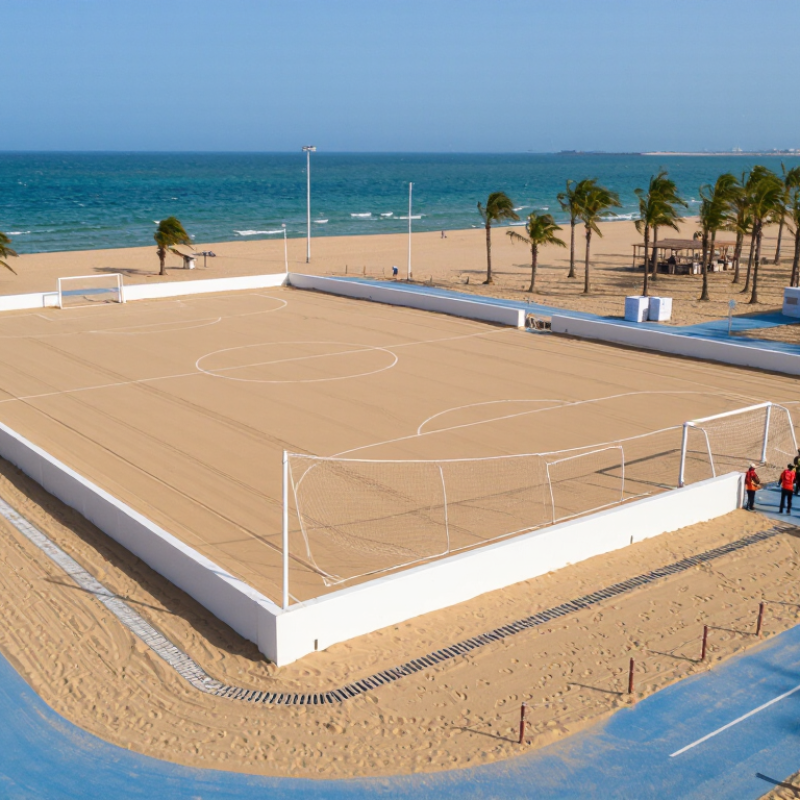
Choosing a China Top Beach Soccer Field Supplier requires more than comparing prices or browsing attractive project photos. A reliable supplier should understand the demands of coastal sports facilities, including salt exposure, strong sunlight, heavy rain, and frequent player impact. The right Beach Soccer Field needs stable sand, accurate dimensions, durable boundary systems, safe access points, and efficient drainage. These details affect player movement, maintenance costs, and long-term performance. Experience matters here. A supplier with completed beach sports projects can explain how materials perform after months of heat, wind, and repeated use.

Ask for technical drawings, material specifications, installation procedures, and evidence of completed projects. Check whether the supplier offers tested sand recommendations, protective treatments, replacement parts, and practical maintenance guidance. A professional team should also discuss local weather conditions instead of offering one standard package. That is a warning sign.

Do not trust every impressive image.

A dependable supplier communicates clearly about limitations, delivery schedules, installation risks, and warranty coverage. Independent certifications and client references can strengthen confidence, but they should be verified carefully. I have seen projects look excellent at handover yet develop drainage or boundary problems later. This is why inspection standards should be agreed upon before production begins. Ask who supervises installation, how defects are recorded, and what happens when specifications change. The cheapest offer may reduce initial spending, but it can create higher repair costs and safety concerns. A careful comparison should balance product quality, engineering support, transparent service, and proven field experience. That approach helps buyers choose a Beach Soccer Field supplier with credibility, not merely attractive marketing.

China Top Beach Soccer Field Supplier How to Choose?

Understanding Beach Soccer Field Requirements in China

China Top Beach Soccer Field Supplier How to Choose?

Understanding beach soccer field requirements in China starts with the site, not the supplier’s catalog. A competition field commonly measures about 35–37 meters long and 26–28 meters wide. However, local rules and event levels may require adjustments. Confirm the playing area, safety zones, player benches, and access routes before construction. The sand should be clean, fine, evenly graded, and free from sharp stones or debris. It must support movement without becoming dangerously loose.

Climate changes the design. Coastal areas may face heavy rain, salt air, strong sunlight, and seasonal wind.

A reliable field needs a stable base, effective drainage, and corrosion-resistant fencing. Drainage layers should remove water quickly without washing away the sand. During inspection, check the surface by walking, turning, and lightly digging several areas. Uneven depth can remain hidden after installation.

That is a practical warning.

Lighting deserves careful measurement. Glare, shadow, and uneven brightness can affect players and cameras. Fencing should protect spectators while allowing clear visibility.

Suppliers should provide material specifications, installation drawings, maintenance instructions, and realistic delivery schedules. Ask for test reports when available, but do not treat paperwork as proof of field quality. Visit completed projects if possible. Photos can hide weak drainage and poor sand grading.

No design is perfect, and budget pressure may force compromises. The important point is to identify them early and record who will correct them.

Key Materials and Construction Standards to Compare

Choosing a China beach soccer field supplier requires more than comparing quotations. The key test is construction quality. Ask for material certificates, installation records, and completed project evidence. Reliable suppliers should explain every layer beneath the playing surface.

Washed, rounded sand is essential for comfortable movement and safer falls. It should drain quickly without becoming dusty or compacted.

Compare sand grain size, cleanliness, depth, and laboratory test results. A geotextile layer can separate sand from the sub-base. Poor separation may cause stones to rise later. That problem is easy to miss during handover.

Drainage also deserves close inspection. The sub-base should maintain stable slopes and connect with properly sized channels. Check the field dimensions against current competition regulations and local building codes.

Confirm boundary spacing, goal anchoring, net strength, and corrosion resistance. Materials near the coast need protection from salt air. Request installation tolerances in writing.

A field can look level while holding water after rain. That is not a minor defect. Independent inspections and moisture tests add useful confidence.

Still, no checklist replaces careful site supervision. Suppliers may provide excellent drawings, yet workmanship can vary on busy projects. Choose a team willing to correct details, document changes, and discuss what could fail.

How to Evaluate Chinese Beach Soccer Field Suppliers

China Top Beach Soccer Field Supplier: How to Choose?

How to Evaluate Chinese Beach Soccer Field Suppliers

A reliable supplier should understand beach soccer, not only sell painted posts and nets. FIFA’s Beach Soccer Laws of the Game specify a field length of 35–37 metres and a width of 26–28 metres. The sand should reach at least 40 centimetres in depth. Ask the supplier for layout drawings, sand specifications, and drainage plans. Request photos from completed fields, including close-ups of boundary anchors and corner areas.

Quality evidence matters more than polished catalogs. The ISO Survey 2023 recorded 1,265,216 ISO 9001 certificates worldwide, but certification alone does not prove field performance. Check whether the factory uses incoming-material inspections, welding records, coating tests, and final packing reports. Ask for material grades and salt-spray test results for metal parts. A third-party inspection before shipment can reveal weak welds, incorrect dimensions, or missing accessories. I have seen attractive samples hide poor edge protection. Supplier claims need physical proof.

Tips: Compare at least three quotations. Request one complete bill of materials. Confirm replacement-part availability and installation guidance. Ask how the supplier handles warped posts or damaged nets. Keep every tolerance in writing. A low price may reflect thinner steel, weaker coating, or incomplete drainage preparation. Even experienced buyers can overlook the sand source. Test it on site, because local moisture and shell content can change player safety.

Supplier Qualifications, Quality Control, and Customization Options

China Top Beach Soccer Field Supplier: How to Choose?

A reliable supplier should provide verified company details, export experience, and clear production records. Ask for project photos, material certificates, and recent customer references. Experience matters because beach fields face salt, sand, strong sunlight, and heavy foot traffic. A professional supplier should explain drainage, sand depth, goal anchoring, and boundary installation in practical terms. Vague answers are warning signs.

Quality control must cover every stage. Check the sand’s cleanliness, particle size, and drainage performance. Inspect net strength, frame welding, fasteners, and protective coatings. Request factory inspection photos before shipment. Customization may include field dimensions, logos, colors, lighting, seating, storage, and removable equipment. However, customization should not weaken safety or maintenance access. I have seen attractive designs become difficult to repair. That lesson is easy to overlook.

Tips:

Prepare a written specification before requesting quotations. Include location, climate, usage frequency, budget, and installation conditions. Compare test reports, not just prices. Ask who checks the field after installation. Confirm replacement parts and response times in writing. A cheaper offer may exclude drainage work or stronger anchors. Read every line. Small omissions can become expensive problems. Also, leave room for expert adjustment; your first plan may not fit the site perfectly.

Pricing, Installation, Maintenance, and After-Sales Support

Choosing a top beach soccer field supplier requires more than comparing the lowest quotation. FIFA’s Beach Soccer Laws specify a 35–37 metre field length, a 26–28 metre width, and sand at least 40 centimetres deep. These requirements affect excavation, delivery, drainage, labour, and final pricing. Ask suppliers to separate every cost. Include sand testing, edge protection, lighting, transport, installation, and taxes. A cheap quote can hide major omissions. That is where procurement becomes uncomfortable.

Installation quality depends on sand cleanliness and drainage design. UNEP’s 2022 Sand and Sustainability report estimates that people use about 50 billion tonnes of sand and gravel annually. Therefore, responsible suppliers should identify legal, suitable sand sources and provide test results. During maintenance, operators should rake high-use zones, remove debris, check drainage after heavy rain, and restore displaced sand. FIFA’s 40-centimetre depth is not a one-time promise. Regular measurement matters. I would also request a written maintenance schedule, even if it feels overly cautious.

Tips: Compare at least three itemised quotations. Request project references, installation photos, warranty terms, spare-part availability, and response times. After-sales support should define emergency contact methods and inspection visits. A practical warranty should state what is covered, what is excluded, and who pays travel costs. Do not accept “lifetime support” without service-level details. The wording sounds impressive, but it proves very little.

China Top Beach Soccer Field Supplier How to Choose? - Pricing, Installation, Maintenance, and After-Sales Support
Field Package Type Recommended Playing Area Typical Sand Requirement Indicative China Supply Price Estimated Installation Time Key Equipment Included Annual Maintenance Budget After-Sales Support to Request Best Use Case
Standard Tournament Field Approximately 37 m × 28 m, excluding safety clearance and spectator zones Washed, rounded sand; normally 30–40 cm compacted depth, subject to site design and local conditions USD 25,000–55,000
Supply price; civil works, shipping, taxes, and land preparation may be additional
10–18 working days after the foundation and drainage are ready Boundary system, goals, nets, corner flags, player benches, technical-area equipment, line-marking materials, and basic drainage components USD 2,000–5,000 Installation drawings, commissioning checklist, spare-parts list, remote technical support, and a written warranty of at least 12 months Professional competitions, sports clubs, resorts, and municipal sports facilities
Training and Community Field Approximately 35 m × 26 m, with sufficient run-off space around the playing area Washed sand with controlled grain size; approximately 25–35 cm depth depending on the base structure USD 16,000–35,000
Usually excludes major ground improvement and permanent lighting
7–14 working days Goals, nets, boundary posts, field lines, protective padding, basic player benches, and maintenance tools USD 1,200–3,000 Assembly manuals, online training for local staff, replacement hardware availability, and response within 1–3 business days Schools, community centers, training academies, and hotel recreation areas
Temporary Event Field Approximately 35–37 m × 26–28 m, adapted to the event site Clean loose sand placed over a protected temporary base; depth commonly 20–30 cm for short-term use USD 12,000–30,000
Rental, transport, removal, and event labor can significantly change the final cost
3–7 working days for installation; 2–5 working days for removal Modular perimeter, portable goals, nets, temporary line system, access gates, and event signage supports USD 500–1,500 per event Site survey, delivery schedule, emergency replacement parts, on-site technician option, and dismantling plan Beach sports festivals, exhibitions, promotional events, and seasonal activities
Permanent Venue with Drainage Approximately 37 m × 28 m, plus drainage, service paths, lighting, and spectator circulation Washed and screened sand; commonly 30–40 cm playing depth over a properly graded and drained base USD 55,000–120,000+
May include infrastructure coordination but normally excludes land acquisition and major utilities
20–45 working days, depending on civil engineering and weather Permanent field system, drainage, goals, boundary protection, access gates, benches, storage, lighting provisions, and safety accessories USD 4,000–10,000 Engineering documents, drainage performance guidance, annual inspection option, priority technical service, and long-term spare-parts supply Dedicated sports parks, commercial venues, resorts, and high-traffic public facilities
Premium Broadcast-Ready Field Competition-size field with expanded technical, media, lighting, and spectator zones Uniform washed sand with regular screening and replenishment planning; final depth should be confirmed by the project engineer USD 90,000–200,000+
Broadcast systems, grandstands, roofing, and advanced lighting are often quoted separately
30–60 working days Competition field, high-visibility perimeter, reinforced goals, player areas, media zones, LED-ready lighting provisions, and enhanced safety systems USD 8,000–20,000 Dedicated project manager, preventive-maintenance schedule, service-level agreement, remote diagnostics, and priority on-site assistance Televised tournaments, professional event venues, and premium resort destinations
Selection guidance: Before comparing quotations, confirm the playing-area dimensions, sand specification, foundation and drainage responsibilities, installation scope, shipping terms, warranty duration, spare-parts availability, response time, and exclusions. Prices are indicative planning ranges in USD and should be verified through a site-specific quotation. A suitable sand soccer field should use clean, rounded sand without sharp particles, maintain effective drainage, and provide adequate safety clearance around the playing area.