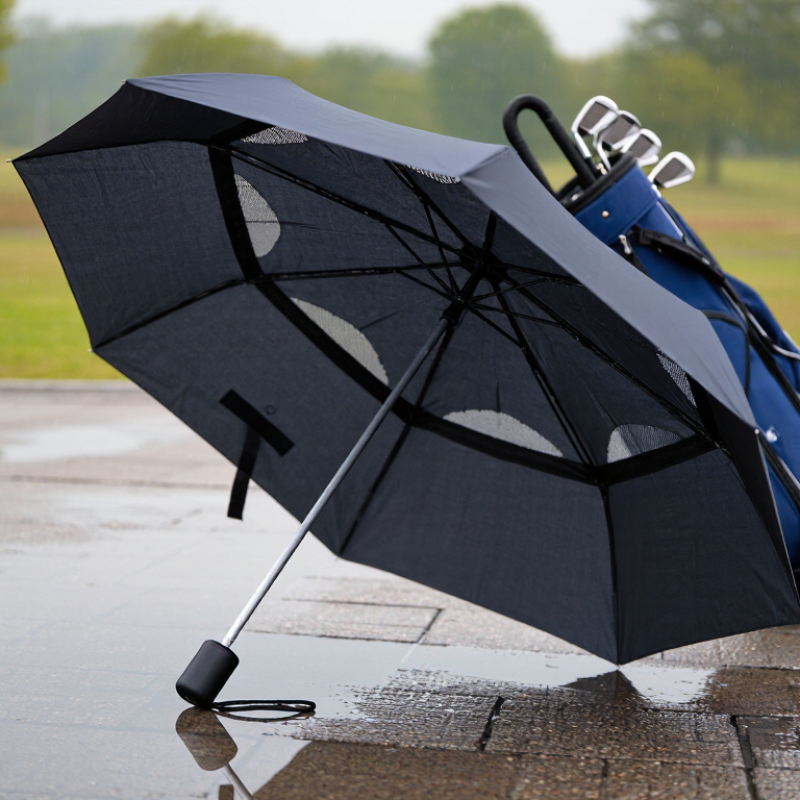
| Definition | A golf umbrella is a large umbrella designed to cover one or more people and golf equipment. | Choose it when broad coverage is more important than compact size. | Use it for golf, walking, spectator activities, commuting, or other situations requiring extended coverage. |
| Canopy Diameter | Common golf-umbrella canopies measure approximately 60–68 inches (152–173 cm) when open. | A 60–62 inch canopy is easier to handle; a 64–68 inch canopy provides more coverage but may be heavier and less convenient in crowded areas. | Open the canopy away from people, vehicles, and fragile objects because its wide span requires additional clearance. |
| Coverage | Depending on design and wind conditions, a large canopy can provide coverage for one or two adults and some equipment. | Prioritize canopy size if you regularly carry a golf bag or need shelter for two people. | Keep the canopy centered over the covered area and avoid forcing it into spaces narrower than its open diameter. |
| Closed Length | Many full-size golf umbrellas are approximately 36–42 inches (91–107 cm) long when closed. | Check the closed length before purchasing if you need to store the umbrella in a vehicle, locker, or entryway. | Use a protective sleeve or strap when storing it to prevent the canopy from snagging on nearby objects. |
| Opening Style | Manual-open and automatic-open mechanisms are both common; automatic models usually open with a spring-assisted button. | Select manual opening for a simple mechanism or automatic opening for faster one-handed deployment. | Keep fingers, faces, and nearby objects clear of the runner and ribs while opening or closing. |
| Frame Construction | A frame normally includes a shaft, ribs, stretchers, runner, and canopy-support points. Materials may include steel, aluminum, fiberglass, or combinations of these. | Fiberglass components are flexible and resistant to corrosion; aluminum is lightweight; steel can provide stiffness but may add weight. | Do not use the umbrella as a walking stick or lever, as excessive force can bend the shaft or damage the ribs. |
| Wind Performance | Wind resistance varies by frame design, canopy venting, construction quality, and wind direction. No umbrella is completely windproof. | Look for flexible ribs, reinforced joints, and a vented canopy when use in exposed areas is expected. Treat marketing wind-speed ratings cautiously unless testing details are provided. | Close the umbrella before strong gusts become difficult to control. Never force the canopy against the wind or use it during thunderstorms. |
| Vented Canopy | A vented canopy has an additional opening or overlapping panel that allows some air to escape. | Choose a vented design for open spaces where gusts are common, while recognizing that ventilation does not eliminate wind-related damage. | Check that vent panels are not blocked, torn, or stuck together after storage. |
| Canopy Material | Common canopy fabrics include polyester and nylon, which are lightweight, quick-drying, and water-resistant when properly finished. | Compare fabric density, stitching, seam quality, and the clarity of the manufacturer’s water-repellent claims. | Do not scrub aggressively or apply household solvents, as they may weaken the coating or discolor the fabric. |
| Handle and Grip | Handles may be straight, curved, molded, or ergonomic, with materials such as plastic, rubber, foam, or wood. | Choose a grip that feels secure with wet hands and is comfortable during extended carrying. | Wipe the handle clean and dry it if moisture or dirt causes the grip to become slippery. |
| Weight | Large golf umbrellas commonly weigh about 1–2 pounds (0.45–0.9 kg), depending on size and frame materials. | Choose a lighter model for walking or carrying over long distances; choose additional structure only when its handling remains comfortable. | Carry the umbrella by its handle rather than by the ribs or canopy, which can place stress on the frame. |
| UV Protection | Some canopies are made with fabrics or coatings intended to reduce ultraviolet exposure, but protection levels differ between products. | If sun protection matters, look for a clearly stated ultraviolet protection rating or test method instead of relying only on canopy color. | Inspect the fabric periodically for fading, peeling, or coating damage that may reduce performance. |
| Water Management | Umbrella fabric is water-resistant rather than permanently waterproof; performance can decline through wear and contamination. | Choose tightly stitched panels and a canopy with a smooth, intact surface and well-finished seams. | Shake off excess water, wipe away dirt, and allow the umbrella to dry fully while open before storing it closed. |
| Cleaning | Most fabric canopies can be cleaned with lukewarm water and mild soap. | Avoid products that require harsh chemicals or complicated maintenance if the umbrella will be used frequently. | Use a soft cloth or sponge, rinse thoroughly, and air-dry completely. Do not machine-wash or machine-dry the umbrella. |
| Storage | Long-term damp storage can encourage mildew, odor, corrosion, and fabric deterioration. | Choose a model that includes a sleeve or closure strap if organized storage is important. | Store it in a dry, ventilated place away from prolonged heat, direct sunlight, and heavy objects that could bend the frame. |
| Inspection Interval | There is no universal replacement schedule; condition depends on frequency of use, weather exposure, and handling. | Replace the umbrella when essential ribs, joints, shaft sections, or the canopy are damaged beyond safe use. | Before use, check the shaft, ribs, stretchers, runner, handle, seams, and opening mechanism for looseness, cracks, or sharp exposed parts. |
| Safety in Lightning | An umbrella does not protect a person from lightning and may increase the person’s height in an exposed area. | Do not select or use any umbrella as a substitute for proper shelter during a thunderstorm. | Stop using the umbrella and move into a substantial enclosed building or a hard-topped vehicle when thunder or lightning is present. |