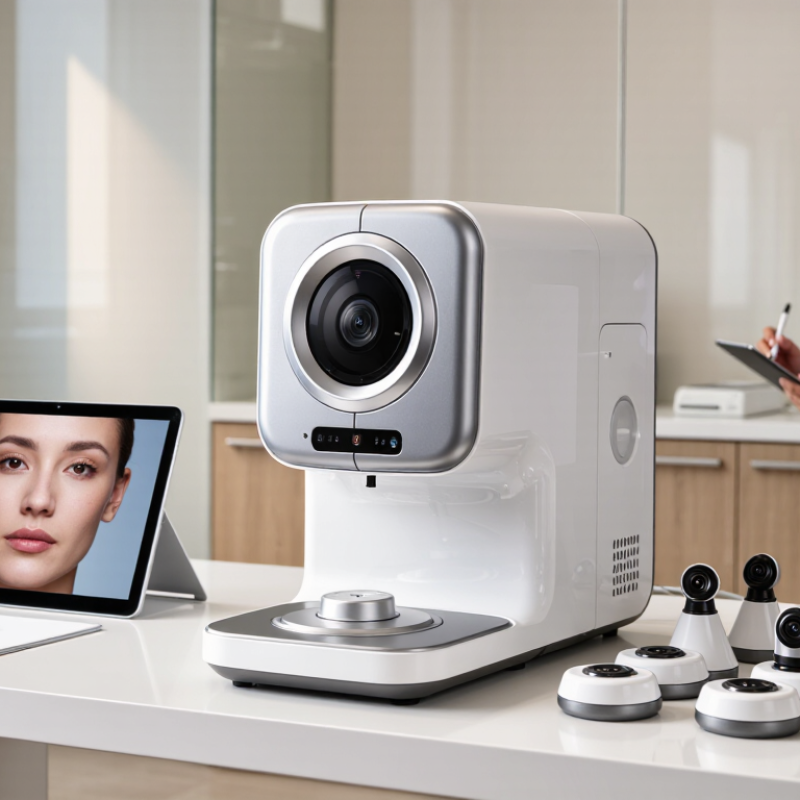
| 1 | Image Quality | Review camera resolution, focus consistency, exposure control, lighting uniformity, and image sharpness across different skin tones. | Request sample images captured under the same conditions. Confirm that the technical specification identifies sensor resolution and illumination type rather than using only terms such as “high definition.” | Blurry or uneven images can produce inconsistent measurements and make before-and-after comparisons unreliable. |
| 2 | Measurement Validity | Determine whether the system reports observable image-based indicators or makes medical diagnostic claims. | Ask for validation methodology, test population details, repeatability data, and definitions for terms such as pores, wrinkles, pigmentation, redness, and texture. Treat cosmetic scores as estimates, not clinical diagnoses. | Unvalidated scores may mislead users, especially when used to recommend treatments or products. |
| 3 | Lighting and Environmental Control | Check whether ambient light, distance, camera angle, facial expression, and makeup affect the results. | Look for a fixed imaging position, controlled illumination, face-position guides, and written capture instructions. A repeat test should use the same lighting and camera distance. | Changing capture conditions can be mistaken for genuine skin improvement or deterioration. |
| 4 | Safety and Electrical Compliance | Verify electrical safety, power supply compatibility, overheating protection, cable condition, and the intended operating environment. | Request applicable conformity documents and test reports. IEC 60601 requirements may apply to medical electrical equipment, while ordinary cosmetic imaging devices may follow different rules depending on their intended use and market. | Non-compliant equipment can create electrical, fire, liability, or market-access problems. |
| 5 | Privacy and Data Protection | Find out where facial images are stored, who can access them, how long they are retained, and whether they are transferred to a cloud service. | Require a privacy notice, data-processing terms, deletion workflow, access controls, encryption information, and consent procedures. GDPR or other privacy laws may apply depending on location and processing activities. | Poor data controls can expose sensitive facial information and create regulatory or reputational risk. |
| 6 | Software and Algorithm Transparency | Assess how results are calculated, how often the software is updated, and whether the system distinguishes measurement from interpretation. | Request a feature list, version history, update policy, calculation definitions, and information about testing across different ages, skin tones, and facial conditions. | Opaque or frequently changing algorithms can make results difficult to explain and compare over time. |
| 7 | Ease of Use and Workflow | Evaluate setup time, user guidance, language options, report generation, customer records, and staff training requirements. | Conduct a live demonstration. Record the number of steps from registration to report, and confirm that a new operator can complete the process using the supplied instructions. | A complicated workflow reduces staff adoption and increases capture or interpretation errors. |
| 8 | Hygiene and Physical Design | Inspect surfaces, removable contact parts, ventilation openings, cable routing, and cleaning requirements. | Choose non-porous, easily cleanable surfaces where possible. Request approved cleaning agents and confirm that cleaning instructions do not damage lenses, coatings, or touchscreens. | Difficult-to-clean equipment may increase cross-contamination risk and shorten service life. |
| 9 | Integration and Reliability | Check compatibility with computers, tablets, customer-management systems, printers, network connections, and backup procedures. | Confirm supported operating systems, file-export formats, offline functionality, backup options, warranty coverage, spare parts, and expected service response times in writing. | Compatibility issues or prolonged downtime can interrupt consultations and cause data loss. |
| 10 | Total Cost and Return on Investment | Calculate the complete cost of ownership, including installation, software subscriptions, training, maintenance, consumables, tax, and replacement parts. | Compare the three-year total cost with the expected number of consultations. Request a written quotation that separates one-time fees from recurring charges and states cancellation terms. | A low purchase price may become expensive when recurring software, support, or repair costs are included. |