20% off Demo Text

How to Choose an Automatic Zipper Machine?

Choosing an automatic zipper machine is a production decision, not merely an equipment purchase. It affects output speed, product consistency, labor requirements, and long-term maintenance costs. A suitable machine should match zipper type, material thickness, required width, and daily production volume.

Industry data shows why automation deserves careful attention. The International Federation of Robotics reported 541,302 industrial robots installed worldwide in 2023, confirming continued investment in automated manufacturing. The International Textile Manufacturers Federation also tracks substantial machinery shipments across spinning, weaving, and finishing sectors. These reports do not isolate zipper machines, which is an important limitation. Still, they reflect a broader move toward measurable, repeatable production.

A practical evaluation should examine feeding accuracy, cutting tolerance, sealing quality, operating speed, changeover time, and operator safety. Inspect the machine closely. Look at the guide rails, sensors, heating units, and control panel. Ask suppliers for test samples using your actual zipper tape and fabric. A machine producing 60 pieces per minute may appear efficient, but frequent stoppages can reduce its real output. That difference matters.

Experience also shows that the cheapest quotation can become expensive after installation. Spare-part availability, technical training, warranty coverage, and response time deserve equal attention. Energy consumption should be compared under normal operating conditions, not only advertised settings. This guide explains how to choose an automatic zipper machine through performance data, application requirements, supplier credibility, and total ownership cost. Some assumptions may fail in unusual production environments. That is exactly why careful testing remains essential.

How to Choose an Automatic Zipper Machine?

Understanding Automatic Zipper Machines and Their Main Applications

How to Choose an Automatic Zipper Machine?

Understanding Automatic Zipper Machines and Their Main Applications

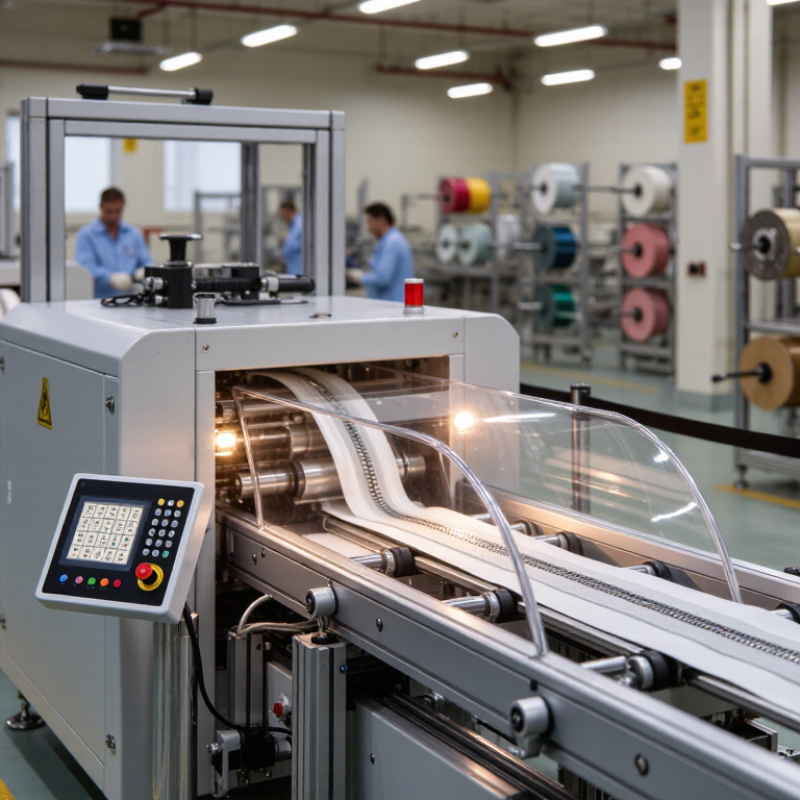
An automatic zipper machine performs feeding, alignment, sewing, cutting, or inspection with limited manual handling. It helps maintain consistent spacing along long production runs. In my experience, stable feeding matters more than impressive speed. A zipper can look straight at the start, then drift near the final section. That small error may affect garment quality and customer satisfaction.

These machines serve clothing, luggage, footwear, home textiles, and protective covers. Apparel factories often use them for trousers, jackets, skirts, and uniforms. Luggage producers need stronger systems for thick tape and layered materials. Footwear applications demand careful control around curves and narrow edges. Before choosing a machine, check zipper width, tape material, fabric thickness, sewing pattern, and expected daily output. Servo control can improve positioning, but it may increase maintenance demands. No machine is perfect.

Tips: Test your actual zipper materials before ordering. Bring samples with different teeth, tapes, and fabrics. Watch the operator load and adjust the machine. If the process feels confusing, production delays may follow. Ask about cleaning access, spare parts, training, and safety guards. A slower machine with reliable alignment can outperform a faster model in real production. Reconsider the choice after a small trial run.

How to Choose an Automatic Zipper Machine? - Understanding Automatic Zipper Machines and Their Main Applications

Machine Type Primary Function Typical Zipper Compatibility Typical Production Capacity Automation Level Main Applications Key Advantages Important Selection Considerations
Automatic Zipper Cutting Machine Measures and cuts continuous zipper chain into preset lengths. Nylon coil, plastic molded, and metal zipper chains; compatibility depends on the cutting tool and feeding system. Approximately 20–60 cuts per minute, depending on zipper type, length, and machine configuration. Automatic feeding, measuring, cutting, and length control. Apparel, luggage, bags, home textiles, and accessory manufacturing. Check the supported zipper width, cutting tolerance, chain hardness, finished length range, and whether tape or chain cutting is required.
Automatic Zipper Slider Insertion Machine Feeds sliders onto separated or continuous zipper chain. Commonly used with nylon coil and molded plastic zippers; slider and chain profiles must match. Approximately 15–40 operations per minute under stable feeding conditions. Automatic slider feeding, alignment, insertion, and cycle control. Garments, jackets, trousers, bags, uniforms, and household textile products. Confirm slider shape, slider size, zipper chain profile, insertion direction, and the allowable variation in tape positioning.
Automatic Zipper End Stop Machine Attaches or forms top and bottom stops to prevent slider movement beyond the zipper ends. Metal, plastic, and coil zippers, subject to compatible stop materials and tooling. Approximately 20–50 pieces per minute, depending on stop type and product design. Automatic positioning, stop feeding, pressing or forming, and quality checking. Clothing, footwear, handbags, luggage, and industrial textile products. Evaluate stop material, fastening strength, tape thickness, stop position tolerance, and tooling changeover time.
Automatic Zipper Top-and-Bottom Stop Machine Performs multiple stop-attachment operations on a cut zipper assembly. Usually configured for a defined range of zipper sizes and stop components. Approximately 10–30 completed zipper assemblies per minute. Integrated feeding, positioning, stopping, and cycle sequencing. Ready-to-sew garment zippers, pockets, trousers, skirts, and small leather goods. Confirm the number of operations, product changeover method, positioning accuracy, and compatibility with different zipper lengths.
Automatic Zipper Sewing Machine Feeds and sews zipper tape to fabric panels or finished product components. Coil, molded, and metal zippers; machine feet and guides must match the zipper construction. Approximately 1,500–3,500 stitches per minute; actual output varies with seam length and operator handling. Automatic or semi-automatic feeding, alignment, sewing, and programmable stopping. Garments, pockets, cushions, bedding, bags, and upholstery products. Consider stitch type, presser-foot design, seam allowance, fabric thickness, zipper visibility, and fabric-feeding stability.
Automatic Zipper Locking and Reinforcement Machine Reinforces zipper ends or creates bartacks to strengthen high-stress areas. Most zipper constructions when the tape and fabric can be positioned securely under the clamp. Approximately 1,000–2,500 cycles per hour, depending on stitch pattern and reinforcement length. Automatic clamping, programmable stitch patterns, sewing, and thread trimming on selected configurations. Workwear, jeans, bags, luggage, sportswear, and protective clothing. Review stitch density, clamp dimensions, thread compatibility, reinforcement location, and the thickness of the assembled product.
Automatic Zipper Testing Machine Tests zipper opening and closing performance, slider travel, and selected strength characteristics. Metal, molded, and coil zippers with suitable fixtures and test settings. Typically 10–30 test cycles per minute, depending on test method and stroke length. Automatic cycling, force or travel monitoring, counting, and pass/fail recording. Quality-control laboratories, zipper production, garment factories, luggage, and outdoor equipment. Define the required test standard, travel distance, operating force range, fixture size, data-recording needs, and sampling frequency.
Automatic Zipper Packaging Machine Counts, folds, bundles, labels, or packs finished zippers for shipment or production-line use. Cut zipper assemblies, loose sliders, zipper rolls, or packaged accessory sets, depending on the feeder design. Approximately 20–80 packages per minute, depending on packaging format and product variation. Automatic counting, feeding, folding or bagging, sealing, and optional labeling. Garment accessories, hardware distribution, sewing factories, and e-commerce fulfillment. Check package dimensions, zipper length range, counting accuracy, film or bag material, label requirements, and changeover speed.
Note: Capacity figures are typical planning ranges rather than guaranteed outputs. Actual performance depends on zipper construction, product size, material variation, operator loading, tooling, maintenance, and required quality tolerances.

Assessing Zipper Types, Materials, and Production Requirements

How to Choose an Automatic Zipper Machine?

Selecting an automatic zipper machine starts with the zipper, not the machine. Separate metal, coil, and molded plastic zippers by structure, size, and finishing method. Metal chains need stronger feeding and cutting systems. Coil zippers require accurate tension control, or the spiral may twist during sewing. Molded plastic chains often need stable positioning around each tooth. Textile Exchange’s Materials Market Report 2024 recorded 124 million tonnes of global fiber production in 2023. Polyester represented about 57 percent. This figure supports careful planning for polyester tapes and recycled-material handling. However, recycled inputs can vary more than expected.

Production requirements decide the machine’s real value. Record target pieces per hour, zipper length, tape width, slider type, and acceptable defect rate. Then check feeding accuracy, changeover time, sensor response, and operator access.

ITMF’s 2024 industry survey described continued pressure on textile orders and factory capacity. A fast machine is not automatically economical. A poorly matched machine can create idle time, waste, and repeated adjustments. Test the actual zipper materials, not only sample photos. Ask for trial data, maintenance intervals, and measured output under continuous operation.

Tips: Run a two-hour material test before purchase. Measure misalignment, broken teeth, thread damage, and restart time. Keep separate settings for each zipper type. One setting rarely fits all. Leave room for manual inspection; automation can hide small defects. Review the result with operators, because their practical feedback may challenge the original specification.

Comparing Machine Features, Speed, Accuracy, and Automation Levels

How to Choose an Automatic Zipper Machine?

Choosing an automatic zipper machine starts with the zipper you actually produce. Check zipper length, tape width, tooth type, and slider dimensions before comparing machine specifications. A suitable machine should guide the tape smoothly and maintain steady tension. Small alignment errors can create waves, open teeth, or difficult slider movement. Ask for sample testing with your own materials. Catalog numbers are not enough.

Speed matters, but maximum speed can be misleading. A machine running at 80 pieces per minute may slow down when handling delicate tape or frequent size changes. In production, stable output is often more valuable than impressive peak speed. Look for servo control, adjustable feeding, and sensors that detect missing sliders or poor alignment. Accuracy should be measured through repeated samples, not one successful test. Keep records. They reveal problems.

Automation levels also affect labor, maintenance, and training. Basic automatic models may require manual loading but offer simpler operation and lower maintenance demands. Advanced systems can connect feeding, inspection, counting, and rejection functions. They save handling time, yet they also need skilled setup and reliable sensors. I once assumed more automation always meant better efficiency. That was too simple. A poorly adjusted automatic line can stop repeatedly and waste more time than a semi-automatic machine. Check changeover time, spare-part access, safety guards, and operator training before deciding. A practical trial often exposes details that brochures miss.

Checking Compatibility, Maintenance Needs, Safety, and Operating Costs

How to Choose an Automatic Zipper Machine?

Start with compatibility. Check zipper tape width, slider geometry, material, tooth spacing, and feeding direction against real samples. Do not trust a catalog photo. Request a supervised trial using your most difficult zipper type, not only a clean standard sample. Record jams, alignment errors, cycle time, and operator adjustments. A machine that runs quickly for ten minutes may struggle during an eight-hour shift.

Maintenance affects output more than many buyers expect. Ask whether cutters, guides, sensors, belts, and heating elements are locally available. Confirm replacement intervals, cleaning access, lubrication points, and diagnostic instructions. A practical maintenance log should capture stoppage minutes, fault codes, and parts replaced. My own rule is simple: price the boring parts first. A perfect spreadsheet is impossible, but ignoring service labor is worse.

Safety needs documented evidence. ISO 12100 recommends a formal risk assessment, while ISO 13849-1 addresses safety-related control systems. OSHA’s FY2024 Top 10 inspection results still included machine guarding, showing that exposed moving parts remain a workplace concern. Require interlocked guards, emergency stops, lockout procedures, and clear training materials. Operating cost also includes electricity and compressed air. The U.S. Department of Energy’s Motor Systems report estimates motor-driven systems use about 70% of industrial electricity. Compare standby consumption, motor efficiency, air leakage, and actual output per hour. The lowest purchase price is not always the lowest cost.

How to Choose an Automatic Zipper Machine?

Suggested evaluation weights for compatibility, maintenance, safety, and operating costs

Compatibility receives the highest weight because zipper size, material, slider design, and feeding method determine whether the machine can produce stable results. Maintenance and safety should be evaluated through access to wear parts, cleaning requirements, guarding, emergency stops, and operator protection. Operating costs include electricity, compressed air, consumables, labor, and planned downtime. These percentages are a practical starting framework and should be adjusted to match production volume and product specifications.

Selecting the Right Supplier and Evaluating Long-Term Production Value

How to Choose an Automatic Zipper Machine?

Selecting the Right Supplier and Evaluating Long-Term Production Value

Choosing an automatic zipper machine starts with the supplier, not the brochure. Ask for production records from similar factories and zipper specifications. A reliable supplier should explain output, defect rates, and maintenance intervals clearly. Request a live test using your fabric, tape, slider, and required zipper length. This reveals feeding errors that sample videos often hide. Check machine speed under continuous operation, not only its highest setting.

Long-term value depends on more than the purchase price. Examine motor quality, sensor accuracy, heating control, and access to replacement parts. Ask how quickly technical support responds to electrical or alignment problems. Clear manuals and practical operator training reduce stoppages. The supplier should also provide installation guidance, safety instructions, and a written warranty. Confirm whether common parts remain available after several years.

A lower quote may still become expensive. I have seen machines lose hours because one small sensor was unavailable. Calculate labor savings, electricity use, waste, downtime, and expected service costs. No forecast is perfect. Leave room for repairs and changing orders. Let operators test the machine before purchase. Their feedback may expose awkward controls or difficult cleaning points. A supplier willing to discuss weaknesses usually deserves closer attention. A supplier promising flawless performance does not.