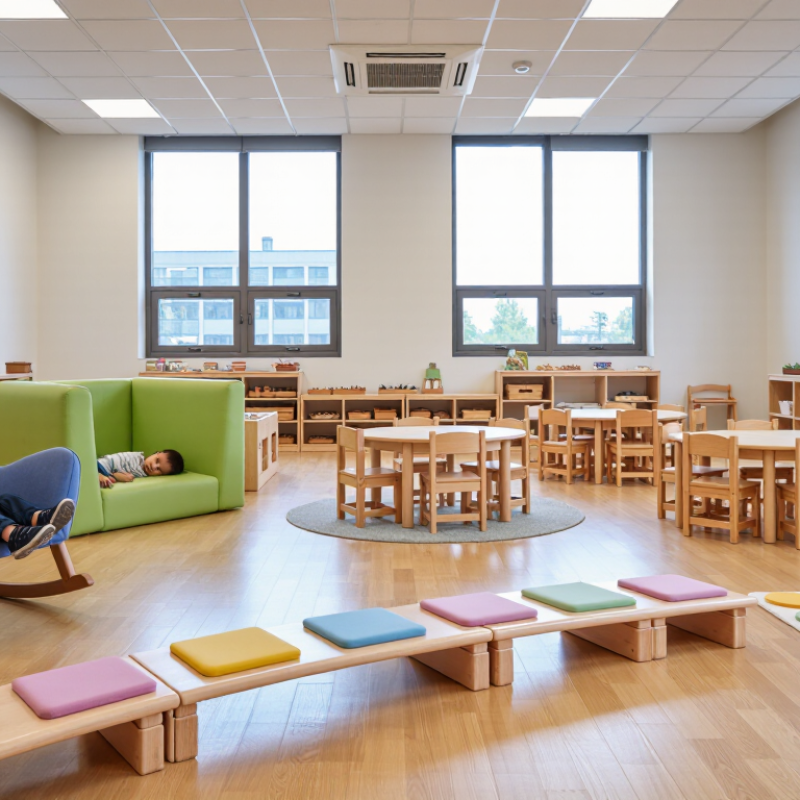
| Rocking Chair | Provides gentle, rhythmic movement that may help some children seek vestibular input or settle during quiet activities. | Wood or molded plastic frames; padded seats may use foam with fabric or wipeable upholstery. | Useful in a supervised reading or calm-down area. Choose a size that allows the child to sit with feet supported where possible. | Check that the chair is stable, has smooth edges, and rocks without trapping fingers. Follow the maker’s age and weight guidance; supervise use. | Compare rocking range, base stability, seat dimensions, surface cleanability, and whether the movement suits the intended space. |
| Wobble Stool | Allows small, self-directed movements while seated; movement can support active sitting for some children. | Typically a molded plastic seat with a rubber or other non-slip base. | Can be used at a child-sized table or in a flexible learning area. It is not a substitute for a stable chair when a task requires stillness. | Use on a level, non-slip floor. Check the base and seat regularly for wear, cracks, or loose parts, and observe whether the child can use it safely. | Compare seat height, base grip, permitted user weight, ease of cleaning, and how much movement the stool allows. |
| Floor Cushion or Beanbag | Offers a soft, low seating option and a change in body position; some designs provide a snug, enveloping feel. | Fabric covers with foam or bead filling; many covers are removable, though construction varies. | Works for supervised reading, floor play, or a quiet corner. A firmer cushion may be easier for children to get on and off independently. | Choose durable, securely closed covers and follow cleaning instructions. Keep loose filling inaccessible, and check the product’s age guidance and condition regularly. | Compare firmness, cover removability, seam and closure strength, fill type, size, and suitability for the classroom’s cleaning routine. |
| Foam Floor Seating | Provides a cushioned surface for floor-based activities and varied postures; it does not necessarily provide active movement. | Foam cores with fabric or wipe-clean coated covers, depending on the product. | Useful for group story time, play spaces, and low-level activity zones. Modular pieces can make layouts easier to change. | Use intact covers and inspect seams and foam for damage. Follow the manufacturer’s cleaning guidance; keep seating clear of exits and walkways. | Compare firmness, cover material, removable-cover options, dimensions, modularity, and how easily pieces can be stored. |
| Tactile Activity Panel | Offers varied touch experiences through different textures or movable elements; sensory response can differ from child to child. | May combine wood or plastic panels with securely attached fabric, textured surfaces, or other tactile components. | Can be wall-mounted or incorporated into a low activity unit. Place it where children can explore without blocking circulation. | Securely mount wall units as instructed. Inspect for loose parts, sharp edges, and damage; choose features that can be cleaned appropriately. | Compare texture variety, durability, attachment security, mounting requirements, accessible height, and cleaning needs. |
| Child-Sized Activity Table | Supports tactile, visual, and fine-motor activities when paired with suitable materials; the table itself does not provide a specific sensory input. | Common options include solid wood, engineered wood, or molded plastic, with different edge and surface finishes. | Suitable for art, construction, sensory bins, and small-group work. Match table height to the children and the seating used. | Look for a stable base, smooth edges, and a surface suitable for the planned activities. Secure the table and keep heavy items from creating a tipping risk. | Compare height, usable surface area, legroom, stability, resistance to routine cleaning, and compatibility with classroom chairs. |