China Best Camping Tarp Supplier for Wholesale Buyers?
For wholesale buyers, finding the best China Camping Tarp supplier requires more than comparing factory prices. It requires evidence, consistency, and a clear understanding of outdoor-use conditions. The 2024 North American Camping Report by Kampgrounds of America reported that 57.8 million American households went camping in 2023. This sustained demand increases pressure on importers to secure dependable shelter products, not merely attractive quotations.
A professional supplier should demonstrate fabric specifications, coating performance, seam construction, and production control. Typical buying checks include polyester or ripstop fabric weight, waterproof ratings, UV resistance, reinforced webbing, eyelet strength, and packed dimensions. These details matter when a tarp faces heavy rain, sharp branches, or repeated folding inside a crowded vehicle. The Outdoor Industry Association also reported continued growth in outdoor participation, showing why reliable equipment remains commercially important. However, market growth does not automatically prove product quality.
That is the difficult part.
A capable Chinese manufacturer should provide material samples, inspection records, batch traceability, realistic lead times, and transparent customization limits. Factory experience with OEM packaging can also reduce confusion during wholesale distribution. Reports offer useful direction, but they cannot replace hands-on sample testing. I have seen specifications look impressive while stitching failed under ordinary tension. That possibility deserves attention. Buyers should therefore assess supplier communication, quality consistency, export experience, and after-sales support before signing large orders. A dependable Camping Tarp partner combines measurable performance with practical manufacturing judgment, helping wholesalers protect margins and build customer trust.
What Defines a Reliable China Camping Tarp Supplier?
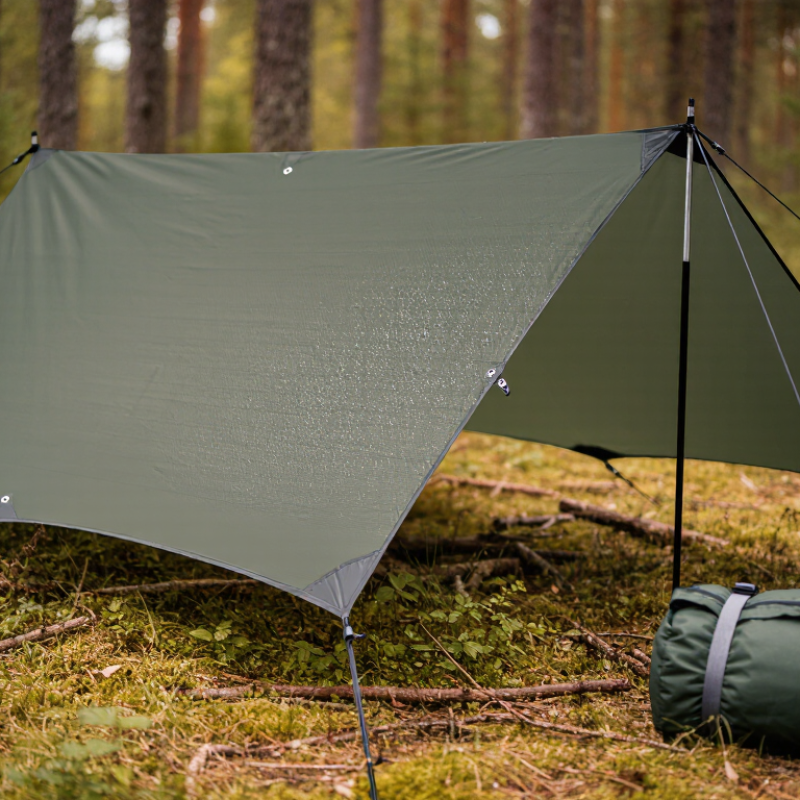
A reliable China camping tarp supplier does more than quote a low unit price. In wholesale sourcing, reliability appears in small, testable details. Ask for fabric weight, coating type, finished size, seam construction, and packed dimensions. A serious supplier answers with specific data, not vague promises. Request a physical sample before approving bulk production. Check the tarp under steady rain, inspect seam tape, and measure each edge after drying. Field experience matters here. A tarp that looks strong in a showroom may sag when wet.
Production capability should be visible and verifiable. Suppliers should explain their cutting process, sewing equipment, inspection points, and monthly capacity. Request recent inspection records, material certificates, and clear product photos with dates. Independent testing can confirm waterproof performance, tear strength, colorfastness, and hardware durability. These checks cost time, but one failed shipment can cost much more. The supplier should also provide a written tolerance range for dimensions and weight. “About 3 by 4 meters” is not enough for wholesale planning.
Communication reveals another layer of trust. A dependable team confirms drawings, packaging labels, carton limits, and delivery terms in writing. They report delays early and offer practical options. Be cautious when every answer is instant and perfect. Real production has limits. I have found that honest discussion about fabric substitutions often prevents larger problems later. Still, buyers should keep their own inspection process, because trust without evidence is only an assumption. A reliable partner accepts questions, records changes, and treats repeat quality as a measurable responsibility.
How to Compare Wholesale Camping Tarp Materials and Designs
Wholesale buyers should compare camping tarp materials before discussing price or production volume. Polyester tarps are light, packable, and suitable for frequent retail use. Ripstop nylon offers excellent strength, but it may stretch when wet. Polyethylene tarps usually cost less and resist moisture well. PVC-coated fabric feels heavier, yet it can handle demanding outdoor conditions.
Ask suppliers for fabric weight, waterproof ratings, tear strength, coating type, and seam construction. A reliable supplier should provide samples and clear test information. Check the tarp under running water, then inspect the seams after folding. Measure twice. Small stitching gaps can become serious leaks during heavy rain. I have found that printed specifications sometimes hide important details, especially coating thickness and edge reinforcement.
Design also affects wholesale value. Compare reinforced corners, rust-resistant grommets, adjustable guy points, storage bags, and repair patches. A practical tarp should open smoothly and pack without excessive bulk. Confirm finished dimensions, folded size, color tolerance, packaging, and sample approval procedures. Ask whether the supplier can maintain consistent quality across repeated orders. That question matters more than a low first quotation.
Do not judge durability from a single sunny-day test. Wind, wet fabric, rough ground, and repeated folding reveal weaknesses. Some buyers overlook setup time. That was a mistake in one field evaluation. A slightly lighter tarp may sell better when customers value portability, while larger commercial users may prefer reinforced, heavier fabric. Comparing real use cases creates a more dependable purchasing decision.
What Customization Options Can Wholesale Buyers Request?
China Best Camping Tarp Supplier for Wholesale Buyers
Wholesale buyers can request more than a printed logo. They can specify fabric weight, weave, coating, dimensions, colors, and attachment points. Common choices include 210D or 300D polyester, PU or silicone coatings, taped seams, reinforced corners, and adjustable webbing loops. A supplier should provide coating samples and laboratory test results before mass production.
Demand supports careful product planning. The Outdoor Industry Association reported 57.8 million Americans went camping in 2023. Grand View Research also identifies growing demand for lightweight, durable outdoor equipment. These figures suggest opportunity, but buyers still need practical specifications. A 3×3-meter tarp may suit two campers, while a 4×6-meter model offers better cooking and storage coverage. Bigger is not always better.
Customization can include waterproof ratings, flame-resistant fabrics where legally permitted, compression bags, cartons, hangtags, and barcode labels. Buyers may request logo printing or woven labels, but color accuracy should be checked under daylight. I have seen dark coatings feel strong yet become stiff in cold weather. That detail is easy to miss. Ask for prototype testing in wind and rain, then review seam leakage, pack size, and setup time. Wholesale orders should also define tolerances, inspection standards, and replacement procedures before production begins.
What Should Buyers Know About Shipping and After-Sales Support?
China Best Camping Tarp Supplier for Wholesale Buyers?
For wholesale buyers, shipping deserves the same attention as fabric quality. Ask for carton dimensions, gross weight, loading quantity, and estimated production time. These details affect freight costs and warehouse planning. A dependable supplier should provide a clear commercial invoice, packing list, and tracking information. Confirm whether the quotation covers port charges, duties, or only factory delivery. Ambiguous terms can create expensive surprises.
After-sales support should be written into the purchase agreement. Request the warranty period, acceptable defect rate, claim procedure, and response time. For damaged cartons, take photos before opening them. Keep batch numbers and inspection records. Experienced suppliers can usually identify whether damage came from packing, transport, or manufacturing. Still, no system is perfect. A supplier may respond quickly but offer slow replacement parts. Test the process with a small order before scaling up.
Tips: Confirm the shipping term in writing. Ask for moisture-resistant packaging and corner protection. Choose pre-shipment inspection for large orders. Keep one sample from each batch. Agree on replacement or credit options before payment. Do not rely on verbal promises. A short video call can also reveal packing methods and warehouse conditions. Small checks matter.
China Camping Tarp Wholesale: Shipping Lead-Time Planning
Typical planning ranges for China-origin wholesale shipments vary by transport mode. Ocean freight usually offers the best cost efficiency for bulk camping tarp orders, while air freight and express services reduce transit time at a higher cost. Before placing an order, buyers should confirm the Incoterm, destination charges, customs responsibility, damage-claim process, replacement policy, spare-parts availability, and expected after-sales response time. Transit times are indicative planning ranges and should be confirmed with the supplier and freight forwarder.