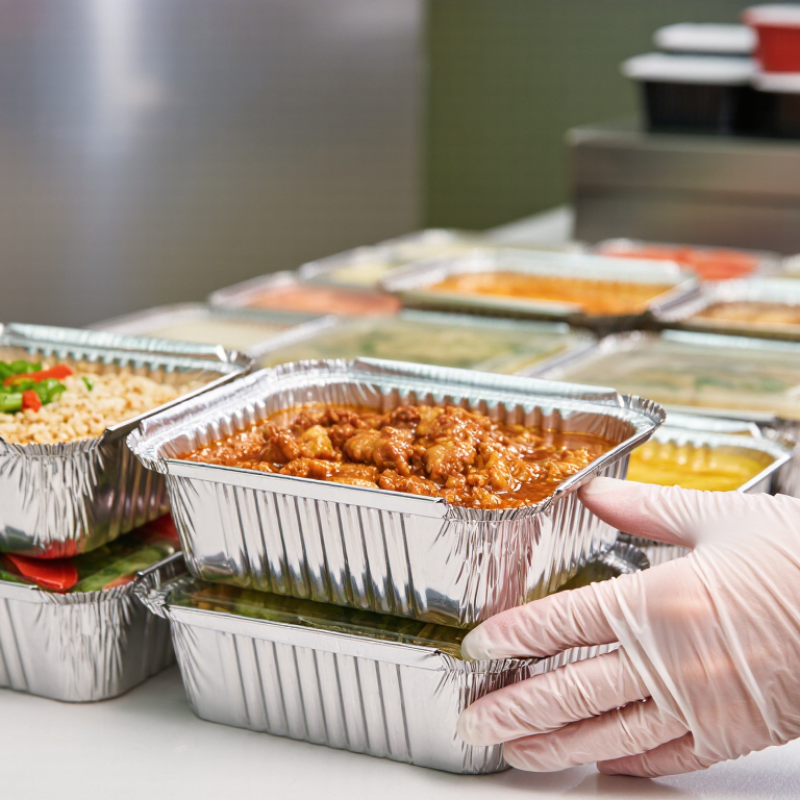
| Small rectangular tray | 250–500 ml | Single-compartment, compact rectangular format | Side dishes, desserts, snacks, small portions, and samples | Lightweight, stackable, and suitable for portion control | Use a compatible lid; avoid overfilling hot or liquid foods |
| Medium rectangular meal tray | 650–1,000 ml | Single-compartment or shallow-rim design | Rice dishes, pasta, roasted vegetables, noodles, and standard takeaway meals | Good balance of capacity, rigidity, and transport efficiency | Allow space below the rim to reduce leakage and lid deformation |
| Large rectangular meal tray | 1,200–2,000 ml | Deep tray, often with reinforced corners | Family meals, catering portions, mixed dishes, and leftovers | High volume, strong heat retention, and convenient oven-to-table use | Check that the filled tray is adequately supported during delivery |
| Compartment tray | 600–1,200 ml | Two- or three-section rectangular tray | Complete meals containing a main dish, side dish, salad, or sauce | Helps separate foods and preserve presentation | Compartments do not guarantee leak prevention; use a secure lid |
| Round foil container | 400–1,500 ml | Round, straight-wall, or fluted-edge format | Soups, stews, baked dishes, curries, pies, and prepared meals | Suitable for portioned foods and easy circular stacking | Hot liquids require a tight-fitting lid and upright handling |
| Pie or bakery container | Individual to family-size portions | Round or oval shallow dish | Pies, quiches, tarts, cakes, roasted bakery products, and desserts | Can support baking, display, storage, and reheating in one container | Use ventilation or a suitable lid for products that release steam |
| Roasting or catering pan | 2,000–5,000 ml or more | Deep rectangular pan with broad rim | Lasagne, roasted meat, catering trays, baked pasta, and buffet service | Large surface area, low weight, and efficient bulk-food handling | Place on a rigid tray or cart when carrying heavy filled pans |
| Aluminium container with board or plastic lid | Depends on the base container | Matching lid with crimped, snap-on, or rim-fit closure | Delivery meals, food display, takeaway service, and chilled storage | Improves stacking, cleanliness, and protection during transport | Confirm lid compatibility, sealing performance, and temperature limits |
| Plain aluminium container | Available in multiple capacities | Uncoated foil or formed aluminium body | Dry foods, baked goods, roasted foods, and short-term food service | Good thermal conductivity and generally suitable for oven heating | Acidic or salty foods may react with uncoated aluminium during extended storage |
| Coated aluminium container | Available in multiple capacities | Food-contact coating applied to the interior or surface | Acidic sauces, tomato-based dishes, marinades, and longer holding periods | Can provide improved resistance to food interaction and staining | Verify that the coating is food-contact compliant and suitable for the intended temperature |
| Oven-use container | Small individual to large catering sizes | Heat-resistant aluminium tray or pan | Cooking, baking, reheating, and oven-to-table service | Aluminium transfers heat efficiently and tolerates common oven temperatures | Remove any lid or component not specifically rated for oven use; never use in a microwave unless expressly approved |
| Chilled or frozen-food container | 250–2,000 ml | Rigid tray with compatible cover | Prepared meals, desserts, frozen portions, and meal-prep products | Lightweight, moisture-resistant, and suitable for organized storage | Leave headspace for foods that expand when frozen and prevent sharp edges from damaging packaging |
| Recyclability profile | Not capacity-specific | Clean, empty aluminium packaging | Post-use collection and material recovery | Aluminium can be recycled repeatedly when accepted by the local recycling system | Remove excessive food residue; recycling rules differ by municipality and facility |