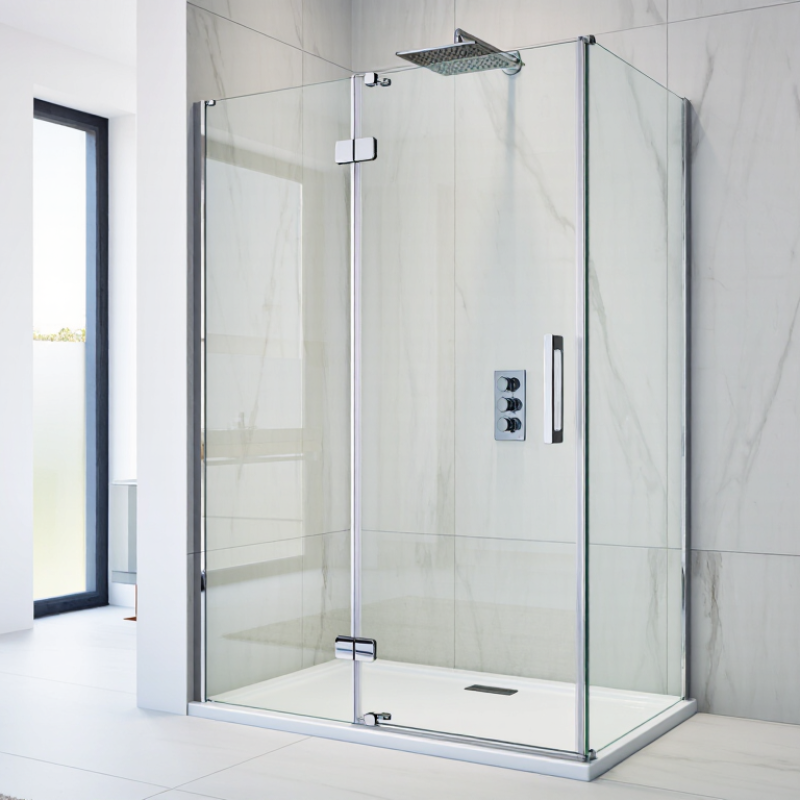
| Product and project experience | A documented range of hinged shower doors, including different opening configurations, glass options, finishes, and enclosure layouts. | Relevant experience helps a supplier assess installation conditions, clearances, hardware compatibility, and project-specific requirements. | Request product drawings, technical specifications, and examples of comparable projects. Confirm which configurations are made in-house. |
| Glass safety and compliance | Glass specifications and test documentation that match the regulations applicable in the destination market. Commonly referenced standards include EN 12150 for thermally toughened soda-lime silicate safety glass and, in the United States, ANSI Z97.1 and 16 CFR Part 1201. | Safety requirements depend on the market and product application. A standard reference alone does not prove that a specific finished product complies. | Ask for current test reports or certificates identifying the product, glass type, thickness, testing body, and applicable standard. Verify that the documentation covers the goods being ordered. |
| Hardware and corrosion resistance | Clear specifications for hinges, handles, brackets, seals, and fasteners, including material grades or coating details where applicable. | Hardware affects door movement, alignment, durability, and performance in a wet environment. | Request material and finish specifications, care instructions, and available test evidence for corrosion-resistance claims. Confirm replacement-part availability. |
| Quality management and inspection | Documented production checks for glass dimensions, edge finishing, drilling, hardware fit, door alignment, and final packaging. | Consistent inspection procedures can reduce dimensional variation, assembly issues, and damage discovered after delivery. | Request the inspection checklist, sample inspection records, and the scope and validity of any quality-management certification. Check that the certificate applies to the relevant site and activities. |
| Customization and technical support | Ability to review opening measurements, wall conditions, hardware options, and project drawings before production. | Hinged doors rely on accurate measurements and suitable clearances. Early technical review can identify installation conflicts before fabrication. | Ask how measurements are submitted and approved, what tolerances apply, and who confirms the final drawings before production. |
| Production capacity and lead-time control | Production planning that accounts for order quantity, customization, material availability, inspection, and packing. | Quoted lead times are more useful when they specify the production scope and the point at which the schedule begins. | Request a written schedule covering drawing approval, production, inspection, and dispatch. Confirm how changes or delays are communicated. |
| Packaging and transport protection | Packaging designed to protect glass edges, corners, and hardware during handling and transit, with clear identification for each package. | Glass products are vulnerable to impact and edge damage. Appropriate packing and handling instructions help manage transit risk. | Request packing specifications, loading photos where available, carton or crate dimensions, and instructions for receiving and inspecting the shipment. |
| Export documentation and communication | Experience preparing the documents required for the agreed shipment, such as commercial invoices, packing lists, and transport documents. | Accurate paperwork supports customs processing and helps buyers coordinate freight, receiving, and installation. | Confirm the responsible contact, document list, shipment terms, and process for resolving discrepancies before the order is placed. |
| Warranty and after-sales support | Written warranty terms that define coverage, exclusions, claim procedures, and responsibility for replacement parts. | Clear terms help buyers understand how defects, transit damage, and routine wear are handled after delivery. | Request the warranty document and claims process. Clarify required evidence, response times, and whether spare hardware or seals can be ordered separately. |
| Supplier verification | Consistent company, factory, product, and payment information across quotations, contracts, certificates, and shipment documents. | Cross-checking documents helps buyers assess supplier identity and ensure that claims relate to the actual manufacturing and supply arrangements. | Verify business and factory details independently, arrange a factory audit or third-party inspection when appropriate, and use a contract that specifies product requirements and acceptance criteria. |