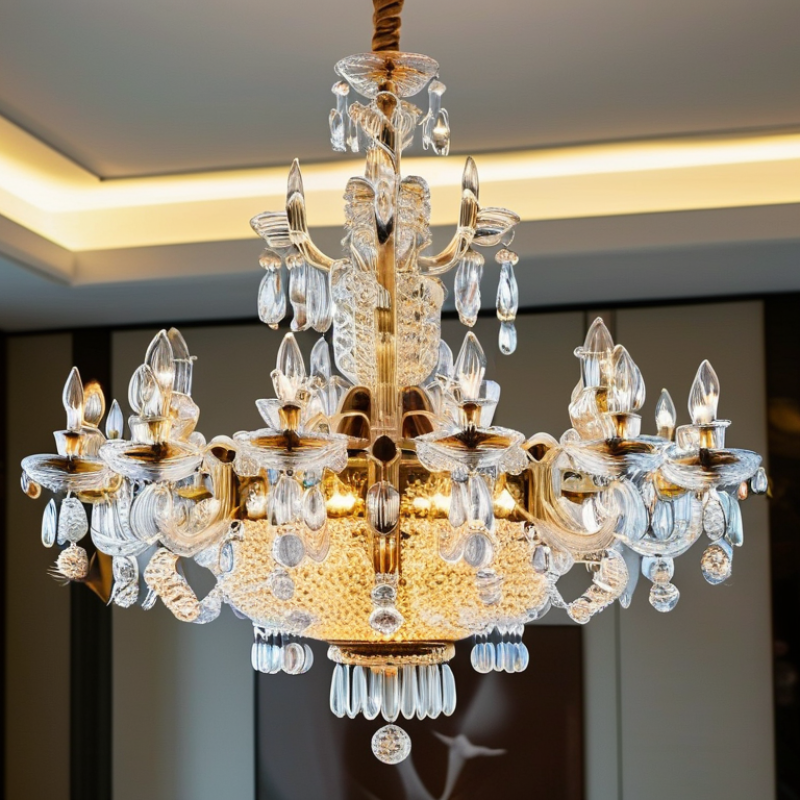
| 1. Product Definition | A clear quotation based on the required chandelier type, dimensions, finish, light source, and installation conditions. | Product type may include pendant, linear, flush-mount, or multi-tier chandelier. Key dimensions are diameter, height, canopy size, and hanging length. | Confirm that the specification matches the project drawings and ceiling height. | Technical drawing, product specification sheet, material list, and quotation. |
| 2. Supplier Screening | Verifiable business information, production capability, quality procedures, export experience, and responsive communication. | Review company registration details, factory or workshop capacity, inspection process, and previous project experience without relying only on online listings. | Use at least three comparable quotations and check whether specifications, packaging, and trade terms are stated consistently. | Business license copy, factory audit report, production photos, inspection records, and customer references where available. |
| 3. Design and Customization | Support for changes to size, finish, number of lights, suspension system, color temperature, and control method. | Custom work generally requires approved drawings, material confirmation, finish samples, and a defined revision process. | Approve one controlled drawing revision before production and identify all non-standard components. | Signed or digitally approved drawings, finish samples, lighting schedule, and change-order record. |
| 4. Sample and Prototype | A physical sample, finish sample, or prototype when appearance, fit, or construction cannot be verified from drawings alone. | Sample approval should cover dimensions, surface finish, wiring layout, light distribution, suspension parts, and visible hardware. | Record deviations and make the approved sample the reference standard for mass production. | Sample approval form, photographs with measurements, test report, and signed deviation list. |
| 5. Electrical and Safety Review | Electrical specifications suitable for the destination market, including voltage, frequency, lamp or LED details, grounding, and installation instructions. | Common supply systems include 220–240 V at 50 Hz and 110–120 V at 60 Hz, depending on the destination. Requirements must be confirmed for the project location. | Verify compatibility with local regulations, dimming systems, ceiling loads, and licensed installation requirements. | Wiring diagram, component datasheets, insulation or continuity test results, installation manual, and applicable conformity documents. |
| 6. Commercial Terms | A written offer showing product price, tooling or sampling charges, packaging, payment terms, trade term, validity period, and exclusions. | Frequently used trade terms include EXW, FOB, CIF, and DDP; the exact cost and risk allocation differs for each term. | Compare total landed cost rather than unit price alone, including freight, insurance, duties, taxes, inspection, and installation parts. | Pro forma invoice, purchase contract, packing requirements, payment schedule, and agreed Incoterm. |
| 7. Production Planning | A production schedule covering material purchasing, fabrication, finishing, assembly, testing, packing, and shipment readiness. | Lead time varies by design complexity, order quantity, customization, component availability, and seasonal production load. | Set milestone dates and require early notice for material shortages, design changes, or delays. | Production schedule, material confirmation, progress photographs, and milestone report. |
| 8. Quality Inspection | A documented inspection system covering quantity, dimensions, finish, assembly, electrical safety, accessories, and packaging. | Inspection may be performed before production, during production, before shipment, or through an independent third party. | Define acceptable tolerances, defect categories, inspection sampling method, and corrective-action requirements in advance. | Pre-shipment inspection report, measurement records, defect photographs, corrective-action report, and carton count. |
| 9. Packaging and Logistics | Protective packaging designed for fragile metal, glass, crystal, acrylic, or other decorative components, with clear carton identification. | Packaging should separate delicate parts, prevent movement, control moisture exposure, and include installation hardware and spare components where agreed. | Confirm carton dimensions, gross and net weights, stacking limits, shipping marks, and insurance responsibility. | Packing list, commercial invoice, carton photographs, shipping marks, and transport documents. |
| 10. Delivery and Installation Support | Clear installation instructions, parts labeling, replacement-part support, and timely assistance with damaged or missing components. | Large or multi-tier chandeliers may require site coordination, ceiling reinforcement review, and professional installation. | Check the shipment immediately after arrival and document visible damage before signing transport records where applicable. | Installation manual, assembly diagram, spare-parts list, warranty terms, and after-sales contact procedure. |
| 11. Final Supplier Selection | A supplier that balances product quality, communication, compliance, production control, delivery reliability, and total cost. | A practical evaluation can score price, quality, customization, compliance, lead time, packaging, communication, and after-sales support on a weighted basis. | Select the supplier with the strongest overall risk-adjusted value, not necessarily the lowest quotation. | Completed supplier scorecard, approved contract, quality agreement, delivery schedule, and documented risk review. |