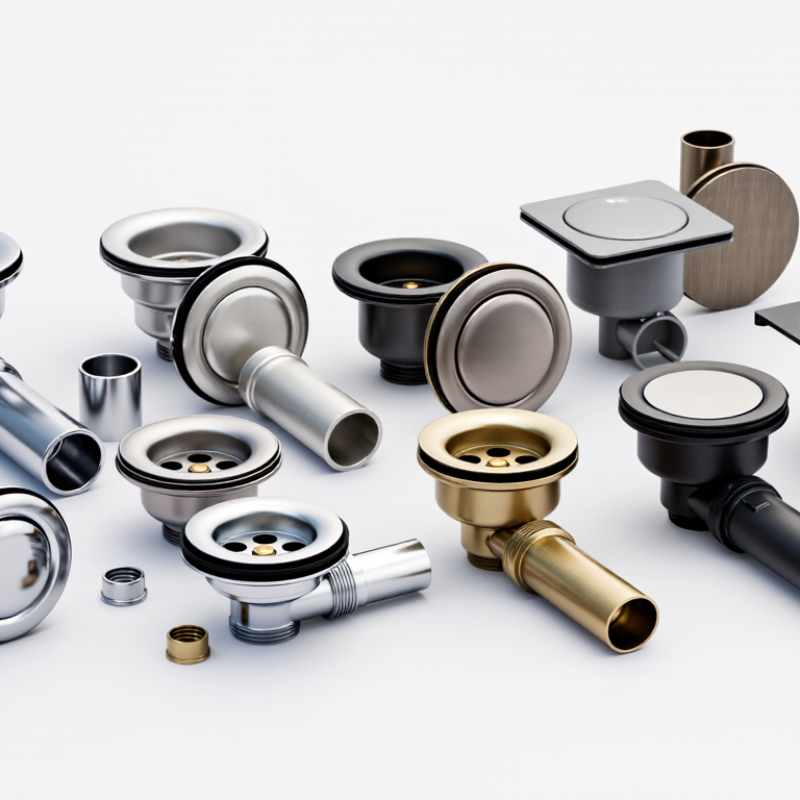
| 1 | Product range and application fit | Check availability of drain types and configurations suitable for the intended lavatory, such as pop-up, grid, or click-clack designs, and confirm whether an overflow connection is required. | Product catalogue, technical drawings, and written confirmation of the selected configuration. | 15% |
| 2 | Material and component specifications | Review the stated material for each component, including the drain body, flange, stopper, and seals. Confirm material grades and any coating or plating details rather than relying on appearance alone. | Bill of materials, material declarations, and product data sheets identifying component materials. | 12% |
| 3 | Dimensional compatibility | Match drain dimensions and connection details to the basin and plumbing installation. Check opening size, tailpiece dimensions, thread type, and available adjustment range against the project drawings. | Dimensioned drawings, installation instructions, and sample-fit approval where needed. | 12% |
| 4 | Market-specific standards and compliance | Confirm the requirements for the destination market and product category. Relevant standards may include EN 274 in markets where it applies, or ASME A112.18.2/CSA B125.2 where applicable; requirements vary by jurisdiction and product scope. | Current certificates or test reports that identify the exact product model, applicable standard, issuing body, and scope. | 12% |
| 5 | Corrosion and finish durability | Assess suitability for the expected bathroom environment, cleaning practices, and water conditions. Compare finish specifications and confirm how exposed surfaces are protected. | Finish specifications, care instructions, and relevant corrosion or coating test reports, if available. | 10% |
| 6 | Leakage and functional testing | Check how the supplier tests sealing, stopper operation, drainage, and repeated use. Test procedures should correspond to the product design and stated performance claims. | Quality-control plan, inspection records, and test reports with methods and acceptance criteria. | 10% |
| 7 | Quality management and traceability | Review the supplier’s production controls, incoming-material checks, nonconformance handling, and ability to trace finished goods to production batches. | Quality-system documentation, sample inspection records, and batch or lot identification procedures. Verify any ISO 9001 certificate and its current scope with the issuer. | 8% |
| 8 | Production capacity and order flexibility | Assess whether the supplier can support the required order volume, repeat orders, packaging needs, and any agreed product variations. | Written capacity and production schedule, confirmed minimum order quantity, and a sample order plan. | 8% |
| 9 | Lead time and export readiness | Compare quoted production and shipping lead times, packaging protection, export documentation support, and the proposed delivery terms. | Written quotation, shipment schedule, packaging specification, and confirmation of documents required for the destination country. | 7% |
| 10 | Warranty, spare parts, and support | Review warranty coverage and exclusions, the availability of replacement seals or other service parts, and the process for resolving quality claims. | Written warranty terms, spare-parts list, claim procedure, and stated response process. | 6% |
| Total suggested evaluation weight | 100% |