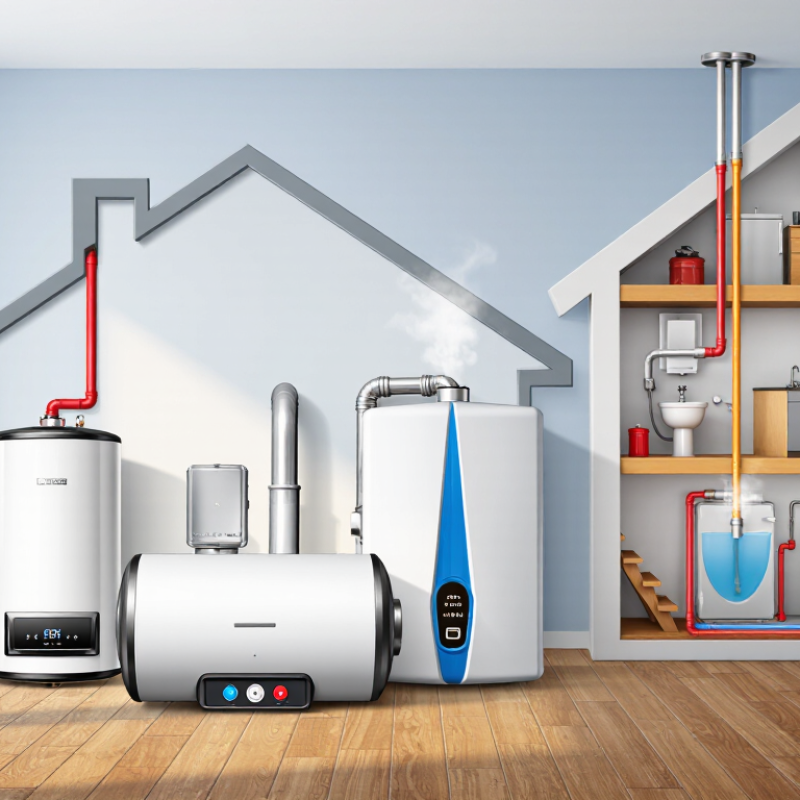
| How it works | Electric resistance elements heat water held in an insulated tank. | Electric elements heat water as it flows through the unit; there is no large storage tank. | A heat pump transfers warmth from surrounding air into the water. Many models include resistance elements for backup or higher demand. | A small resistance-heated tank or tankless unit supplies a nearby fixture or appliance. |
| Energy use | Uses electricity to heat stored water and can lose some heat while water sits in the tank. | Avoids most storage standby losses, but its efficiency depends on the model and usage pattern. | Typically uses less electricity than a standard resistance tank because it moves heat rather than producing all of it directly. | Can reduce heat loss in long hot-water pipes when installed close to the point of use; it does not necessarily reduce total energy use in every home. |
| Hot-water delivery | Provides a ready reserve, but the tank can run out during unusually high demand while it reheats. | Can provide continuous hot water within the unit’s flow-rate and electrical-capacity limits. Multiple simultaneous uses may reduce flow or temperature. | Provides stored hot water. Recovery may be slower in heat-pump mode; backup resistance heating can help meet higher demand. | Best for a nearby sink, small bathroom, or other limited-demand location; usually not intended to serve a whole home. |
| Installation considerations | Requires space for the tank and an electrical circuit sized for the model. | Often requires substantial electrical capacity. A whole-home electric unit may need multiple high-amperage circuits or electrical-service upgrades. | Needs adequate surrounding air volume and clearance. It cools and dehumidifies the space where it operates, so location and room conditions matter. | Usually simpler to place near a fixture, but still needs an appropriately sized circuit and access for maintenance. |
| Main advantages | Familiar design, straightforward operation, and stored hot water available for short periods of peak demand. | Compact footprint and no tank to maintain at temperature between draws. | Can substantially lower water-heating electricity use compared with conventional electric resistance storage when properly installed and operated. | Can shorten the wait for hot water at a distant fixture and reduce water wasted while waiting for the hot line to warm. |
| Main trade-offs | Standby heat loss and finite tank capacity; the tank occupies floor space. | High electrical demand can make installation costly or impractical, and performance is limited by flow rate and incoming-water temperature. | Usually costs more upfront and may not suit a cold, cramped, or poorly ventilated installation space. | Limited capacity or flow; multiple units may be needed for several fixtures, adding equipment and circuit requirements. |
| Often a good fit for | Homes seeking a simple replacement where the existing tank setup and electrical service are suitable. | Homes with suitable electrical capacity, space constraints, and hot-water use that fits the unit’s output. | Households seeking lower operating energy use and able to provide a suitable installation location. | Remote fixtures, additions, or locations where reducing the wait for hot water is the main goal. |
| Overall takeaway | A practical, familiar option, but generally less energy-efficient than a heat-pump model. | A compact option, but electrical requirements and simultaneous demand should be assessed before choosing it. | Often the strongest choice for energy efficiency among common whole-home electric options when the home and installation location are suitable. | A targeted solution for localized hot-water needs rather than a universal whole-home replacement. |