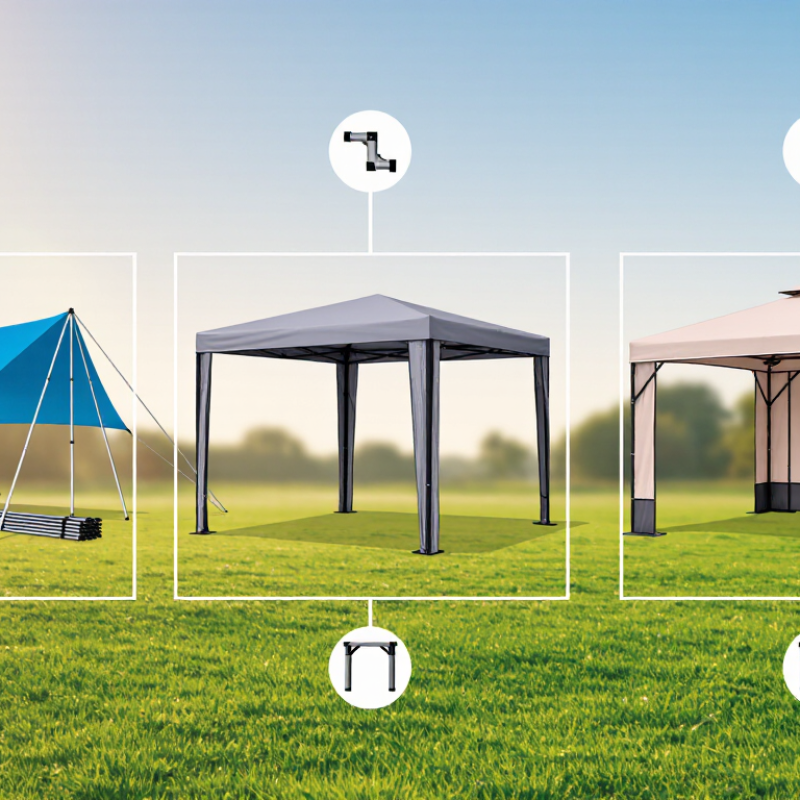
| Straight-leg pop-up canopy | Scissor-frame design; commonly available in footprints such as 10 × 10 ft (about 3 × 3 m); steel or aluminum frame. | Markets, parties, garden gatherings, and general-purpose shade where a square covered area is useful. | Good for sunny, calm conditions. A water-resistant canopy may handle light rain, depending on its fabric and construction. | Secure every leg with suitable weights or stakes. Do not use in strong or gusty winds, and do not allow water to pool on the roof. |
| Slant-leg pop-up canopy | Angled legs create a smaller footprint at the ground than the roof; often designed to be relatively light and portable. | Casual backyard use, short outings, and situations where low packed weight or a compact base matters. | Best in fair weather and light shade use. Wind and rain performance depends on the specific frame, cover, and anchoring system. | The usable space beneath the canopy can be smaller than the roof dimensions suggest. Check the leg spacing before placing tables or equipment. |
| Heavy-duty folding-frame canopy | Reinforced folding frame with heavier components; commonly offered in event-sized footprints such as 10 × 10 ft or 10 × 20 ft. | Frequent setup, organized outdoor events, and users who prioritize a sturdier frame over minimum carrying weight. | Generally more stable than lightweight designs when correctly assembled and anchored, but it is not a substitute for a permanent structure in severe weather. | Usually heavier to transport. Follow the manufacturer’s wind guidance, use proper anchors, and take the canopy down if conditions exceed its stated limits. |
| Vented-roof pop-up canopy | A roof with an upper vent or layered opening that lets some warm air escape while retaining the main covered area. | Warm-weather gatherings and outdoor work where improved airflow is desirable. | Useful in hot, calm weather. The vent may reduce trapped heat; actual shade and rain protection depend on the roof design. | An open vent does not make a canopy safe in high winds. Check that the vent design directs rain away from the occupied area. |
| Canopy with detachable sidewalls | A folding roof frame with removable fabric panels on some or all sides; panels may include doors or windows. | Events needing privacy, a windbreak in mild conditions, or temporary separation from nearby activity. | Sidewalls can block light breezes and some wind-driven rain, but enclosing the sides can increase wind load on the structure. | Use panels only as directed and remove them if wind rises. This type is not a weatherproof room or a safe shelter during storms. |
| Screened pop-up canopy | A folding canopy with mesh walls, often with zippered entry panels, to create a more enclosed shaded area. | Picnics, camping, and outdoor meals where airflow and a barrier against many flying insects are useful. | Best in dry or mildly breezy conditions. Mesh allows airflow but does not provide a solid barrier against wind or rain. | Mesh screening does not guarantee protection from all insects. Keep clear of open flames and follow the product’s ventilation and safety instructions. |
| Compact personal pop-up shelter | Small, lightweight folding shelter for one or a few people; designs and footprints vary considerably. | Personal shade at the beach, children’s activities, or short stops where fast packing and carrying are priorities. | Suitable for shade in calm conditions. Beach and open-ground locations can be especially exposed to gusts. | Use anchors appropriate to the surface, such as sand anchors on suitable beaches. Do not leave it unattended in changing weather. |