| Ergonomic Seat Height |
Approx. 400–520 mm
Adjustable seat height should accommodate a broad range of users and allow feet to rest flat on the floor. |
Supports neutral leg position and improves compatibility with international desk heights. |
Check the measured adjustment range, not only the catalogue specification. Verify against the applicable office-chair dimensional standard. |
| Seat Depth and Width |
Depth: approx. 420–500 mm
Width: commonly 450–520 mm
A waterfall seat edge and sufficient usable width are preferred. |
Helps reduce pressure behind the knees while accommodating different body sizes and clothing styles. |
Request a dimensioned drawing showing usable seat area, cushion compression, and adjustment positions. |
| Backrest Support |
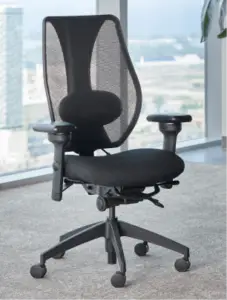
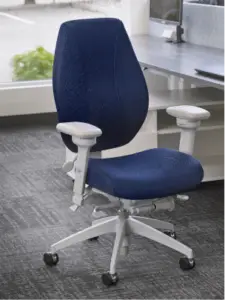
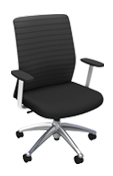
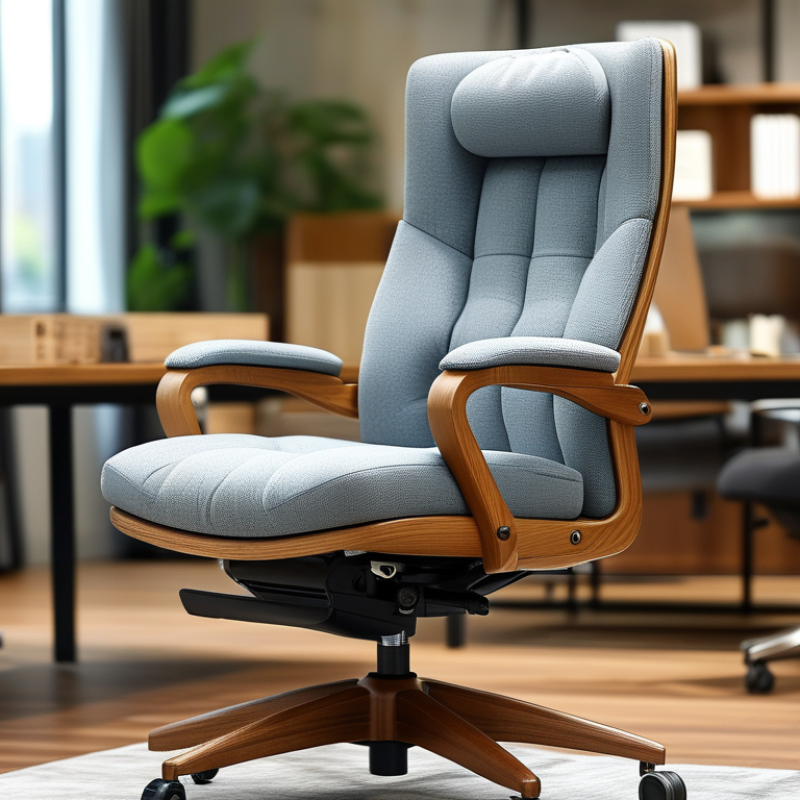
High-back construction with lumbar support, recline adjustment, and a backrest that supports the upper back without restricting shoulder movement. |
Executive chairs are often used for long meetings, computer work, and decision-making sessions. |
Review the recline angle, locking positions, lumbar adjustment range, and user testing results. |
| Recline Mechanism |
Typical working range: about 90°–135°
Multi-position locking or tension adjustment is preferable to a fixed backrest. |
Allows users to alternate between focused work, meetings, reading, and short rest periods. |
Perform repeated-cycle testing and confirm that the mechanism remains stable at every lock position. |
| Weight Capacity |
Common commercial target: 120–150 kg
Higher-capacity versions should state the tested load and test method clearly. |
Provides a transparent safety margin for global users and reduces ambiguity in procurement specifications. |
Request a test report identifying the standard, load rating, cycle count, and failure criteria. Do not rely solely on a marketing claim. |
| Base and Caster Stability |
Five-star base with smooth-rolling casters suitable for the intended floor type. Metal or reinforced polymer construction may be used when properly tested. |
Improves stability, mobility, and resistance to tipping during recline or movement. |
Verify base dimensions, caster size, floor compatibility, braking behavior, and stability test results. |
| Gas Lift Safety |
Use a certified or independently tested gas lift matched to the chair’s maximum rated load and adjustment range. |
The gas lift is a critical load-bearing component and a key safety concern for international buyers. |
Request component traceability, applicable safety documentation, and evidence of durability and pressure testing. |
| Materials and Upholstery |
Common options include leather, polyurethane-coated upholstery, fabric, mesh, or combinations. Material selection should match the climate and cleaning requirements. |
Surface durability, breathability, stain resistance, and long-term appearance vary significantly by material. |
Ask for composition, abrasion results, colorfastness data, hydrolysis resistance where applicable, and care instructions. |
| Fire and Chemical Compliance |
Compliance depends on the destination market. Buyers may require documentation for flammability, restricted substances, formaldehyde, or other chemical limits. |
Regulatory requirements differ by country, contract sector, and public-procurement policy. |
Define the destination-country requirements before production and obtain laboratory reports for the finished chair, not only individual materials. |
| Durability and Cycle Testing |
Commercial seating should be evaluated using a recognized office-chair durability method, with the test level matched to the intended use. |
Durability testing provides more useful evidence than appearance inspection alone. |
Request complete reports showing sample identification, test setup, cycle count, load, results, and laboratory details. |
| Assembly and Packaging |
Use protective packaging, clear multilingual instructions, labeled hardware, and a design that minimizes assembly errors. |
Reduces damage, returns, installation time, and after-sales costs in international distribution. |
Conduct carton drop, vibration, compression, and unpacking evaluations before shipment approval. |
| Quality Consistency |
Production should use approved specifications, controlled incoming materials, in-process inspections, and final random inspection. |
Consistent dimensions, color, stitching, mechanisms, and packaging are essential for repeat orders. |
Use a signed golden sample, tolerance sheet, inspection checklist, and agreed defect classification. |
| Customization Capability |
Useful options may include upholstery color, logo-free private-label packaging, armrest type, caster selection, plug-free mechanical components, and carton artwork. |
Enables distributors and contract buyers to align the chair with local preferences and project specifications. |
Confirm minimum order quantities, tooling charges, lead times, sample approval procedures, and change-control requirements. |
| Warranty and Spare Parts |
Provide a clearly defined warranty with exclusions, claim procedures, replacement-part availability, and service response targets. |
Reliable after-sales support can be as important as the initial chair price for global buyers. |
Review the written warranty, spare-parts list, replacement mechanism policy, and expected support period. |
| Total Landed Cost |
Evaluate product price together with packaging, inspection, freight, duties, taxes, warehousing, assembly, warranty exposure, and expected service life. |
The lowest unit price may not deliver the lowest ownership cost. |
Compare suppliers using the same specification, delivery term, destination, quantity, and quality requirements. |