What Is the Best Birch Plywood for Global Buyers in 2026?
What Is the Best Birch Plywood for Global Buyers in 2026? The answer is not a single factory name or thickness. It depends on the project, destination, climate, and required surface quality. A cabinet maker in Toronto needs different performance from a construction buyer in Singapore. Moisture, temperature changes, machining, and shipping conditions all matter.
Metsä Wood plywood specialist Jussi Äijälä explains, “The best birch plywood is selected by performance, not by appearance alone.” This practical view deserves attention. A clean, pale face may look excellent under warehouse lighting. However, hidden voids, uneven veneers, or weak bonding can appear after cutting. Small details become expensive problems.
This guide examines the features global buyers should check in 2026. These include veneer quality, core construction, glue durability, thickness tolerance, formaldehyde class, certification, and packaging. A reliable supplier should provide clear technical data, batch information, and test documentation. Samples should be inspected before large orders. Trust, unfortunately, cannot be packed into a container.
Buyers should also compare the full cost. A cheaper panel may create more waste, slower machining, or higher replacement risk. That calculation is often missed. I have seen attractive quotations lose their value after warped sheets arrived at the workshop. The strongest choice balances price, consistency, compliance, and after-sales support. Even experienced purchasers should leave room for doubt and verify every important claim.
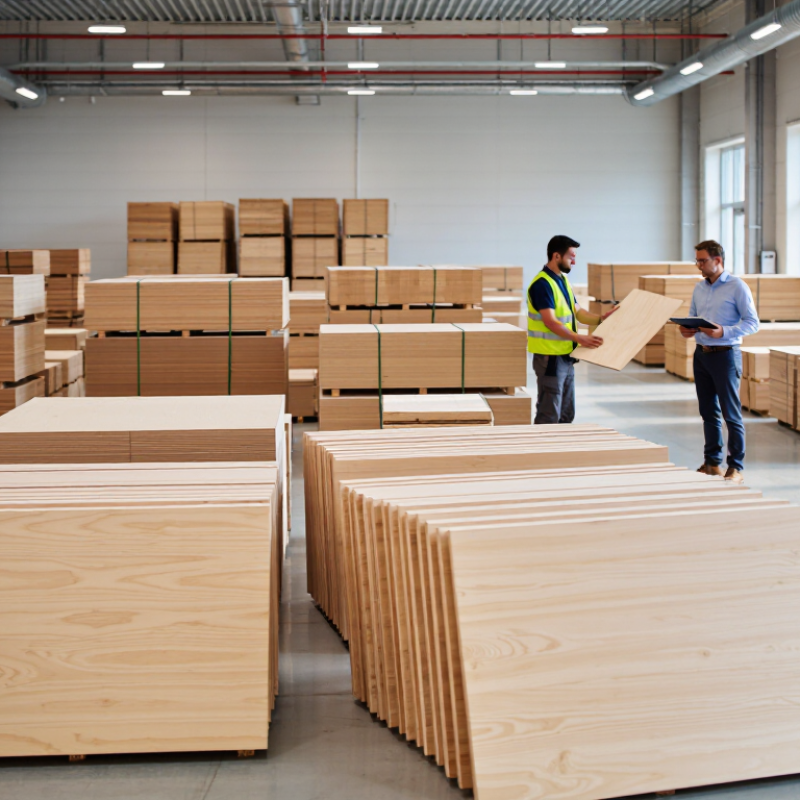
Birch Plywood: Definition, Structure, and Core Applications
Birch plywood is an engineered wood panel made from thin birch veneers bonded in alternating directions. This cross-laminated structure improves stability, strength, and screw-holding performance. Most panels show a pale, even surface with a fine grain. The edge reveals many compact layers, often creating a clean striped appearance.
That detail matters.
In workshop inspections, I check veneer alignment, core gaps, sanding quality, and thickness tolerance before approving a panel. Smooth faces can mislead. A beautiful surface may hide weak inner layers or uneven bonding. Core composition also affects machining, especially during CNC cutting, drilling, and edge routing. Buyers should examine samples from several sheets, not only one display piece.
Birch plywood supports furniture, cabinetry, drawer boxes, wall panels, shop fixtures, interior fittings, and lightweight transport packaging. For humid rooms, select panels with suitable moisture resistance and verify the adhesive classification. Global buyers should also request formaldehyde-emission data, technical specifications, and reliable test reports. Construction use requires the correct structural grade and local compliance documents.
Thickness variation can affect joints, so a stated 18-millimeter panel should be measured across multiple points. Small differences become visible in large cabinet runs. No grade is perfect. Performance depends on storage, cutting tools, edge sealing, and the final environment.
Regional Buying Factors: Supply, Trade Rules, and Delivery Risks
The best birch plywood for global buyers in 2026 depends on regional risk, not only panel grade. Northern European supply offers stable quality, but winter harvesting, mill capacity, and inland trucking can extend lead times. The UNECE/FAO Forest Products Annual Market Review shows that European wood-product markets remain sensitive to energy costs and disrupted raw-material flows. Ask for core density, veneer moisture, formaldehyde class, and recent test reports. A low quote can still be the wrong choice.
Trade compliance now shapes purchasing decisions. The European Union Deforestation Regulation requires wood operators to prove legal origin and supply-chain due diligence. Larger operators faced application from December 30, 2025, while smaller operators receive extra time until June 30, 2026. The United States also requires applicable wood declarations under the Lacey Act. Suppliers should provide species, harvest country, coordinates where required, and consistent invoice data. Paperwork gaps can hold a container longer than production defects.
Delivery risk deserves a practical calculation. UNCTAD’s Review of Maritime Transport 2024 reported major route disruptions and longer voyages around the Cape of Good Hope. That can add days, fuel costs, and insurance exposure. Buyers in Asia should compare nearby certified sources with European cargo, not just factory prices. Keep two approved origins. It is safer, though not always cheaper. Regional warehouses may reduce project delays, but stored panels need dry, ventilated conditions. My own caution: forecast data is useful, yet plywood demand can change faster than official reports.