7 Bathroom Towel Rack Buying Tips for Global Buyers
Buying a Bathroom Towel Rack for international projects requires more than comparing photos and prices. A rack may look elegant online, yet feel unstable on a tiled wall. Global buyers must examine material quality, dimensions, installation methods, and supplier reliability before placing an order. These details affect daily use, shipping costs, and customer satisfaction.
This guide presents seven practical buying tips for distributors, contractors, hotel groups, and homeware retailers. It explains how stainless steel, brass, aluminum, and coated iron perform in humid bathrooms. It also considers load capacity, corrosion resistance, mounting hardware, and cleaning requirements. Small details matter. A thin fixing plate can loosen after repeated use. Poor packaging can scratch a polished finish before arrival.
Requirements differ across markets. Wall structures, bathroom layouts, testing expectations, and consumer preferences are not identical worldwide. Buyers should request technical drawings, material declarations, product samples, and clear warranty terms. Supplier experience also deserves careful review. Factory photos alone are not enough. Ask about production control, inspection records, export packaging, and replacement procedures.
No buying checklist is perfect. I have found that even reliable suppliers can overlook one practical detail, such as screw length or carton protection. That is why physical samples and realistic installation tests remain valuable. A beautiful rack is not automatically a dependable one. The right decision balances appearance, safety, durability, cost, and long-term service. These seven tips will help buyers ask sharper questions and avoid expensive surprises.
Define the Use Case: Towel Count, Space, Users, and Seven Buying Criteria
7 Bathroom Towel Rack Buying Tips for Global Buyers
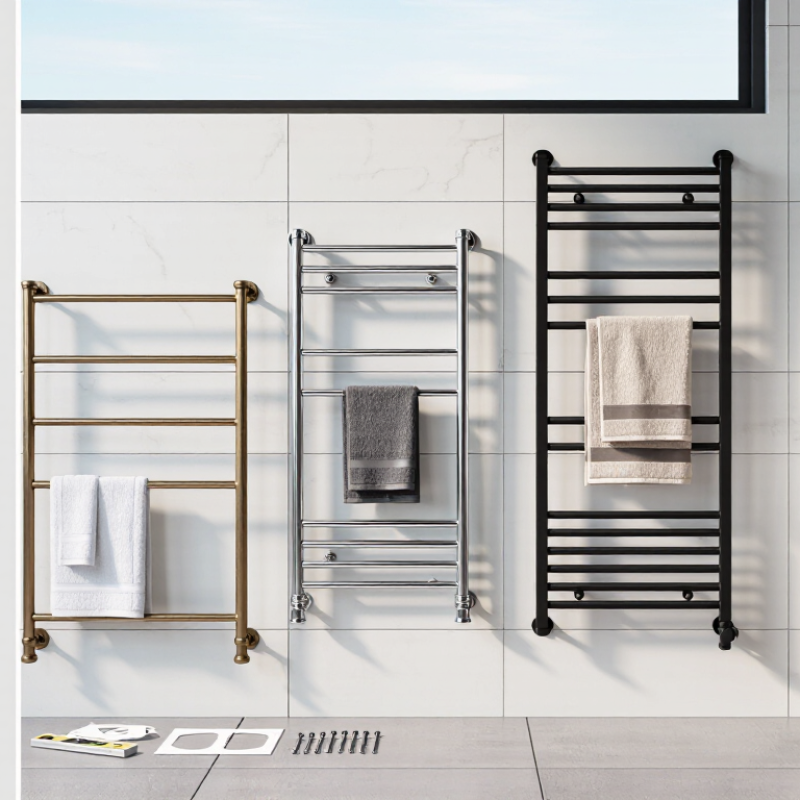
Define the use case before comparing finishes. Count daily towels, hand towels, and bath sheets. Add one spare space per regular user. A two-person household may need four hanging positions, not two. Measure wall width, door swing, vanity clearance, and outlet locations. In small bathrooms, a 600-millimeter rail can still feel crowded. The 2024 Houzz Bathroom Trends Study reports that homeowners continue investing in bathroom upgrades, but available space remains a practical design constraint.
Check seven criteria: capacity, dimensions, load rating, mounting method, material, ventilation, and cleaning access. Stainless steel suits humid rooms, while coated metal may show chips over time. Test the wall structure before choosing adhesive mounting. It is convenient, but not always dependable on textured tile. Leave air between towels. ASHRAE Standard 62.2 recommends 50 cubic feet per minute for intermittent bathroom exhaust, supporting faster moisture removal and fewer damp odors.
Global buyers should also verify packaging strength, installation instructions, corrosion testing, and replacement hardware. The U.S. Environmental Protection Agency reports that bathroom faucets use more than 1 trillion gallons of water annually in American homes; moisture control therefore deserves equal attention to appearance. Think about children, older users, and limited mobility. Rounded edges help. I once underestimated towel thickness and ordered a rail that looked generous but held only two bath sheets comfortably. A small mistake, yet an expensive one. Check real dimensions, not catalogue impressions.
Set Size and Load Specs; Separate Towel Bars from 250-lb ADA Grab Bars
Bathroom towel racks need careful sizing, not just attractive finishes. Measure the wall, user count, and towel dimensions before ordering. A practical set may include one 24-inch bar for bath towels and one shorter bar for hand towels. Leave enough space for airflow. Damp towels folded tightly stay wet.
Tips: Check the product’s tested load rating, mounting method, and fastener type. Do not treat a towel bar as a safety device. The 2010 ADA Standards require compliant grab bars to resist 250 pounds at any point. They also specify strength, clearance, diameter, and secure installation requirements. A decorative rack may look solid, yet fail under sudden body weight. I have seen this mistake during renovation planning.
Keep towel bars and ADA grab bars visibly separate in specifications and drawings. Label them as “towel holder” or “support grab bar.” The WHO Global Report on Assistive Technology estimates that more than 2.5 billion people need assistive products today, with demand projected to reach 3.5 billion by 2050. That figure supports inclusive planning, but it does not make every bathroom accessory an accessibility product. ADA rules mainly govern covered facilities in the United States; other markets may use different standards. Ask for test documentation, maximum supported load, substrate requirements, and installation instructions. One detail is easy to miss: a 250-pound rating often assumes proper blocking or structural reinforcement behind the wall. Drywall anchors alone may not provide that performance.
Choose 304/316 Stainless Steel; Require ASTM A967 Passivation Records
7 Bathroom Towel Rack Buying Tips for Global Buyers
Choose 304 or 316 stainless steel, and request clear material evidence before placing an order. 304 suits most indoor bathrooms. 316 offers stronger resistance near coastlines, pools, and high-chloride cleaning areas. Do not judge quality by shine alone. A bright surface may hide weak welds, thin tubing, or unsuitable fasteners. Check tube thickness, load rating, mounting plates, screw material, and edge finishing. Small details matter.
Ask the supplier for ASTM A967 passivation records for each production lot. The document should identify the passivation method, inspection date, batch number, and acceptance results. It should also connect the records to the supplied towel racks. A material certificate alone does not prove passivation. Request test details, such as free-iron or copper sulfate results, when applicable. Keep the records with your purchase documents.
Inspect welded corners and concealed joints carefully. Acid residues, iron contamination, or rough crevices can cause staining later. The rack may look excellent during factory inspection, yet fail after months of steam and wet towels. That risk is easy to underestimate. Ask for photos before packing, random sampling, and packaging that prevents surface scratches. One practical lesson remains: specifications need verification, not trust. Suppliers can make mistakes, and buyers can overlook them. Fresh water, poor ventilation, and aggressive cleaners may still shorten service life.
7 Bathroom Towel Rack Buying Tips for Global Buyers
Choose 304/316 Stainless Steel; Require ASTM A967 Passivation Records
The chart compares typical chromium, nickel, and molybdenum composition ranges for 304 and 316 stainless steel, expressed as weight percentages. These representative ranges are based on ASTM A240/A240M requirements for wrought stainless steel products; the exact limits depend on the product form and grade designation. Grade 316 normally contains molybdenum, which improves resistance to chlorides and humid bathroom environments.
- Confirm the stainless steel grade as 304 or 316 on the purchase specification.
- Request material test certificates showing the applicable product standard and heat number.
- Prefer 316 stainless steel for coastal, high-humidity, or chloride-exposed locations.
- Require ASTM A967/A967M passivation process records for finished stainless steel parts.
- Check that the passivation record identifies the treatment method, processing date, batch, and inspection results.
- Request suitable ASTM A967 verification evidence, such as free-iron or copper-sulfate testing where applicable.
- Inspect welds, edges, mounting hardware, and surface finish because local contamination can cause corrosion.
Reference standards: ASTM A240/A240M for chromium and chromium-nickel stainless steel plate, sheet, and strip; ASTM A967/A967M for chemical passivation treatments and verification tests for stainless steel parts.
Verify Finish Durability with ASTM B117 or ISO 9227 Test Data
Bathroom towel racks face warm water, soap residue, and trapped humidity every day. Poor finishes can blister near mounting plates and screw heads. That failure is costly to replace.
ASTM B117 and ISO 9227 provide controlled salt spray methods for comparing corrosion resistance. ISO 9227:2022 covers neutral salt spray, acetic acid salt spray, and copper-accelerated testing. Ask suppliers for the exact method, exposure time, sample preparation, and failure criteria. A 72-hour result sounds convincing, but it is not a lifetime promise. Salt spray hours cannot translate directly into years of bathroom service.
The NACE IMPACT study estimated global corrosion costs at about 2.5 trillion US dollars annually, equal to 3.4% of global GDP. That figure supports careful specification, even for small accessories. In practical checks, inspect edges, welds, drilled holes, and the rear mounting surface. These areas often expose weaknesses first. Test panels should match the production finish, not a polished sample made only for presentation.
Tip: Request ASTM B117 or ISO 9227 reports from an independent laboratory when possible. Confirm the rack’s substrate, coating thickness, and corrosion rating. I would also ask for photographs after testing. A report without visible evidence feels incomplete. Avoid choosing only by “stainless steel” wording; alloy, polishing, and installation conditions still matter. Salt spray testing is useful, but real bathrooms remain less predictable.