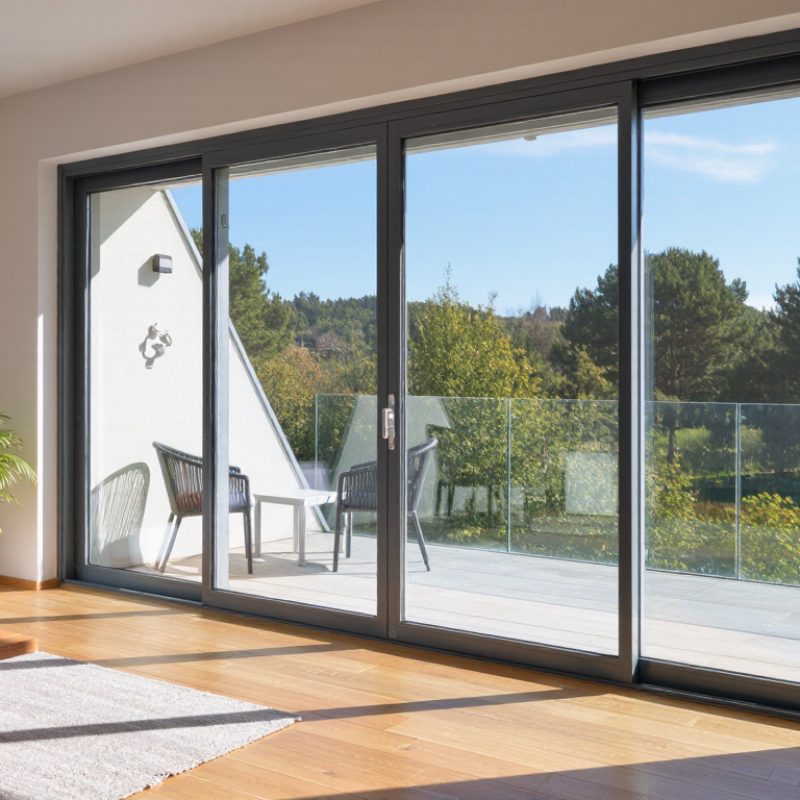
| 1. Thermally broken two-panel slider | One operable panel and one fixed panel; commonly configured to open left or right. | Patios, balconies, and rooms needing a straightforward outdoor connection. | Simple operation and fewer moving panels than multi-panel layouts. | About half the framed opening is typically occupied by the fixed panel. | Confirm the tested handing, overall frame size, air-leakage result, water-penetration resistance, and structural performance grade. |
| 2. Large-format two-panel slider | One larger operable panel paired with one fixed panel. | Wide views and openings where a large clear-glass area is a priority. | Broad, uninterrupted views with a familiar two-panel arrangement. | Larger, heavier panels can place greater demands on rollers, tracks, and frame stiffness. | Check that the reported results apply to the specified panel size and glass make-up; do not extrapolate from a smaller tested unit. |
| 3. Three-panel, two-track slider | Three panels share two tracks; the number and position of operable panels vary by system. | Wider rooms where a two-panel door does not provide enough opening width. | Can provide a wider passage than a basic two-panel layout. | Track and panel arrangement affects the clear opening; more components require careful adjustment and maintenance. | Verify the exact panel arrangement, active-panel configuration, tested size, water performance, and structural grade. |
| 4. Three-panel, three-track slider | Three panels run on separate tracks and may stack to one side, depending on the design. | Openings where a larger portion of the doorway should be operable. | Multiple panels can create a broad opening while retaining sliding operation. | Requires more frame depth for the additional track; the opening and stacking behavior are system-specific. | Confirm that the tested specimen uses the same track count, panel sequence, hardware, and dimensions as the planned installation. |
| 5. Four-panel, two-track slider | Four panels operate on two tracks; configurations may include center-opening or side-opening layouts. | Large living areas and broad exterior openings. | Can serve a wide opening with a symmetrical or multi-panel appearance. | More panel joints and interlocks mean more seals and adjustments to maintain. | Check the tested configuration, including which panels move, interlock details, frame size, and applicable performance results. |
| 6. Multi-panel stacking slider | Several panels slide and stack together, often using multiple tracks. | Expansive openings where a large clear passage is desired when the door is open. | Can open a substantial portion of the wall compared with a conventional two-panel slider. | More tracks, panels, and hardware can increase installation and adjustment complexity. | Request test documentation for the exact panel count and layout. Confirm tested structural performance and water resistance for the intended exposure. |
| 7. Lift-and-slide aluminum door | A handle-operated mechanism lifts the panel slightly for movement and lowers it onto seals when closed; available in different panel layouts. | Large or heavy panels where smoother movement and a compression-style closed seal are desired. | The lifting mechanism can make a heavy panel easier to move when operated as designed. | Requires compatible hardware and correct adjustment; operation and performance vary by system. | Verify that the complete lift-and-slide configuration—not merely its hardware—has applicable NAFS test results for the specified size and glazing. |