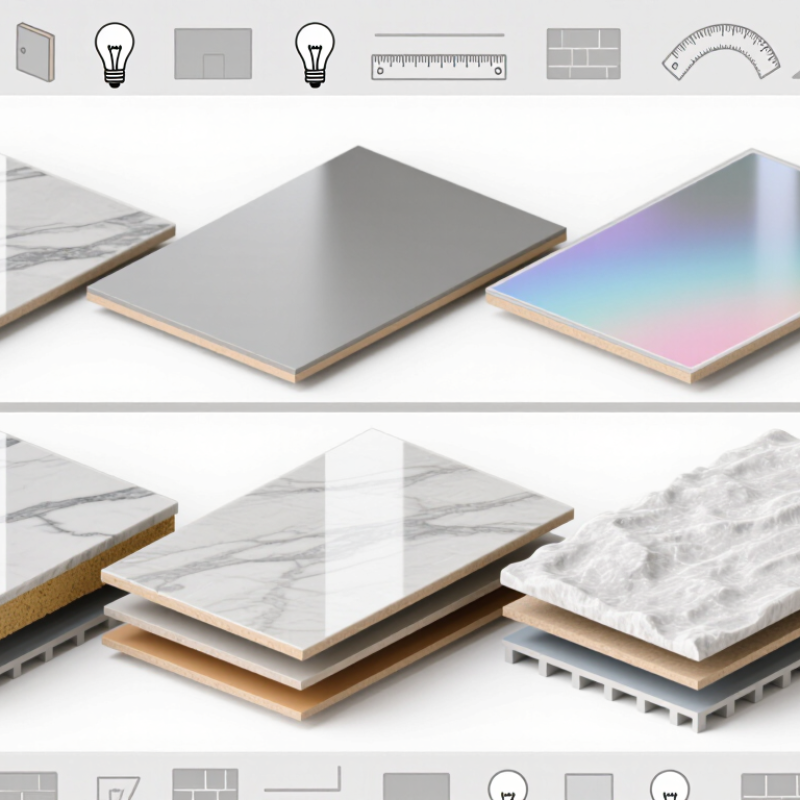
| Standard decorative PVC marble sheet | Rigid PVC-based sheet, often compounded with mineral filler, printed with a marble pattern and finished with a clear protective coating. | About 2–5 mm; confirm the actual construction and tolerance with the supplier. | Best suited to controlled indoor environments. In hot or humid locations, verify dimensional stability, bonding system, and installation details. | Interior feature walls, ceilings, reception areas, and other decorative surfaces not subject to heavy impact. | Not a substitute for structural cladding or a waterproofing system. Avoid prolonged direct sunlight, high heat, and outdoor exposure unless the product is specifically tested and rated for those conditions. | Request a current technical data sheet, installation instructions, thickness and flatness tolerances, and applicable chemical or emissions test reports. For EU sales, check relevant REACH obligations and any applicable national requirements. |
| UV-coated PVC marble sheet | PVC decorative sheet with a UV-cured surface coating intended to improve surface hardness, gloss, and resistance to everyday staining or scratching. | About 2–5 mm, depending on the core and finish. | Suitable for indoor rooms with ordinary temperature variation. A UV-cured coating does not by itself establish suitability for exterior sunlight or extreme heat. | Interior wall panels in homes, retail spaces, offices, and light-use hospitality areas. | Surface performance varies by coating formulation and thickness. Confirm resistance to the cleaning products and abrasion expected in the project. | Ask for coating and abrasion-test details, cleaning guidance, and the product’s stated service conditions. Request market-specific chemical compliance documentation; do not assume a coating claim proves compliance with every market regulation. |
| Co-extruded or capped PVC marble sheet | Decorative PVC surface layer combined with a separately formulated protective cap layer, typically manufactured as a multi-layer sheet. | About 3–6 mm; layer construction and total thickness are product-specific. | Can be considered for environments needing greater surface durability, but hot, humid, or sun-exposed installations still require product-specific testing. | Interior corridors, commercial wall finishes, and areas requiring a more durable decorative face than a basic printed sheet. | “Capped” does not automatically mean outdoor-grade, impact-proof, or waterproof at joints. Check edge and seam details for the intended installation. | Request a layer-construction description, adhesion or delamination test information, dimensional-stability data, and installation instructions. For public projects, obtain the fire classification required by the local building code. |
| High-mineral-content rigid PVC marble sheet | Rigid PVC compound with a relatively high mineral-filler proportion and a decorative marble-pattern surface; formulation varies by manufacturer. | About 2.5–5 mm; compare weight, stiffness, and impact performance as well as nominal thickness. | Generally intended for indoor use. In humid climates, use compatible adhesives and follow substrate-preparation and ventilation requirements. | Decorative wall and ceiling panels where a stiffer sheet is preferred and the substrate is properly prepared. | Higher filler content can change weight, brittleness, and fastening behavior. Do not infer strength from thickness alone; test the complete installed system where loads or impacts matter. | Request composition or product declarations where available, density or weight per area, impact data, and fixing guidance. Verify that adhesives and sealants are suitable for PVC and the local temperature range. |
| Fire-retardant PVC marble sheet | PVC-based decorative sheet formulated with flame-retardant additives; performance depends on the exact formulation, thickness, substrate, and installation assembly. | Commonly about 2–5 mm, but fire performance must be verified for the exact product and build-up. | Climate suitability is determined by the base sheet and installation system; fire-retardant formulation alone does not establish heat or weather resistance. | Interior projects where the building specification requires documented reaction-to-fire performance, subject to local code approval. | “Fire-retardant” is not a universal rating. A test result for one thickness, backing, adhesive, or mounting method may not apply to another assembly. | Obtain a valid test report or classification for the exact product and intended assembly, such as an applicable EN 13501-1 classification or ASTM E84 result where accepted by the project jurisdiction. Confirm the required test method with the local authority or specifier. |
| Thin PVC decorative overlay sheet | Thin printed PVC decorative layer, sometimes supplied for bonding to a separate panel or substrate rather than for use as a stand-alone rigid sheet. | Often below 2 mm; verify whether the stated thickness includes any backing or protective layer. | Indoor use on a stable, dry substrate is typical. Temperature and humidity performance depends heavily on the substrate and adhesive. | Furniture or cabinet finishing, decorative lining, and other applications where the overlay is supported by a suitable base. | Usually requires a compatible substrate and adhesive. It should not be treated as a self-supporting wall panel unless the product is specifically designed and tested for that use. | Request substrate-preparation and adhesive instructions, bond-strength information, and any relevant emissions or chemical test reports. Check that the adhesive is rated for the project’s service temperature and humidity. |