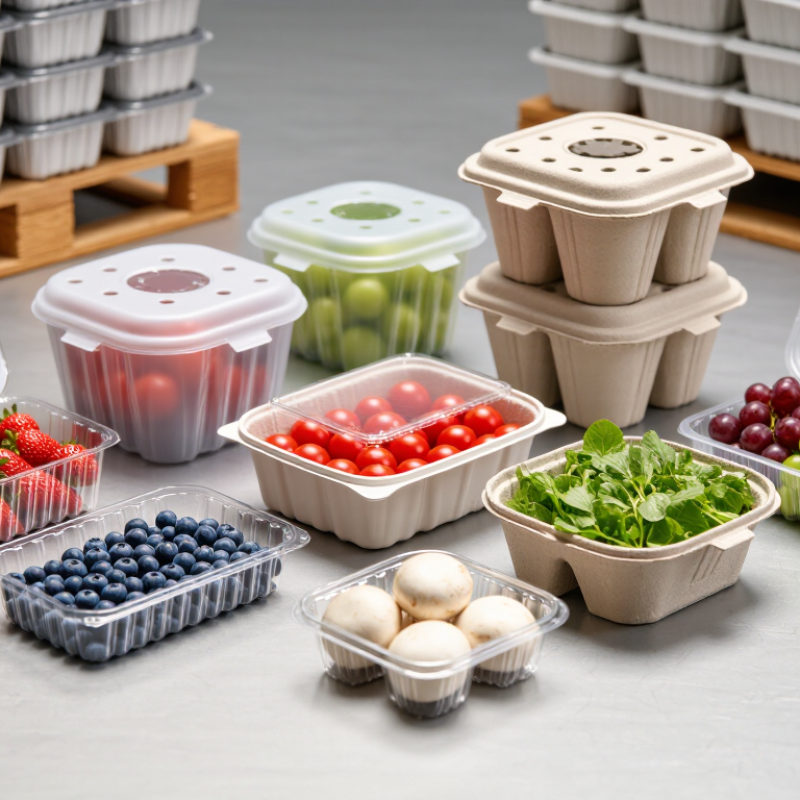
| Clear PET clamshell | Berries, grapes, cherry tomatoes, stone fruit and cut produce | Transparent, rigid and lightweight; commonly made as a hinged container with ventilation openings and a tamper-evident closure | PET is widely recyclable where collection and sorting systems accept PET packaging. Clear, uncoated mono-material designs generally support better sorting than colored, laminated or heavily labeled formats. | Food-contact authorization in the destination market; packaging-waste labeling; extended producer responsibility obligations; restrictions on unnecessary packaging; migration and overall safety documentation | High visibility, good impact resistance and broad converting availability; often selected when product presentation and pack protection are priorities | Confirm resin identification, recycled-content declaration, closure performance, vent design, pack weight, pallet efficiency and compatibility with local recycling guidance |
| rPET clamshell | Berries, grapes, salads, premium fruit and ready-to-eat produce | Rigid transparent PET packaging containing post-consumer recycled PET, subject to the applicable food-contact rules and supply availability | Can reduce reliance on virgin plastic and support circular material demand. Benefits depend on verified recycled content, responsible feedstock sourcing, manufacturing energy and end-of-life collection. | Food-contact approval for recycled plastic; chain-of-custody or recycled-content evidence where required; recycled-content claims; EPR reporting; correct recycling instructions | Usually positioned as a lower-virgin-plastic option; pricing and supply may vary with recycled resin quality and regional demand | Request a material specification, recycled-content percentage by mass, batch traceability, food-contact declaration, contaminant controls and evidence supporting environmental claims |
| PP clamshell | Tomatoes, berries, mushrooms, herbs, salads and prepared produce | Lightweight polypropylene format with good toughness and heat resistance; may be transparent, translucent or opaque | PP recycling is available in some markets but collection and sorting coverage is less consistent than for commonly collected PET in many regions. Mono-material construction improves recyclability potential. | Food-contact compliance; national recycling-label requirements; EPR fees; applicable recycled-content rules; restrictions on additives, inks, coatings and intentionally added substances | Good balance of durability, low weight and design flexibility; suitable where resistance to cracking during transport is important | Check local recycling acceptance before switching from PET; verify hinge fatigue, stacking strength, sealing quality, vent area and temperature limits |
| Molded fiber or paperboard clamshell | Mushrooms, berries, tomatoes, specialty fruit and dry produce | Fiber-based structure formed from molded pulp or folded paperboard; may use a transparent window, barrier coating or separate plastic film | Renewable fiber content can be advantageous, but recyclability depends on coatings, adhesives, wet-strength agents, windows and contamination. Fiber sourcing should be legal and traceable. | Food-contact safety; fiber-source legality and due diligence; recyclability or compostability claim requirements; coating and ink compliance; moisture and odor-transfer testing | Distinctive natural appearance and potential fiber reduction of plastic; usually requires careful moisture management and transport validation | Identify all layers and components; verify whether the package is recyclable or industrially compostable in the target market; test wet strength, shelf life, compression and leakage resistance |
| PLA bioplastic clamshell | Cold produce, berries, salad greens and short-life fresh products | Biobased thermoplastic made from fermented plant-derived feedstocks; typically clear and rigid but sensitive to higher temperatures | Industrial compostability is not the same as home compostability or ordinary biodegradability. PLA can contaminate conventional PET recycling streams if incorrectly sorted. | Food-contact authorization; substantiated compostability claims; conformity with applicable industrial-composting standards; disposal instructions; restrictions on misleading biodegradability claims | Considered where certified composting infrastructure and separate collection are available; generally requires strict temperature and disposal controls | Confirm certification scope, operating temperature, shelf-life performance, composting-site acceptance and clear disposal labeling in every target country |
| Ventilated produce clamshell | Berries, grapes, leafy greens, mushrooms and moisture-sensitive produce | A functional design category available in PET, rPET, PP, fiber or hybrid structures; vent geometry controls airflow and moisture release | Correct ventilation may reduce condensation, mold risk and food loss. The sustainability benefit should be assessed together with material weight, product protection and actual shelf-life results. | Food-contact safety; performance testing for the intended produce; labeling and traceability; packaging-waste obligations; no unsupported food-waste reduction claims | Selected primarily for freshness and quality retention; design must be matched to produce respiration rate, cold-chain conditions and distribution duration | Validate vent area, condensation control, product temperature, shelf life, transport vibration and pack strength under realistic cold-chain conditions |
| Tamper-evident clamshell | Premium berries, cut fruit, ready-to-eat salads and high-value specialty produce | Hinged or two-piece structure with an integrated breakable seal, tear strip or locking feature; produced in several rigid materials | Integrated mono-material seals are generally preferable to separate stickers, metalized films or incompatible components. Added security should be balanced against extra material use. | Food-contact compliance; tamper-evidence performance; traceability and lot coding; allergen and ready-to-eat hygiene controls where relevant; recycling instructions | Improves visible package integrity and retail handling control; may increase tooling complexity and unit cost | Test seal activation, evidence of opening, child-safety considerations where applicable, closure repeatability, label adhesion and recyclability after opening |