| Football-specific performance certification | FIFA Quality Programme for Football Turf | Check whether the proposed system has been tested to the applicable FIFA category. Confirm that the tested construction matches the quoted carpet, infill, shockpad, and installation method. | Current certificate or test documentation; product and system identification; test date; and confirmation of the applicable FIFA requirements. |
| Outdoor synthetic-surface requirements | EN 15330-1, for synthetic turf and needle-punched surfaces primarily designed for outdoor sports use | Review the declared product characteristics and the test results relevant to the intended sport and project. Verify that the specification covers the complete proposed system. | Test reports identifying the tested product configuration, test methods, results, and laboratory. |
| Shock absorption and vertical deformation | FIFA football-turf test requirements; ASTM F355 is a test method for measuring impact attenuation of playing surfaces | Compare measured results with the limits for the selected certification category and the project specification. These are system-level properties and can change with the shockpad, infill, and base. | Test results for the specified system, plus confirmation of the test method, conditioning, and tested locations. |
| Ball roll and vertical ball rebound | FIFA Quality Programme test requirements; EN 15330-1 where applicable | Check measured ball-roll distance and rebound results against the applicable category requirements. Confirm that the test report refers to the proposed pile, infill, and system build-up. | Independent test report with the measured values, test conditions, and system configuration. |
| Rotational resistance and player-surface interaction | FIFA football-turf test requirements | Review the measured rotational-resistance result against the relevant category criteria. Confirm that the surface is tested with the specified infill and maintained at the stated level. | Test report with the measured result, test method, system details, and maintenance condition during testing. |
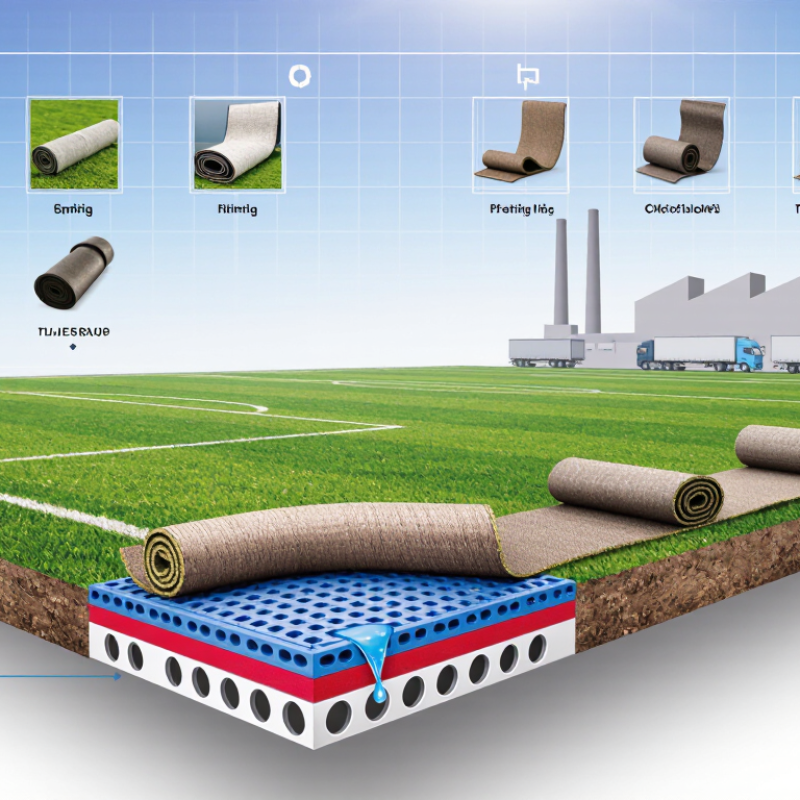
| Pile height and carpet construction | Project specification and the system configuration used in applicable performance tests | Football turf commonly uses pile heights in the approximate 40–60 mm range, but the correct specification depends on the tested system and intended use. Compare pile height, yarn type, stitch rate, gauge, backing, and total carpet mass. | Technical datasheet, product sample, manufacturing tolerances, and confirmation that the supplied carpet matches the tested construction. |
| Infill specification | Project requirements and applicable product-safety regulations | Compare declared infill type, particle size, required quantity per square metre, installation depth, and top-up needs. Options can include mineral, polymer, or organic materials; suitability depends on the complete system and local requirements. | Material declaration, safety data where applicable, installation specification, and system test documentation. |
| Drainage and water management | EN 15330-1 and project-specific drainage design | Check the system’s documented water permeability alongside the design of the sub-base, falls, drainage outlets, and local rainfall conditions. Carpet permeability alone does not establish field drainage capacity. | Permeability test results, civil-design drawings, drainage calculations, and installation details. |
| Weathering and colour durability | EN 14836, which addresses artificial weathering of synthetic sports surfaces | Compare evidence of resistance to weathering and colour change for the proposed materials. Ask how the test evidence relates to the climate and expected exposure at the project site. | Weathering test report, material identification, and product warranty terms for colour and material performance. |
| Seams, joints, and installation quality | Project specification, installation method statement, and applicable system test requirements | Review seam layout, jointing materials, edge details, infill installation, and quality-control checks. Site workmanship can affect both performance and service life. | Installation drawings, method statement, installer references, inspection records, and completed-field acceptance tests where specified. |
| Maintenance and service-life planning | Manufacturer’s written maintenance instructions and project operating plan | Compare routine brushing, infill redistribution, debris removal, inspection frequency, and expected maintenance resources. Service life depends on use, climate, construction, and maintenance. | Maintenance schedule, recommended equipment, annual service-cost estimate, and written warranty exclusions and conditions. |
| Environmental and quality-management documentation | ISO 9001 and ISO 14001, where claimed; applicable local environmental rules | Treat management-system certificates as evidence of management processes, not as proof of football-field performance. Review the declared material composition and applicable end-of-life or recycling options. | Valid certificates within their stated scope, material declarations, and project-specific environmental documentation. |