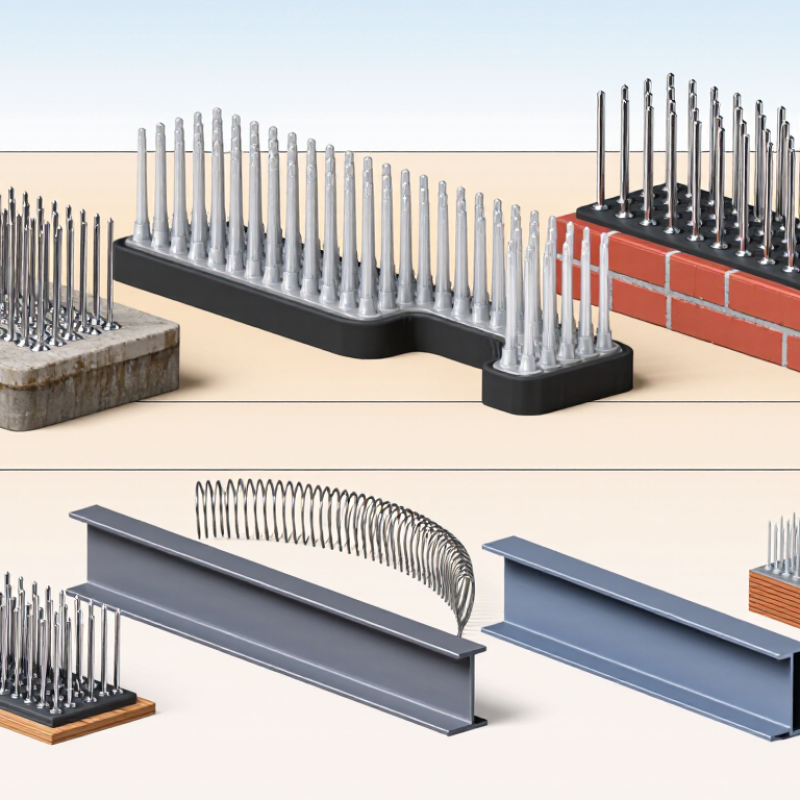
| Narrow Single-Row Spikes | UV-stabilized polycarbonate base with stainless-steel wires | Approximately 50–100 mm | Narrow ledges, window sills, sign edges, residential parapets | Small pigeons, sparrows, starlings | Adhesive, screws, or clips on clean, level surfaces | Compact, discreet, economical, and easy to cut to length | Limited coverage for large birds or deep ledges |
| Double-Row Spikes | Stainless steel or UV-stabilized polymer with metal wires | Approximately 100–150 mm | Medium-width parapets, roof ridges, balconies, warehouse beams | Pigeons, mynas, starlings, smaller gulls | Adhesive, screws, rivets, or mechanical clips | Good balance between coverage, appearance, and cost | May not stop determined large gulls on very wide surfaces |
| Triple-Row Heavy-Duty Spikes | Marine-grade stainless steel, commonly grade 304 or 316 | Approximately 150–200 mm | Industrial roofs, bridges, monuments, loading bays, exposed ledges | Large pigeons, gulls, crows, rooks | Mechanical fixing is generally preferred; adhesive may supplement | Broad coverage and strong resistance to wind, impact, and corrosion | Higher cost and more visible than narrow systems |
| Flexible Base Spikes | Stainless-steel wires fixed to a flexible polymer base | Approximately 100–200 mm | Curved parapets, irregular stonework, pipes, rounded signs | Pigeons and medium-sized perching birds | Adhesive, cable ties, clips, or screws depending on the substrate | Conforms to uneven or curved surfaces better than rigid bases | Requires careful spacing and secure fixing on highly exposed sites |
| Low-Profile Architectural Spikes | Low-visibility stainless steel or UV-resistant polymer | Approximately 50–120 mm | Historic façades, hotels, public buildings, retail storefronts | Pigeons, sparrows, starlings | Concealed adhesive or carefully selected mechanical fasteners | Minimal visual impact and suitable for appearance-sensitive projects | Less effective on wide ledges or against large aggressive birds |
| Solar-Panel Bird Spikes | UV-resistant polymer base with stainless-steel or coated wires | Typically 100–200 mm along panel edges | Solar-panel perimeters, rooftop equipment, cable-entry zones | Pigeons, starlings, sparrows | Solar-compatible adhesive or non-penetrating clips; avoid drilling panels | Helps limit roosting, nesting, droppings, and cable damage around panels | Must not obstruct drainage, ventilation, maintenance access, or panel movement |
| Gutter and Roof-Edge Spikes | UV-stabilized polymer with stainless-steel support wires | Approximately 75–150 mm | Gutters, eaves, roof edges, rainwater channels | Pigeons, sparrows, starlings | Clips or compatible adhesive; keep water flow unobstructed | Targets common roosting points without covering the entire roof | Debris and nesting material require regular inspection and cleaning |
| Anti-Nesting Ledge Spikes | Stainless steel or flexible UV-resistant polymer | Approximately 150–300 mm | Deep ledges, air-conditioning platforms, bridge cavities, service platforms | Pigeons, gulls, crows, larger urban birds | Multiple rows with mechanical fixing on wide surfaces | Provides wider exclusion coverage where one row is insufficient | Not a substitute for netting where birds can enter a large open void |
| Marine-Environment Stainless Spikes | Grade 316 stainless steel with corrosion-resistant fittings | Approximately 100–200 mm | Coastal buildings, ports, marinas, offshore-adjacent structures | Gulls, pigeons, cormorants, larger coastal birds | Stainless-steel screws, rivets, clamps, or approved marine adhesive | Improved resistance to salt spray and humid coastal conditions | Higher material cost; routine inspection remains necessary in severe exposure |