| Supplier Selection | Business operating history | At least 3 years of documented bag or soft-accessory production experience | Supplier should provide factory profile, product scope, and recent production references without disclosing confidential customer information | Review business documents, production photos, audit records, and sample consistency | Medium |
| Production capacity | Capacity should cover the planned order volume with 15–20% reserve capacity | Confirm monthly output, peak-season capacity, and subcontracting controls | Request capacity statement, production schedule, and evidence of equipment availability | Medium |
| Minimum order quantity | Common starting range: 100–500 pieces per color or design; lower quantities may carry a setup fee | MOQ must match the buyer’s launch budget and inventory turnover plan | Obtain written MOQ by material, color, logo method, and packaging option | Low |
| Sample development | Pre-production sample in approximately 7–15 calendar days after complete specifications | Sample approval should be completed before bulk materials are purchased | Check sample lead time, revision policy, sample fee, and courier cost | Medium |
| Lead time reliability | Typical bulk production lead time: 25–45 calendar days after sample and material approval | Supplier should communicate delays within 24–48 hours and provide a recovery plan | Compare quoted lead time with documented delivery performance for recent orders | High |
| Material traceability | Material specification should identify fiber or polymer type, weight, coating, and color standard | Every approved material must be traceable to a purchase record or batch reference | Request material swatches, specification sheets, and batch control procedure | High |
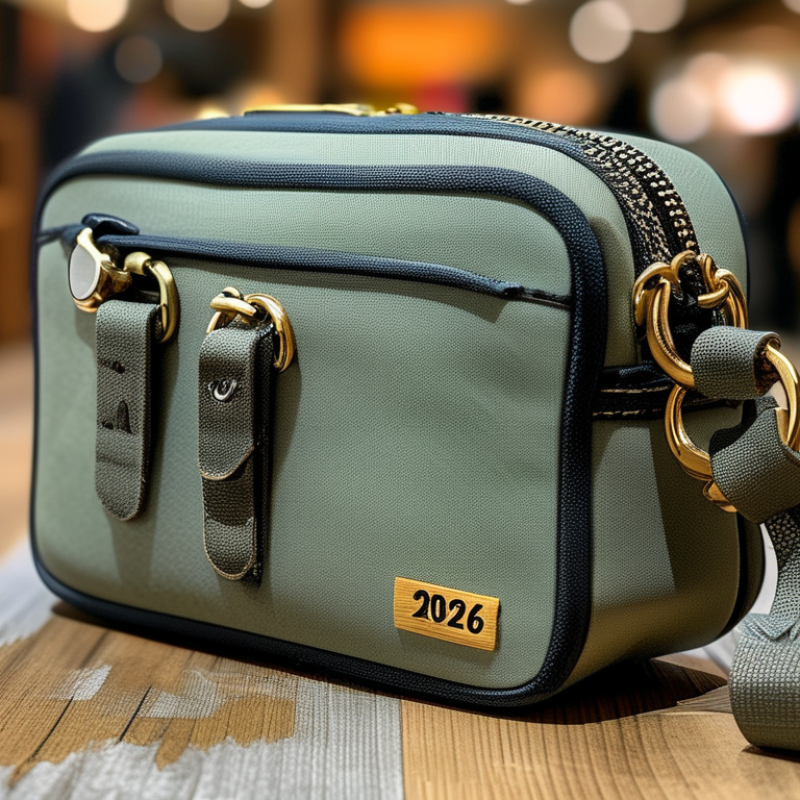
| Customization | Bag dimensions and capacity | Typical belt bag body: approximately 25–35 cm wide, 12–18 cm high, and 5–10 cm deep | Final dimensions must be confirmed with a tolerance, commonly ±0.5–1.0 cm | Measure approved sample and compare with technical drawing and packing specification | Medium |
| Main fabric selection | Common options include recycled or conventional polyester, nylon, canvas, and coated technical fabrics | Select fabric according to abrasion resistance, water resistance, hand feel, and target price | Approve a physical swatch and record fabric weight, finish, color, and coating requirements | High |
| Logo and decoration | Embroidery, screen printing, heat transfer, rubber patch, woven label, and metal or molded logo options | Logo size, position, color reference, and allowable visual variation must be documented | Approve a decorated sample and use a signed artwork file with production-scale dimensions | Medium |
| Strap adjustment range | A practical adult strap range is approximately 70–120 cm, with wider ranges available by request | Strap length must fit the intended wearing position and target customer profile | Measure minimum and maximum usable length and inspect adjustment movement | Medium |
| Hardware and closure options | Zippers, buckles, sliders, D-rings, snap hooks, and magnetic closures should be selected for load and usage conditions | Hardware must operate smoothly, resist corrosion, and match the specified finish | Perform repeated opening tests, visual inspection, and corrosion or coating review when applicable | High |
| Packaging and labeling | Standard options include individual polybags, paper sleeves, hangtags, carton labels, and barcode labels | Packaging should protect the bag from moisture, crushing, dust, and incorrect size or color labeling | Approve packaging artwork, carton dimensions, inner quantity, gross weight, and shipping marks | Medium |
| Quality Control | Measurement accuracy | Critical dimensions should remain within the approved tolerance, commonly ±0.5–1.0 cm | No critical dimension may fall outside the signed technical specification | Use a calibrated ruler or measuring tape during pre-shipment inspection | High |
| Stitching and seam quality | Stitching should be even, secure, free from skipped stitches, loose threads, puckering, and open seams | Stress points require reinforced stitching or bartacks according to the approved sample | Inspect exterior and interior seams under adequate lighting; perform manual stress checks | High |
| Zipper and closure function | Zippers and closures should open and close smoothly without catching, separation, or excessive resistance | Check all main compartments and pockets on the inspection sample | Conduct repeated operation tests and inspect zipper tape, puller, slider, and end stops | High |
| Strap and buckle strength | Strap attachment points and buckles must withstand normal carrying loads without tearing or accidental release | Set a documented load requirement based on bag size, intended contents, and wearing method | Perform pull testing or controlled manual load testing on attachment points and hardware | High |
| Color and appearance | Color should match the approved swatch or defined color reference with consistent appearance across the shipment | No visible stains, scratches, shade bands, logo defects, or significant panel-to-panel color variation | Inspect under consistent lighting and compare products with the approved golden sample | Medium |
| Fabric performance | Test requirements may include abrasion resistance, colorfastness, water repellency, and seam leakage depending on product use | Performance limits must be agreed before production because requirements vary by material and market | Request material test reports or arrange third-party testing for high-volume orders | High |
| Final inspection and defect limits | Use an agreed sampling plan, such as ANSI/ASQ Z1.4, with defined critical, major, and minor defect limits | Critical defects should be zero; major and minor acceptance limits must be stated in the purchase agreement | Conduct final random inspection before shipment and issue a report with photos and quantity reconciliation | High |
| Commercial Readiness | Landed-cost transparency | Quotation should separate product, customization, packaging, inspection, shipping, duties, and payment-related costs | Buyer should compare total landed cost rather than unit price alone | Request a line-item quotation valid for a stated period and confirm all surcharges in writing | High |
| Payment protection | Use staged payments linked to sample approval, production progress, and final inspection where commercially appropriate | Avoid paying the full balance before quality verification for an untested supplier | Document payment milestones, refund terms, replacement policy, and dispute procedures | High |
| Compliance documentation | Prepare applicable material declarations, restricted-substance documents, social-compliance records, and labeling information | Requirements depend on destination market, product materials, and intended use | Confirm destination-country regulations and obtain current supporting documents before shipment | High |
| After-sales handling | Supplier should provide a written process for defective goods, shortage claims, corrective action, and replacement timing | Claims procedure should include evidence requirements and a defined response time | Add quality remedies and claim deadlines to the purchase order or supply agreement | Medium |