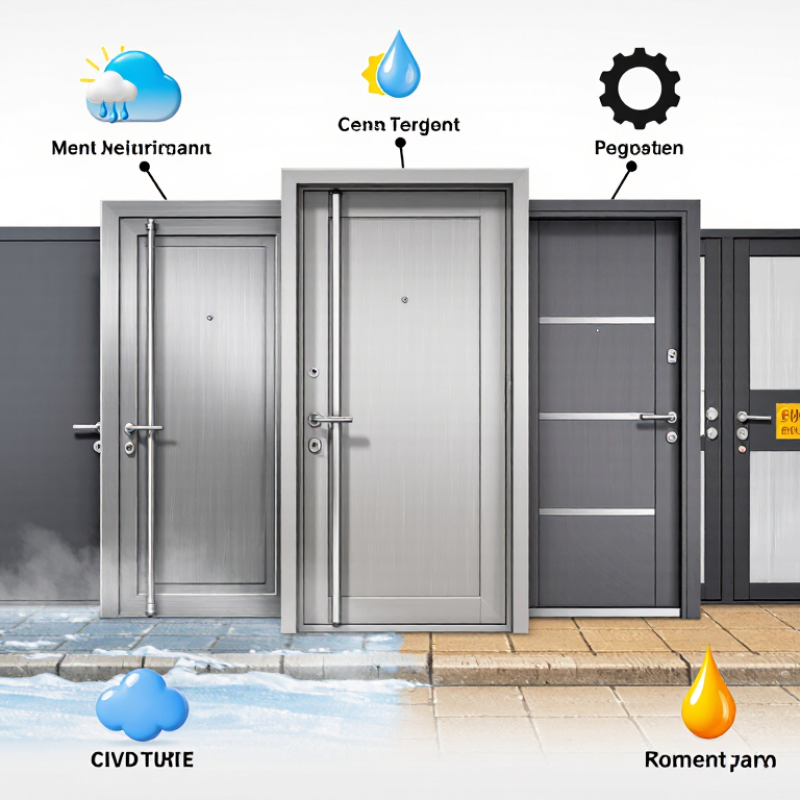
| Insulated Steel | Galvanized or coated steel skins around a polyurethane, polystyrene, or mineral-wool core. | Approximately 40–60 mm; the complete frame and threshold also affect performance. | Approximately 35–80 kg, depending on size, core, glazing, and hardware. | Usually offers good insulation when the core is continuous and the frame includes a thermal break. Compare the tested whole-door U-value rather than the panel alone. | Good with galvanized steel, suitable powder coating, sealed edges, and regular touch-up of scratches. Cut edges and exposed hardware need protection in coastal areas. | High potential because steel resists forced impact; performance depends on the lock, hinges, frame anchoring, cylinder, and tested door assembly. | Low to medium; inspect coating, seals, drainage, and bottom edges periodically. | Cold climates, security-focused homes, apartments, offices, and high-traffic entrances. |
| Aluminum | Extruded aluminum profiles with insulated panels, glazing, or a composite infill. | Approximately 45–70 mm for insulated entrance systems. | Approximately 20–50 kg, depending on size, glazing, and profile design. | Aluminum conducts heat readily, so thermal-break profiles, insulated panels, and properly sealed thresholds are important in hot or cold regions. | Naturally resistant to rust; powder coating or anodizing improves finish durability. Salt exposure and incompatible metals can still cause surface corrosion. | Medium to high when reinforced profiles, secure glazing, multi-point locking, and properly anchored frames are used. | Low; clean with mild detergent and inspect seals, drainage holes, and hardware. | Modern homes, humid or coastal regions, large glazed entrances, and projects requiring lower door weight. |
| Wrought Iron | Solid or hollow steel sections, bars, scrollwork, and welded decorative elements; often paired with glass or a separate inner door. | Approximately 40–80 mm overall, with substantial variation in bars, panels, and frame sections. | Approximately 60–140 kg or more for large, highly decorative assemblies. | Metalwork alone provides limited insulation. Add insulated backing, weather seals, and a thermally improved inner door where energy performance matters. | Requires durable primer and exterior coating. Welds, joints, decorative recesses, and drainage points need regular inspection to limit rust. | High physical strength is possible, but security depends on bar spacing, infill, frame anchoring, hinges, locks, and the resistance of any glass. | Medium to high, especially in wet or marine environments. | Traditional, Mediterranean, luxury, estate, and architecturally distinctive entrances. |
| Stainless Steel | Stainless-steel sheets, tubes, or formed profiles; may include an insulated core and decorative brushed or polished surfaces. | Approximately 45–70 mm for insulated entrance doors. | Approximately 35–90 kg, depending on grade, size, glazing, and reinforcement. | The metal itself is conductive; use a continuous insulated core and thermally separated frame for improved indoor comfort. | Very good corrosion resistance when the appropriate stainless grade and finish are selected. Chlorides, contamination from carbon steel, and poor cleaning can cause staining or localized corrosion. | High potential with reinforced construction and certified hardware; surface corrosion resistance does not by itself define forced-entry performance. | Low to medium; clean regularly to preserve the finish, especially near seawater or industrial pollution. | Coastal buildings, healthcare and commercial entrances, contemporary architecture, and demanding hygiene environments. |