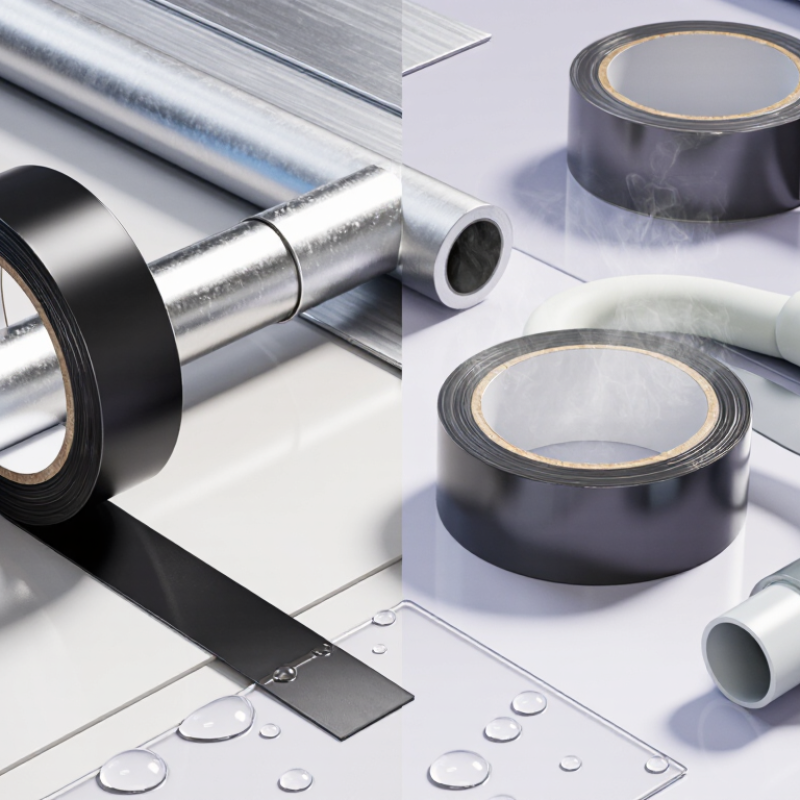
| Silicone Self-Fusing Tape | Approximately −60°C to 200°C | Often up to approximately 260°C, depending on construction and exposure time | Excellent after fusion | High-temperature cable splicing, electrical insulation, emergency hose repair, outdoor sealing | Clean, dry cables, hoses, pipes, and smooth or moderately irregular surfaces | Forms a seamless, non-adhesive rubber sleeve; strong resistance to moisture, ozone, and weathering | Needs firm stretching during installation; does not bond reliably to every surface; limited resistance to sharp abrasion | Choose when heat resistance, electrical insulation, and a watertight seal are all required |
| Self-Amalgamating EPDM Rubber Tape | Approximately −40°C to 120°C | Usually up to approximately 150°C for limited periods | Excellent after fusion | Outdoor cable joints, pipe connections, automotive wiring, marine and utility repairs | Rubber, plastic, metal, and insulated cable jackets after surface preparation | Flexible, weather-resistant, and effective on curved or uneven components | Lower maximum temperature than silicone tape; requires overlapping wraps and adequate tension | Choose for durable outdoor waterproofing where temperatures are moderate rather than extreme |
| Butyl Rubber Waterproof Tape | Approximately −40°C to 90°C | Commonly up to approximately 100°C for limited periods | Excellent, highly moisture resistant | Roof flashing, window and door sealing, gutters, ducts, tanks, and low-pressure pipe joints | Metal, glass, concrete, wood, masonry, many plastics, and painted surfaces | Excellent gap filling, low water absorption, and strong conformability | Can soften or flow at elevated temperatures; usually unsuitable for high-voltage insulation or high-pressure repairs | Choose when waterproofing and gap filling matter more than very high-temperature performance |
| EPDM Adhesive Rubber Tape | Approximately −40°C to 120°C | Often up to approximately 150°C, depending on adhesive grade | Very good | HVAC duct sealing, automotive trim, outdoor enclosures, vibration damping, and weather seals | Clean metal, glass, painted metal, rubber, and selected plastics | Good resistance to sunlight, ozone, rain, and temperature cycling | Adhesion can be poor on oily, dusty, low-energy, or silicone-contaminated surfaces | Choose for permanent or semi-permanent weather sealing on prepared surfaces |
| High-Temperature Fiberglass-Reinforced Rubber Tape | Approximately −40°C to 150°C | May tolerate approximately 180°C to 200°C for short periods, depending on adhesive and reinforcement | Good when overlapped correctly | Hose reinforcement, thermal insulation support, engine-bay repairs, and high-temperature bundling | Metal pipes, rubber hoses, cable jackets, and heat-resistant insulation materials | Higher mechanical strength and dimensional stability than unreinforced rubber tape | Less flexible around very tight bends; the adhesive layer may limit the true service temperature | Choose when tensile strength and moderate heat resistance are more important than maximum flexibility |
| Silicone Adhesive Rubber Tape | Approximately −50°C to 180°C | Often up to approximately 230°C for short-term exposure | Very good | High-temperature gaskets, electrical enclosures, lighting assemblies, and outdoor equipment sealing | Glass, metal, silicone rubber, selected plastics, and clean painted surfaces | Maintains flexibility across a wide temperature range and resists UV and ozone | Usually more expensive; adhesion may be weaker than acrylic or butyl systems on some substrates | Choose when the tape must remain flexible during repeated heating and cooling cycles |
| Neoprene Rubber Adhesive Tape | Approximately −30°C to 90°C | Usually up to approximately 110°C for limited periods | Good | General weather sealing, vibration control, equipment protection, and low-temperature industrial repairs | Metal, glass, wood, painted surfaces, and many rigid materials | Good flexibility, abrasion resistance, and resistance to oils compared with some other rubber types | Less resistant to long-term sunlight and ozone than EPDM; not intended for very high temperatures | Choose for general-purpose sealing where moderate heat, vibration, and abrasion are present |
| Natural Rubber Adhesive Tape | Approximately −20°C to 70°C | Typically below 90°C for short periods | Moderate to good | Indoor bundling, temporary sealing, packaging, and light-duty maintenance | Paper, cardboard, wood, metal, and clean low-stress surfaces | High initial tack, easy handling, and good conformability | Lower resistance to heat, UV, ozone, and aging than silicone, EPDM, or butyl systems | Choose only for moderate-temperature, mainly indoor applications |