| Flag fabric | Lightweight knitted polyester, commonly around 110–130 g/m²; heavier woven polyester is also available. | Knitted polyester is a widely used outdoor flag fabric because its construction allows air to pass through the material. Heavier fabric can provide a more substantial appearance but may place more load on the pole. | Ask the supplier for fabric weight, finishing details, and outdoor-use recommendations. Choose construction based on local wind exposure and the pole system. |
| Single-sided printing | Artwork is printed on one face; the image may show through to the reverse, often with reduced color intensity. | Suitable when the flag is mainly viewed from one direction and low weight is a priority. | Use large, bold text and a simple graphic. Confirm the expected reverse-side appearance before ordering. |
| Double-sided construction | Two printed panels with a light-blocking layer between them are commonly used to keep separate designs readable from both sides. | Useful for locations where people approach from either direction. It is generally heavier than a single-layer flag. | Specify whether both sides should display the same design or mirrored/reversed artwork, and check the finished flag’s weight against the pole system. |
| Compact size | 3 × 5 ft (0.91 × 1.52 m) | Small storefronts, short poles, and locations where the viewing distance is limited. | Limit the design to one main message and a simple symbol. Fine print is difficult to read outdoors. |
| Large size | 4 × 6 ft (1.22 × 1.83 m) or 5 × 8 ft (1.52 × 2.44 m) | Prominent entrances, event grounds, and open sites with a suitable pole and clear viewing distance. | Use a short headline, a recognizable visual, and strong separation between the foreground and background. |
| Extra-large size | 6 × 10 ft (1.83 × 3.05 m) | Large open areas where the flag can be seen from farther away and the pole system is designed for the flag’s dimensions. | Check pole height, fabric weight, mounting hardware, and site conditions together. A larger flag can catch more wind. |
| Color selection | High-contrast combinations, such as dark text on a light field or light text on a dark field. | Outdoor viewing, changing light conditions, and quick-glance messages. | Use a limited palette and avoid placing similarly colored text and background areas together. Request a print proof because fabric and printing can affect how colors appear. |
| Typography and message | One short headline, a large readable typeface, and only essential supporting information. | People viewing the flag while walking or passing by. | Prioritize the main offer or action. Keep contact details and long explanations for nearby signs or a website. |
| Artwork and file preparation | High-resolution raster artwork or vector artwork supplied at the printer’s requested size and color format. | Custom logos, illustrations, and text-based designs. | Request the production template, safe-area guidance, and proofing requirements before preparing final artwork. Keep key text away from seams and edges. |
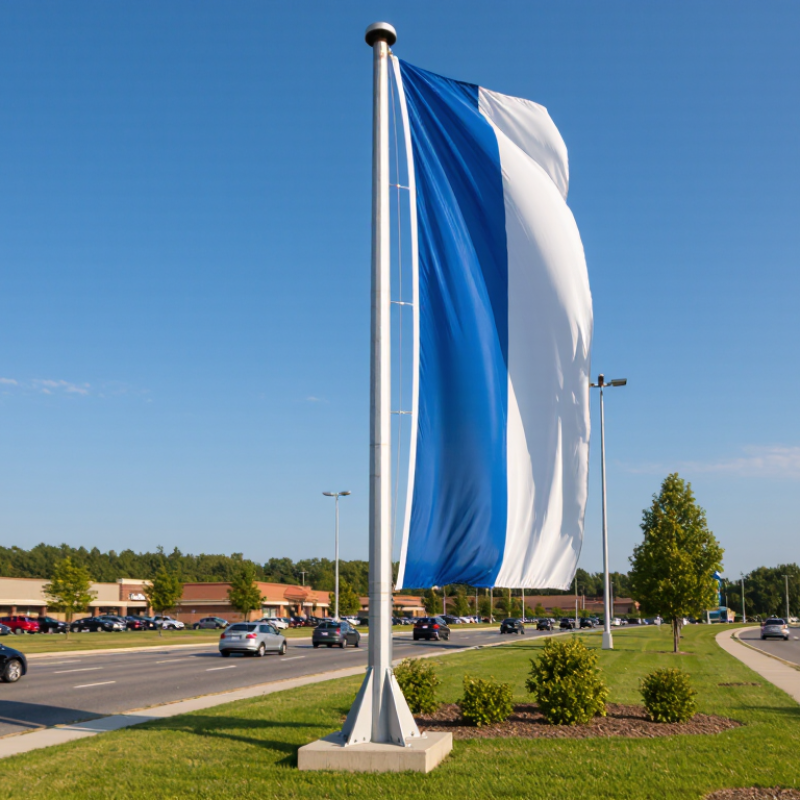
| Pole and installation | Pole height, diameter, mounting hardware, and base should be selected to suit the flag dimensions and installation surface. | Ground-mounted, wall-mounted, or other approved outdoor installations. | Follow the pole and hardware manufacturer’s installation guidance. Consider wind exposure and local conditions; take the flag down when conditions exceed the system’s recommendations. |
| Care and maintenance | Follow the fabric supplier’s cleaning and storage instructions; inspect stitching, edges, and attachment points regularly. | Flags used repeatedly or left outdoors for extended periods. | Remove and store the flag when practical during severe weather. Replace damaged fabric or hardware rather than continuing to use it. |